
 English
 中文
中文
-

What are the battery certifications? What are the standards for battery certification
-
Leading Global Compliance: In-depth Dissection of the New IS/IEC 62368-1:2023 Electronic Safety Standard
-

2026 India BIS Update Barometer: Countdown to Mandatory Version Replacement for XR and Electronic Products
-
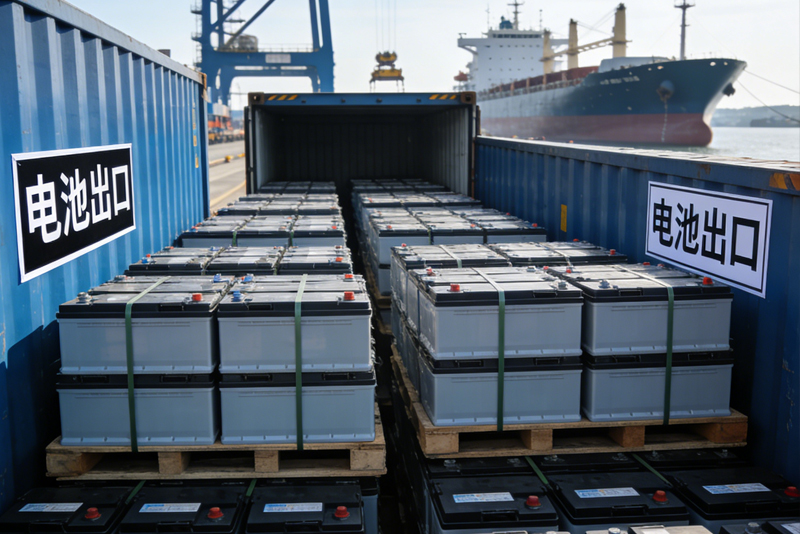
2026 Latest Guide: What Certification Materials are needed for Battery exports to the United States?
-
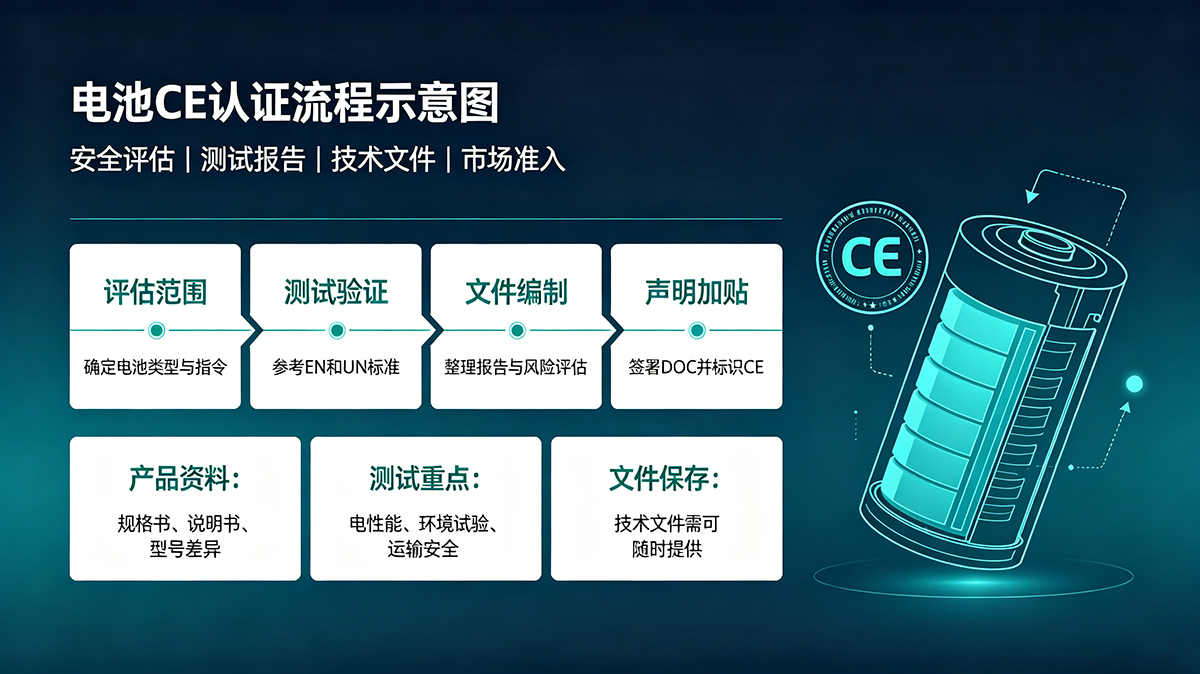
How to obtain the EU CE certification? Compliance Guide for Battery Exports to Europe
What certifications are required for battery exports to Europe? Key Points Analysis of CE Certification
The export of batteries to Europe requires not only production capacity but also compliance with the regulatory requirements of the target market. As an important compliance step in the European market, the EU CE certification requires enterprises to plan in combination with product types, safety standards and regulatory requirements.
How to obtain the EU CE certification? Compliance Guide for Battery Exports to Europe
For battery enterprises, entering the European market requires not only focusing on product performance but also attaching great importance to regulatory compliance. The EU CE certification is not only a testing requirement but also an important way for enterprises to establish a product safety system. Understanding the battery CE certification process in advance, clarifying the testing standards and improving the technical data can help enterprises reduce export risks and enhance the stability of their products entering the European market.
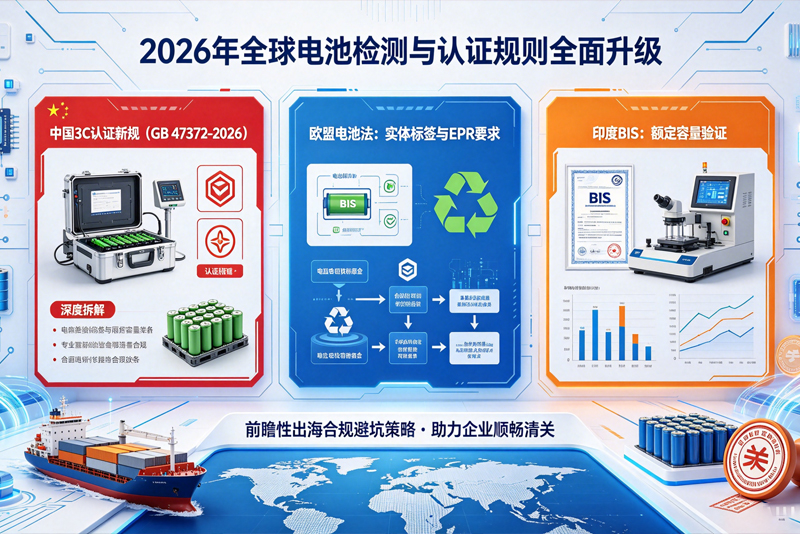
A Comprehensive Analysis of the New Battery Testing and Certification Regulations: Advanced Guidelines for Battery Customs Clearance and Compliance in Various Countries in 2026
With the continuous upgrading of global green and low-carbon transformation and consumer electronics safety regulation, the testing and certification standards of the battery industry have undergone an all-round iteration in 2026. From the update of the new national standards for domestic mobile power banks and the 3C certification rules, to the implementation of the entity labels under the new EU battery Law, and then to the tightening of testing requirements in emerging markets, major economies around the world are reshaping the battery supply chain with stricter "compliance access vouchers". This article provides you with an in-depth analysis of the new trends in global battery customs clearance and compliance in 2026, helping you make precise plans and break through to go global.
What certifications are required for battery exports to Europe? Key Points Analysis of CE Certification
 Click:913编辑: 诚测检测CCJC
 Time:2026-07-10 17:47:25
The answer lies in the fact that there are differences in product safety and environmental protection management systems among different regions. The European market not only focuses on whether the products can be used normally, but also pays attention to their safety performance during transportation, installation and long-term operation.
Therefore, the EU CE certification has become one of the key compliance requirements that many battery products need to understand before entering the European market.

Before applying for certification, enterprises need to first determine the type of product.
Product type |
Application field |
Focus on key points |
Consumer lithium batteries |
Mobile phones, wearable devices |
Safety, electromagnetic compatibility |
Energy storage battery |
Household energy storage, industrial energy storage |
System security |
Power battery |
Electric vehicle equipment |
High safety level |
Button battery |
Small electronic devices |
Materials and Safety |
Different products correspond to different regulatory requirements.
Therefore, enterprises cannot simply assume that "once CE certification is obtained, all products can be used."
What are the core values of the EU CE certification?
The core of CE certification is not to prove the highest quality of the product, but to demonstrate that the product complies with the safety requirements stipulated by EU regulations.
This is a point that many enterprises tend to misunderstand.
CE pays more attention to:
Product risk control
Safe to use
Completeness of technical documents
Regulatory compliance
For battery products, safety issues have always been a key focus area in the European market.
For example:
If the battery shows:
Overheating
Short circuit
External impact damage
It may affect consumer safety.
Therefore, the significance of certification testing lies in the early detection of risks.
Iii. How to Choose the CE Certification Standards for Lithium Batteries?
For different lithium battery products, the testing scheme should be selected in combination with the actual application.
Common areas of concern for enterprises include
Battery cell safety
The main verification is the stability of the battery cell itself.
Battery pack safety
Pay attention to the overall performance after the combination of multiple battery cells.
Safety of the electronic control system
Smart batteries typically include:
BMS Management system
Protect the circuit
Control module
All of these will affect the final certification scheme.
Industry data shows that battery certification usually requires a comprehensive judgment based on CE, battery-related regulations, and safety testing standards, rather than looking at a single item alone.
Four. The Most Easily overlooked Issues when Enterprises Apply for certification
1. Insufficient preparation of product information
Many enterprises only focus on testing but neglect technical documents.
In fact:
Product manuals, specification parameters, structural data, etc. will all affect the certification process.
2. The battery model change was not re-evaluated
For example:
Change the battery cell supplier
Modify capacity
Adjust the protection plan
These changes may affect the validity of the original certification.
3. Ignoring regulatory updates
European regulations are constantly being adjusted.
Enterprises need to pay attention to
Environmental protection requirements for batteries
Recycling requirements
New compliance requirements
Avoid restrictions after the product enters the market.
V. How to Choose a Certification Scheme Suitable for Your Enterprise?
For enterprises exporting to Europe for the first time, the following ideas can be followed:
First, confirm the sales market.
Although different European countries all follow the EU system, enterprises still need to understand the specific requirements for sales channels.
Secondly, confirm the product application.
Consumer electronics batteries and energy storage system batteries should not adopt exactly the same certification planning.
Finally, conduct test evaluations in advance.
Identifying problems before mass production is less costly than rectifying them after export.
Professional testing institutions usually formulate testing plans based on product information, target markets and application scenarios. For instance, some third-party institutions offer battery testing, international certification consultation and regulatory information services to assist enterprises in preparing for exports.
Vi. What trends should battery enterprises pay attention to in the future?
With the development of the new energy industry, Europe's requirements for battery safety, environmental protection and traceability management are constantly increasing.
Future enterprise competition is not only reflected in:
Battery capacity
Product price
Delivery speed
It is also reflected in
Compliance capability
Product safety system
International market experience
Laying out the certification system in advance will become an important foundation for the long-term development of battery enterprises.
Summary
The export of batteries to Europe requires not only production capacity but also compliance with the regulatory requirements of the target market.
As an important compliance step in the European market, the EU CE certification requires enterprises to plan in combination with product types, safety standards and regulatory requirements.
For battery enterprises preparing to enter the European market, understanding the certification process in advance, improving technical documents and conducting safety tests are important steps to reduce export risks.
相关BlOG
-
What certifications are required for battery exports to Europe? Key Points Analysis of CE Certification
The export of batteries to Europe requires not only production capacity but also compliance with the regulatory requirements of the target market. As an important compliance step in the European market, the EU CE certification requires enterprises to plan in combination with product types, safety standards and regulatory requirements.
9132026-07-10
-
How to obtain the EU CE certification? Compliance Guide for Battery Exports to Europe
For battery enterprises, entering the European market requires not only focusing on product performance but also attaching great importance to regulatory compliance. The EU CE certification is not only a testing requirement but also an important way for enterprises to establish a product safety system. Understanding the battery CE certification process in advance, clarifying the testing standards and improving the technical data can help enterprises reduce export risks and enhance the stability of their products entering the European market.
8072026-07-06
-
A Comprehensive Analysis of the New Battery Testing and Certification Regulations: Advanced Guidelines for Battery Customs Clearance and Compliance in Various Countries in 2026
With the continuous upgrading of global green and low-carbon transformation and consumer electronics safety regulation, the testing and certification standards of the battery industry have undergone an all-round iteration in 2026. From the update of the new national standards for domestic mobile power banks and the 3C certification rules, to the implementation of the entity labels under the new EU battery Law, and then to the tightening of testing requirements in emerging markets, major economies around the world are reshaping the battery supply chain with stricter "compliance access vouchers". This article provides you with an in-depth analysis of the new trends in global battery customs clearance and compliance in 2026, helping you make precise plans and break through to go global.
5852026-07-23