
 English
 中文
中文
-

What are the battery certifications? What are the standards for battery certification
-
Leading Global Compliance: In-depth Dissection of the New IS/IEC 62368-1:2023 Electronic Safety Standard
-
2026 India BIS Update Barometer: Countdown to Mandatory Version Replacement for XR and Electronic Products
-
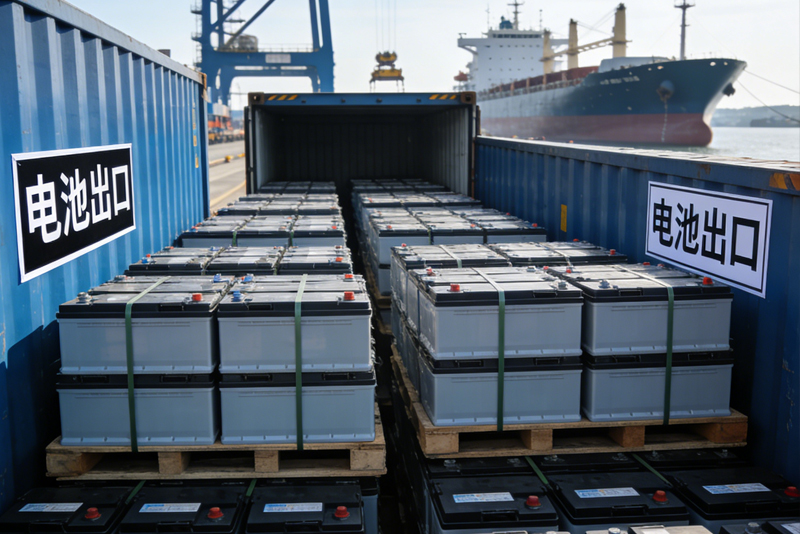
2026 Latest Guide: What Certification Materials are needed for Battery exports to the United States?
-
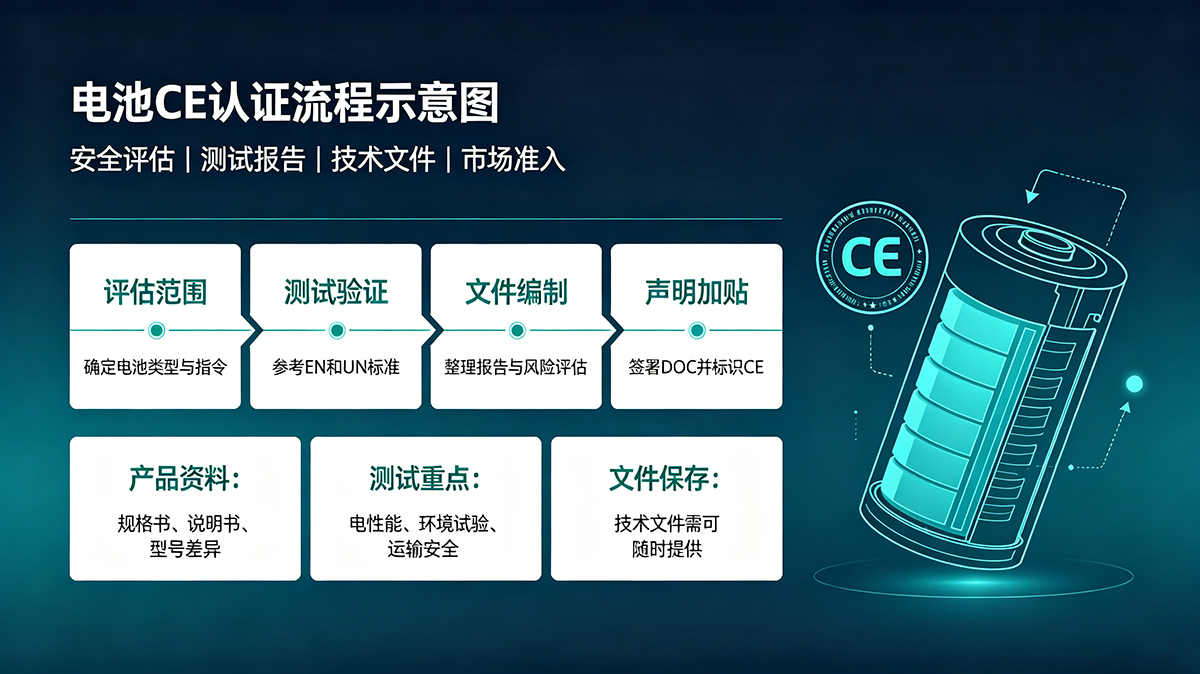
How to obtain the EU CE certification? Compliance Guide for Battery Exports to Europe
What certifications are required for battery exports to Europe? Key Points Analysis of CE Certification
The export of batteries to Europe requires not only production capacity but also compliance with the regulatory requirements of the target market. As an important compliance step in the European market, the EU CE certification requires enterprises to plan in combination with product types, safety standards and regulatory requirements.
How to obtain the EU CE certification? Compliance Guide for Battery Exports to Europe
For battery enterprises, entering the European market requires not only focusing on product performance but also attaching great importance to regulatory compliance. The EU CE certification is not only a testing requirement but also an important way for enterprises to establish a product safety system. Understanding the battery CE certification process in advance, clarifying the testing standards and improving the technical data can help enterprises reduce export risks and enhance the stability of their products entering the European market.
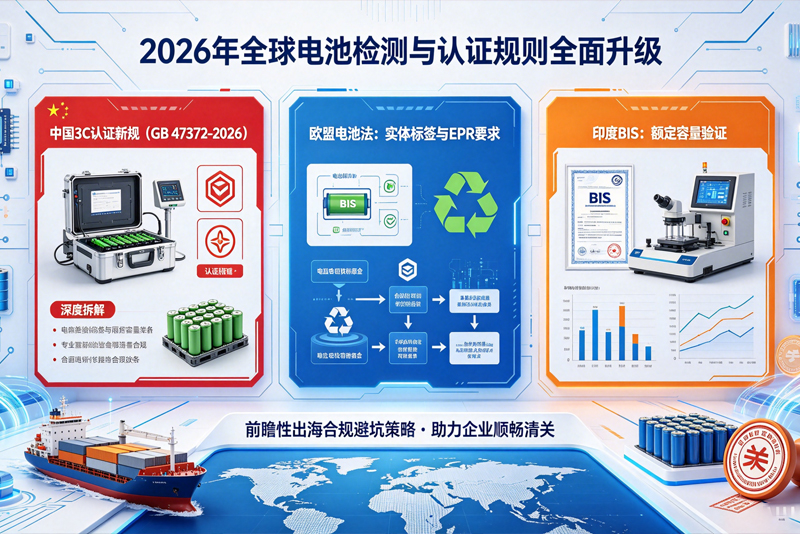
A Comprehensive Analysis of the New Battery Testing and Certification Regulations: Advanced Guidelines for Battery Customs Clearance and Compliance in Various Countries in 2026
With the continuous upgrading of global green and low-carbon transformation and consumer electronics safety regulation, the testing and certification standards of the battery industry have undergone an all-round iteration in 2026. From the update of the new national standards for domestic mobile power banks and the 3C certification rules, to the implementation of the entity labels under the new EU battery Law, and then to the tightening of testing requirements in emerging markets, major economies around the world are reshaping the battery supply chain with stricter "compliance access vouchers". This article provides you with an in-depth analysis of the new trends in global battery customs clearance and compliance in 2026, helping you make precise plans and break through to go global.
A Comprehensive Analysis of the New Battery Testing and Certification Regulations: Advanced Guidelines for Battery Customs Clearance and Compliance in Various Countries in 2026
 Click:584编辑: 诚测检测CCJC
 Time:2026-07-23 15:09:47
Entering 2026, China has continuously intensified its regulatory efforts on lithium batteries and related products, with the core changes mainly focusing on the update of the Compulsory Product Certification (CCC) standards:
New regulations issued: The Certification and Accreditation Administration of the People's Republic of China has released the new implementation rules (CNCA-C09-02:26), officially incorporating the mandatory national standard GB 47372-2026 "Safety Technical Specification for Mobile Power Banks" into the CCC certification basis standards.
Technological upgrade: The new standards further strengthen the assessment of extreme safety items such as thermal abuse and needle-puncture tests, and incorporate core safety indicators into the post-certification supervision process.
The transition period node: The announcement clearly sets the transition period to March 31, 2027. Enterprises involved in mobile power banks and their accompanying lithium-ion batteries and battery packs need to promptly conduct tests and complete the certificate conversion to prevent the expiration of certificates from affecting domestic sales and customs clearance.

Europe remains one of the regions with the most complex battery compliance requirements globally, and 2026 marks a crucial implementation juncture:
Full implementation of physical labels: According to the timetable of the new EU battery law, starting from August 18, 2026, all batteries placed on the EU market must meet strict physical label requirements, including the addition of independent collection symbols, capacity information, QR codes, and heavy metal chemical symbols, etc.
Regular EPR supervision: Cross-border e-commerce and traditional export enterprises must strictly implement the Extended Producer Responsibility (EPR) registration. Unlicensed and compliant sales will face the dual risks of being removed from the platform and having goods detained by customs.
Forward-looking warning: The "battery passport" and carbon footprint threshold for power batteries and large industrial batteries are also in the countdown stage. The compliance logic is shifting from simple "product safety" to "green tracking throughout the entire life cycle".
Iii. Indian Market: BIS New Regulations for Verification of Rated Capacity of Lithium Batteries
The Bureau of Indian Standards (BIS) has also been taking strong measures in compliance control:
The BIS of India has issued new regulations on the verification of the rated capacity of portable sealed secondary lithium battery cells and lithium batteries, with a focus on cracking down on the widespread chaos of capacity false labeling in the market.
Customs clearance impact: This means that when batteries exported to India apply for BIS certification or undergo port clearance spot checks, the tolerance standards for capacity testing will be more stringent. Even the slightest deviation could lead to the entire batch of goods being detained at the port.
Iv. 2026 Battery Enterprises' Compliance and Clearance Response Strategies
In the face of the ever-changing and strict international new regulations, battery industry chain enterprises suggest adopting the following strategies
Keep a close eye on the time window for standard switching: Whether it is the domestic GB 47372-2026 conversion or the new labeling regulations of the European Union, it is essential to communicate with the laboratory in advance and reserve sufficient time for sample submission and testing.
Strengthening supply chain traceability capabilities: In the face of the EU battery law's traceability requirements for materials, carbon footprints and recycling information, enterprises must connect the upstream raw material data chain.
Establish a pre-compliance risk control mechanism: Introduce the latest standards of the target sales country (such as thermal abuse, capacity tolerance, etc.) during the product project initiation and R&D stages to avoid the huge sunk costs caused by "first production and post-production rectification".
相关BlOG
-
What certifications are required for battery exports to Europe? Key Points Analysis of CE Certification
The export of batteries to Europe requires not only production capacity but also compliance with the regulatory requirements of the target market. As an important compliance step in the European market, the EU CE certification requires enterprises to plan in combination with product types, safety standards and regulatory requirements.
9122026-07-10
-
How to obtain the EU CE certification? Compliance Guide for Battery Exports to Europe
For battery enterprises, entering the European market requires not only focusing on product performance but also attaching great importance to regulatory compliance. The EU CE certification is not only a testing requirement but also an important way for enterprises to establish a product safety system. Understanding the battery CE certification process in advance, clarifying the testing standards and improving the technical data can help enterprises reduce export risks and enhance the stability of their products entering the European market.
8062026-07-06
-
A Comprehensive Analysis of the New Battery Testing and Certification Regulations: Advanced Guidelines for Battery Customs Clearance and Compliance in Various Countries in 2026
With the continuous upgrading of global green and low-carbon transformation and consumer electronics safety regulation, the testing and certification standards of the battery industry have undergone an all-round iteration in 2026. From the update of the new national standards for domestic mobile power banks and the 3C certification rules, to the implementation of the entity labels under the new EU battery Law, and then to the tightening of testing requirements in emerging markets, major economies around the world are reshaping the battery supply chain with stricter "compliance access vouchers". This article provides you with an in-depth analysis of the new trends in global battery customs clearance and compliance in 2026, helping you make precise plans and break through to go global.
5852026-07-23