
 English
 中文

-

How to handle common problems related to battery certification for enterprises exporting battery products?
During the export process of battery-powered products, many enterprises encounter not just a single technical issue, but rather a mismatch between data, transportation, customer requirements and those of the destination country. The same battery product may have no problem with domestic customs declaration, but it will be blocked in the air transportation process. It is also possible that the customer confirmed the samples but put forward new compliance requirements when shipping in bulk. Battery certification requires enterprises to establish a compliance list in advance instead of taking temporary remedial measures when problems arise.
 50
 2026-11-13
-

How can battery certification be processed more smoothly when exporting products with batteries?
From the actual export experience, the common problems of products with batteries are mainly concentrated in three links: First, the domestic customs declaration documents are incomplete; Second, the identification of air or sea transportation is not recognized. Thirdly, the import requirements of the destination country are inconsistent with the export data. If an enterprise only prepares materials according to the template, it is very likely to get stuck at some stage.
742026-11-09
-
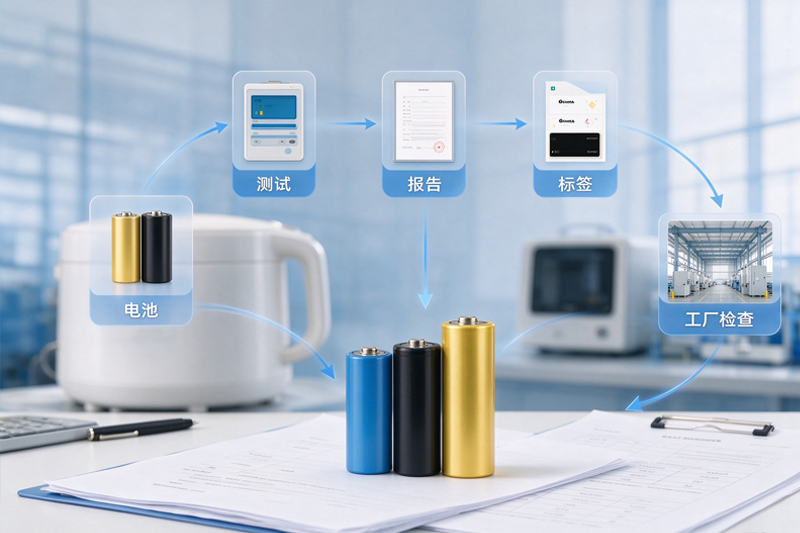
The certification process, document preparation and common questions for lithium batteries in small household appliance enterprises
Lithium battery certification involves multiple aspects such as battery safety, electrical performance, marking instructions, transportation rules and factory quality capabilities. It is more efficient for enterprises to establish a clear certification plan at the project initiation stage than to temporarily supplement materials later.
922026-11-07
-
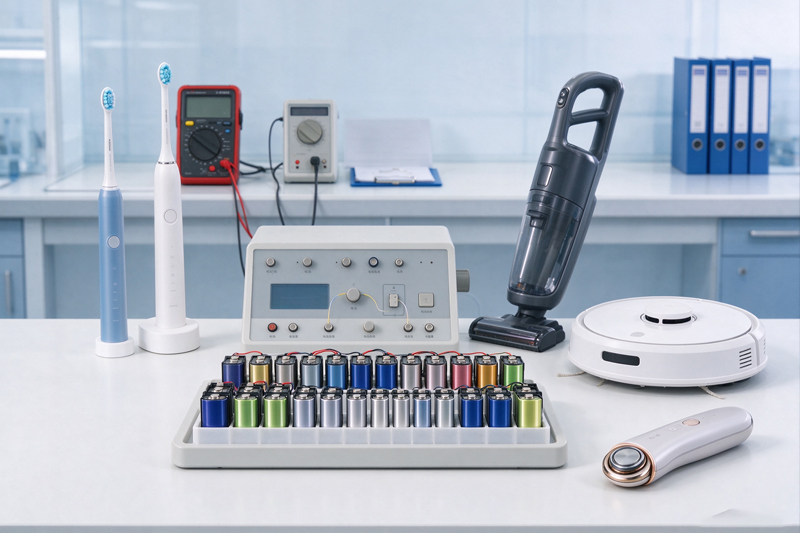
Compliance Key Points and Market Access Analysis of Lithium Battery Certification in the Small Household Appliances Industry
With the enrichment of small household appliances, consumers' demands for portability, wireless technology and long battery life are constantly increasing. As an important power component, lithium batteries are widely used in electric toothbrushes, vacuum cleaners, handheld vacuum cleaners, beauty devices, kitchen small appliances and other products. Meanwhile, the safety and compliance issues of lithium batteries have also drawn increasing attention from enterprises.
032026-11 -
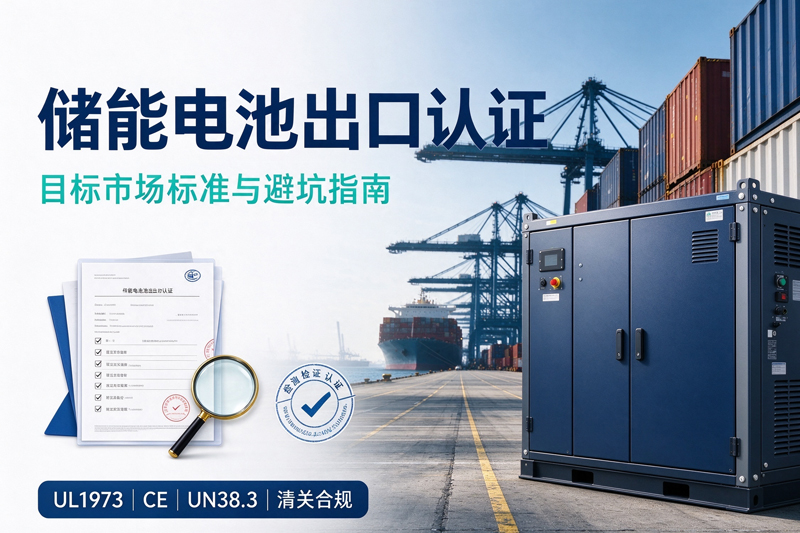
How to obtain export certification for energy storage batteries? Target market standards and pitfalls avoidance guidelines
For the export of energy storage batteries, the most feared issue is not that production capacity cannot keep up, but that compliance fails to keep up. Many foreign trade teams treat the export certification of energy storage batteries as a "to-do item within the delivery period" during the quotation stage. As a result, when the containers arrive at the destination port, they find that the certification system does not meet local requirements, and the containers are detained, returned, or even reworked in batches. Energy storage batteries are a high-risk category, and the entry requirements for them vary among major markets. Understanding the certification path in advance often determines whether an order can be smoothly implemented more than negotiating the price.
292026-10 -

How to obtain certification for energy storage batteries? Standards, processes and frequently asked questions
When exporting energy storage batteries or participating in domestic grid-connected energy storage projects, many manufacturers get stuck at the compliance stage. Purchasers, general contractors, and overseas customers all request certifications for energy storage batteries. However, many practitioners fail to distinguish the applicable boundaries of different certificates, choose the wrong standards, and omit test items. This can result in delays in the project delivery cycle at best, and at worst, the goods may be detained at the port and unable to be included in the project tender list. Many people mistakenly believe that the certification of energy storage batteries is just a general certificate. In fact, it is a compliance testing system that fits the usage scenarios and target markets, and it is also the basic threshold for energy storage products to enter the market.
272026-10 -
What are the certifications for lithium batteries? A Comprehensive Analysis of Essential Items for Export Transportation
For friends engaged in the export of lithium batteries, the most headache-inducing issue is often not the products themselves, but rather "what exactly needs to be certified". After asking around, some people said UN38.3, some said CE, and some said UL. The prices and cycles also vary. The more I asked, the more confused it became. This article clearly explains the common types, essential items and process cycles of lithium battery certification, helping shipment avoid detours.
202026-10 -
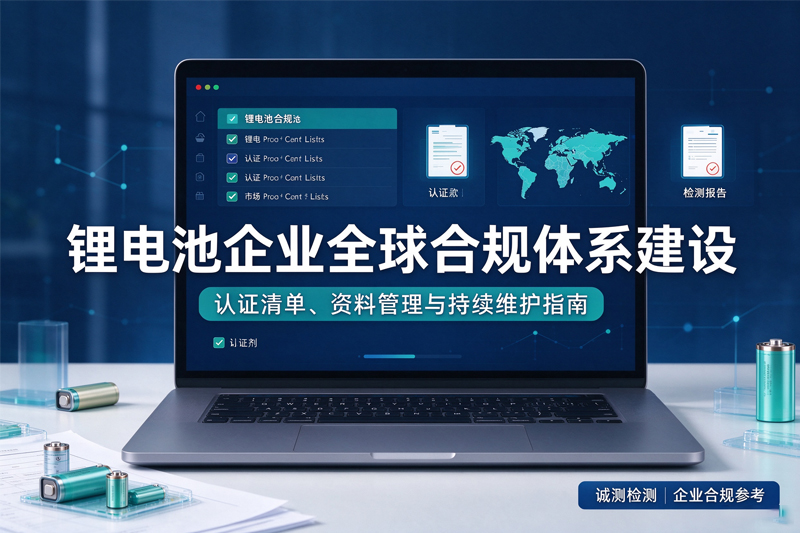
Global compliance system construction for lithium battery enterprises: Certification list, data management and continuous maintenance
For lithium battery enterprises, it is not difficult to complete a certification once in a while. The challenge lies in how to maintain compliance continuously after their products enter multiple markets. With the increase in product models, the expansion of target markets, and the update of standard versions, many enterprises will encounter problems such as scattered certificates, difficulty in finding materials, and inability to respond quickly when customers inquire. Establishing a global compliance system for lithium batteries essentially means transforming certification from a "project-based" approach to a "regular management" one.
152026-10 -
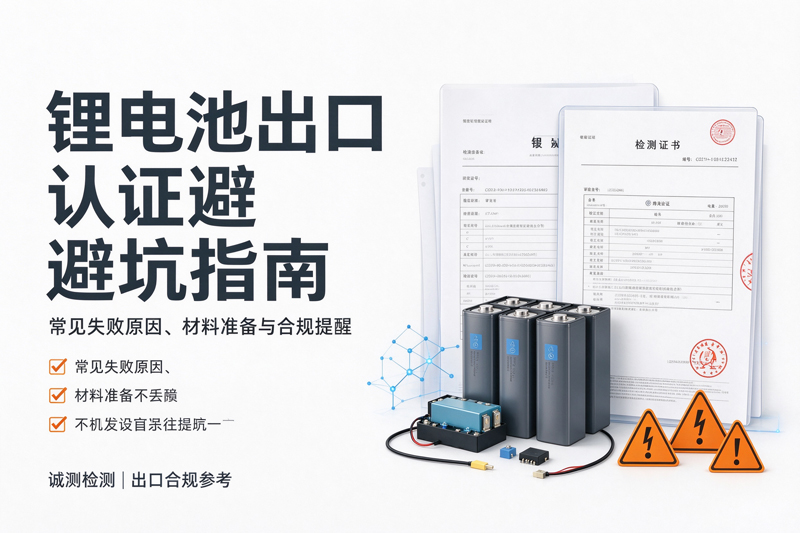
A Guide to Avoiding Pitfalls in Lithium Battery Export Certification: Common Problems, Failure Causes and Countermeasures
Many lithium battery enterprises have had similar experiences: samples sent for testing have no results for a long time, or the certificates have just been obtained, but the customers ask for additional reports. The export certification of lithium batteries involves product standards, label information, technical documents and transportation data. Any lack of preparation in any of these aspects may affect the progress of testing or the efficiency of customs clearance. For enterprises, identifying high-frequency problems in advance is more important than conducting supplementary tests afterwards.
102026-10