
 English
 中文
-

What are the battery certifications? What are the standards for battery certification
-
Leading Global Compliance: In-depth Dissection of the New IS/IEC 62368-1:2023 Electronic Safety Standard
-
2026 India BIS Update Barometer: Countdown to Mandatory Version Replacement for XR and Electronic Products
-
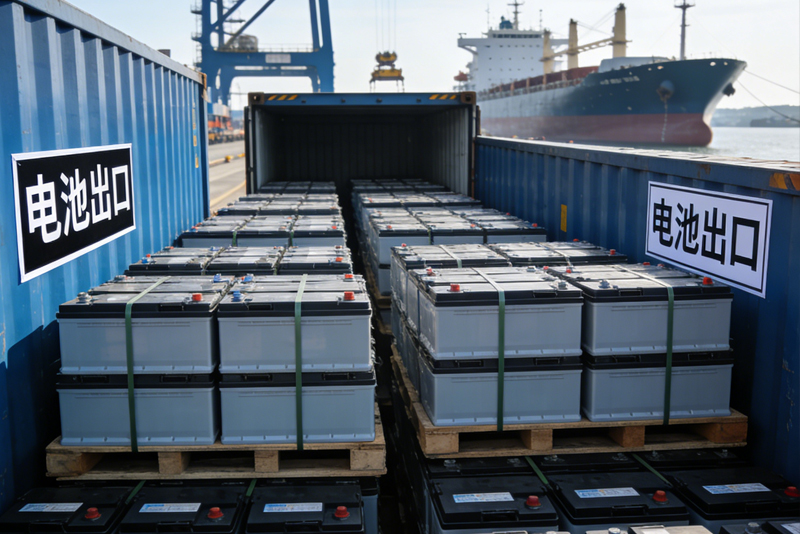
2026 Latest Guide: What Certification Materials are needed for Battery exports to the United States?
-
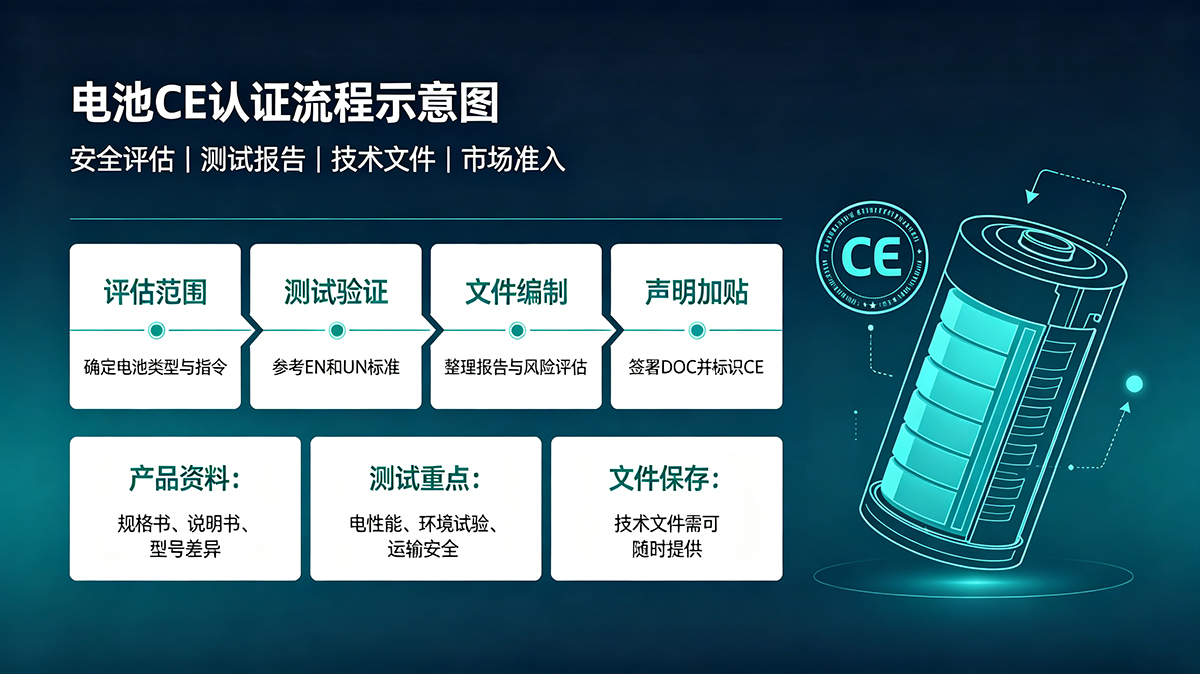
How to obtain the EU CE certification? Compliance Guide for Battery Exports to Europe
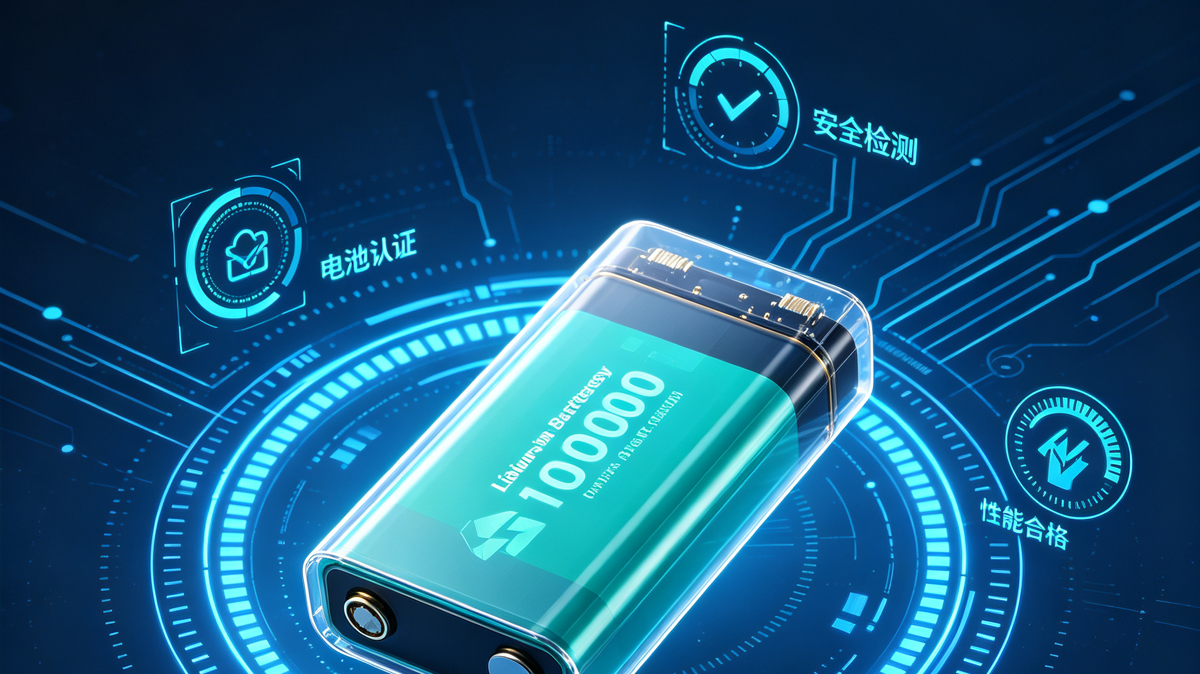
What certifications are required for battery exports to Europe? Key Points Analysis of CE Certification
The export of batteries to Europe requires not only production capacity but also compliance with the regulatory requirements of the target market. As an important compliance step in the European market, the EU CE certification requires enterprises to plan in combination with product types, safety standards and regulatory requirements.
How to obtain the EU CE certification? Compliance Guide for Battery Exports to Europe
For battery enterprises, entering the European market requires not only focusing on product performance but also attaching great importance to regulatory compliance. The EU CE certification is not only a testing requirement but also an important way for enterprises to establish a product safety system. Understanding the battery CE certification process in advance, clarifying the testing standards and improving the technical data can help enterprises reduce export risks and enhance the stability of their products entering the European market.
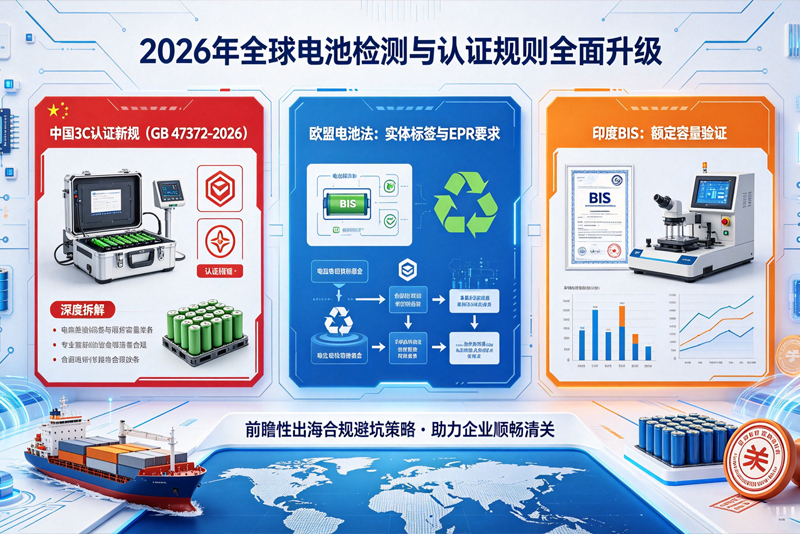
A Comprehensive Analysis of the New Battery Testing and Certification Regulations: Advanced Guidelines for Battery Customs Clearance and Compliance in Various Countries in 2026
With the continuous upgrading of global green and low-carbon transformation and consumer electronics safety regulation, the testing and certification standards of the battery industry have undergone an all-round iteration in 2026. From the update of the new national standards for domestic mobile power banks and the 3C certification rules, to the implementation of the entity labels under the new EU battery Law, and then to the tightening of testing requirements in emerging markets, major economies around the world are reshaping the battery supply chain with stricter "compliance access vouchers". This article provides you with an in-depth analysis of the new trends in global battery customs clearance and compliance in 2026, helping you make precise plans and break through to go global.
How to obtain export certification for energy storage batteries? Target market standards and pitfalls avoidance guidelines
 Click:137编辑: 诚测检测CCJC
 Time:2026-10-29 14:50:32
For the export of energy storage batteries, the most feared issue is not that production capacity cannot keep up, but that compliance fails to keep up. Many foreign trade teams treat the export certification of energy storage batteries as a "to-do item within the delivery period" during the quotation stage. As a result, when the containers arrive at the destination port, they find that the certification system does not meet local requirements, and the containers are detained, returned, or even reworked in batches. Energy storage batteries are a high-risk category, and the entry requirements for them vary among major markets. Understanding the certification path in advance often determines whether an order can be smoothly implemented more than negotiating the price.
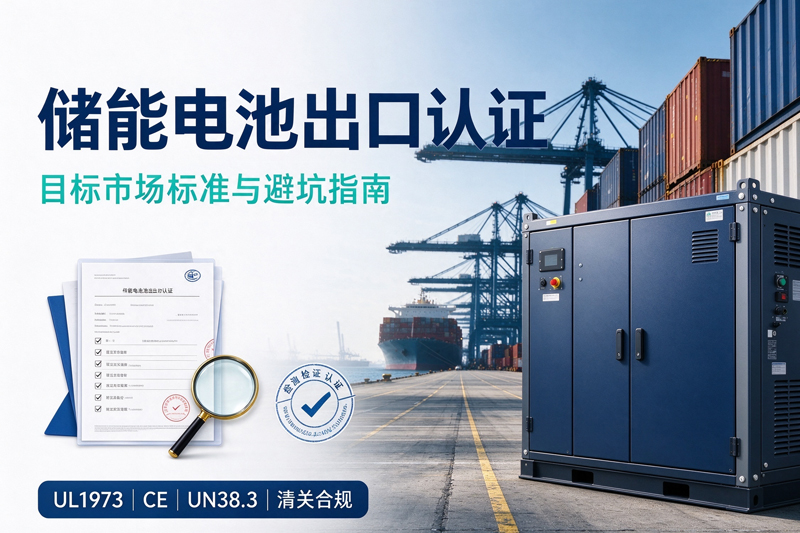
The access logic varies greatly among different countries and regions. The export certification for energy storage batteries is not a matter of "one certificate for all". Before going global, first determine the applicable standards based on the product form and sales regions, and then make testing plans.
In the North American market, industrial, commercial and household energy storage systems often require UL1973 certification, while also complying with system-level standards such as UL9540. Some projects also need to take into account energy efficiency requirements such as FCC electromagnetic compatibility and California CEC.
In the EU market, batteries need to comply with the relevant requirements of the CE Directive, including electromagnetic compatibility (EMC), low voltage (LVD), and the gradual implementation of the new battery regulations. Performance and safety tests also mostly refer to EN standards.
In Japan, South Korea and Southeast Asia, PSE or local battery safety standards are commonly seen in energy storage projects. South Korea also has localized requirements for battery certification. Some countries in Southeast Asia recognize the IEC standard system, but the local certification process still needs to be confirmed separately.
It can be seen from this that the first step in the export certification of energy storage batteries is not to find a laboratory, but to clearly define the sales destination. If the same product is to enter multiple markets simultaneously, it is usually necessary to plan multiple sets of tests in parallel and incorporate the cost and cycle of "one product, multiple certifications" into the quotation in advance.
The core link of export certification: UN38.3 is the basic threshold
No matter which market it is sold to, the logistics and transportation link is almost an unavoidable threshold. UN38.3 is a test requirement for the safety of lithium battery transportation, covering items such as vibration, shock, thermal shock, and external short circuit. It is the basic condition before the air, sea, and land transportation of batteries.
Before sending samples for testing, it is recommended to do three things first: confirm whether the specifications of the battery cells and the entire machine are consistent with the design, prepare a complete BOM and specification sheet, and assess whether it is necessary to cooperate with transportation documents such as MSDS. After the test is passed, pay attention to the validity period of the report and version updates. Check again before shipment to avoid customs clearance being blocked due to certificate version issues.
Common misunderstandings in the export certification of energy storage batteries
Misconception One: Only looking at the certificate without considering the scope of application. Some certifications cover the cell level, while others cover the battery pack level or system level. The levels of concern for the purchaser and the customs may be different. Reports at the wrong level are likely to be rejected. Misconception 2: Inconsistency between the sample and mass production. Changes in battery cell suppliers, upgrades to BMS versions, and adjustments to protection circuits will all affect the validity of the certificate. If a model is modified privately during the mass production stage and is randomly inspected, the consequences are often quite serious. Mistake Three: Ignoring the localization supporting requirements. In some markets, in addition to battery certification, there are also supporting obligations such as recycling, traceability, and customs code declaration. The export team needs to arrange all these together and cannot just focus on the test report.
Several practical suggestions
For enterprises planning to go global, it is recommended to initiate compliance assessment simultaneously at the project initiation stage: organize product information, determine the target market, select qualified third-party laboratories, and reserve sufficient time for testing and rectification. The export certification of energy storage batteries is a continuous investment rather than a one-off "key". As standards and markets update, enterprises need to keep tracking and iterating.
Only by regarding certification as proof of product quality and compliance capabilities rather than merely a cost burden can energy storage enterprises move forward both quickly and steadily in overseas markets.
相关BlOG
-
What certifications are required for battery exports to Europe? Key Points Analysis of CE Certification
The export of batteries to Europe requires not only production capacity but also compliance with the regulatory requirements of the target market. As an important compliance step in the European market, the EU CE certification requires enterprises to plan in combination with product types, safety standards and regulatory requirements.
13162026-07-10
-
How to obtain the EU CE certification? Compliance Guide for Battery Exports to Europe
For battery enterprises, entering the European market requires not only focusing on product performance but also attaching great importance to regulatory compliance. The EU CE certification is not only a testing requirement but also an important way for enterprises to establish a product safety system. Understanding the battery CE certification process in advance, clarifying the testing standards and improving the technical data can help enterprises reduce export risks and enhance the stability of their products entering the European market.
12272026-07-06
-
A Comprehensive Analysis of the New Battery Testing and Certification Regulations: Advanced Guidelines for Battery Customs Clearance and Compliance in Various Countries in 2026
With the continuous upgrading of global green and low-carbon transformation and consumer electronics safety regulation, the testing and certification standards of the battery industry have undergone an all-round iteration in 2026. From the update of the new national standards for domestic mobile power banks and the 3C certification rules, to the implementation of the entity labels under the new EU battery Law, and then to the tightening of testing requirements in emerging markets, major economies around the world are reshaping the battery supply chain with stricter "compliance access vouchers". This article provides you with an in-depth analysis of the new trends in global battery customs clearance and compliance in 2026, helping you make precise plans and break through to go global.
12072026-07-23