
 English
 中文
-

What are the battery certifications? What are the standards for battery certification
-
Leading Global Compliance: In-depth Dissection of the New IS/IEC 62368-1:2023 Electronic Safety Standard
-

2026 India BIS Update Barometer: Countdown to Mandatory Version Replacement for XR and Electronic Products
-
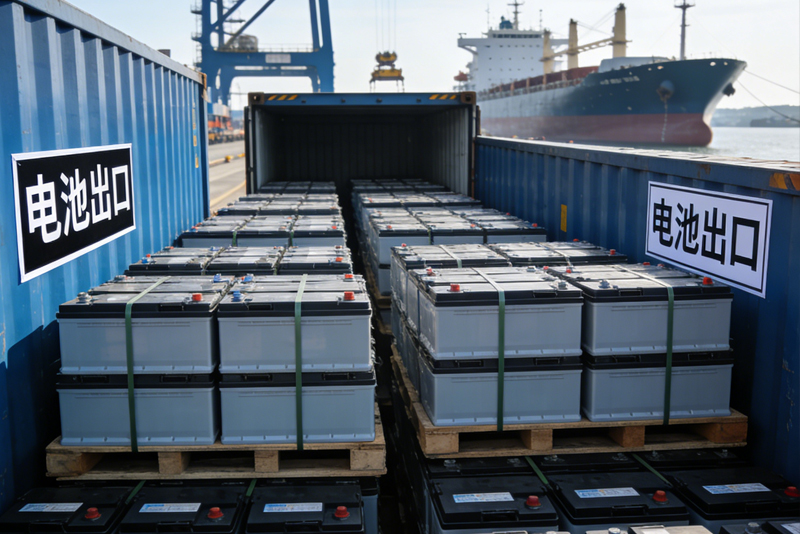
2026 Latest Guide: What Certification Materials are needed for Battery exports to the United States?
-
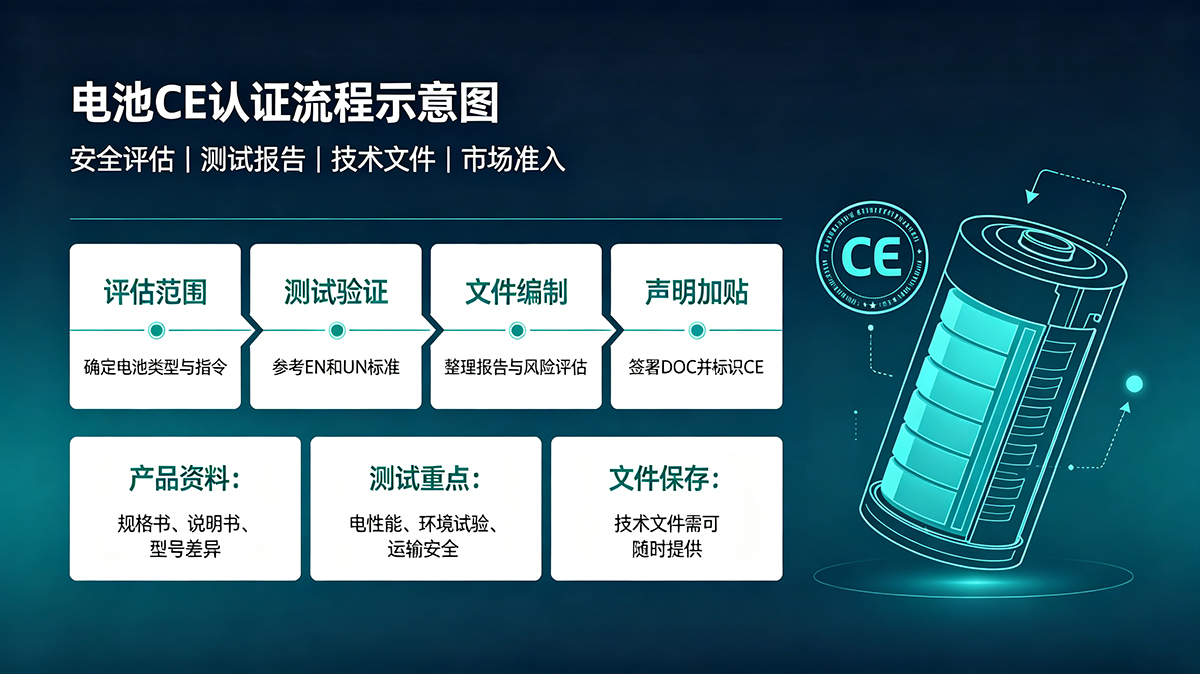
How to obtain the EU CE certification? Compliance Guide for Battery Exports to Europe

What certifications are required for battery exports to Europe? Key Points Analysis of CE Certification
The export of batteries to Europe requires not only production capacity but also compliance with the regulatory requirements of the target market. As an important compliance step in the European market, the EU CE certification requires enterprises to plan in combination with product types, safety standards and regulatory requirements.
How to obtain the EU CE certification? Compliance Guide for Battery Exports to Europe
For battery enterprises, entering the European market requires not only focusing on product performance but also attaching great importance to regulatory compliance. The EU CE certification is not only a testing requirement but also an important way for enterprises to establish a product safety system. Understanding the battery CE certification process in advance, clarifying the testing standards and improving the technical data can help enterprises reduce export risks and enhance the stability of their products entering the European market.
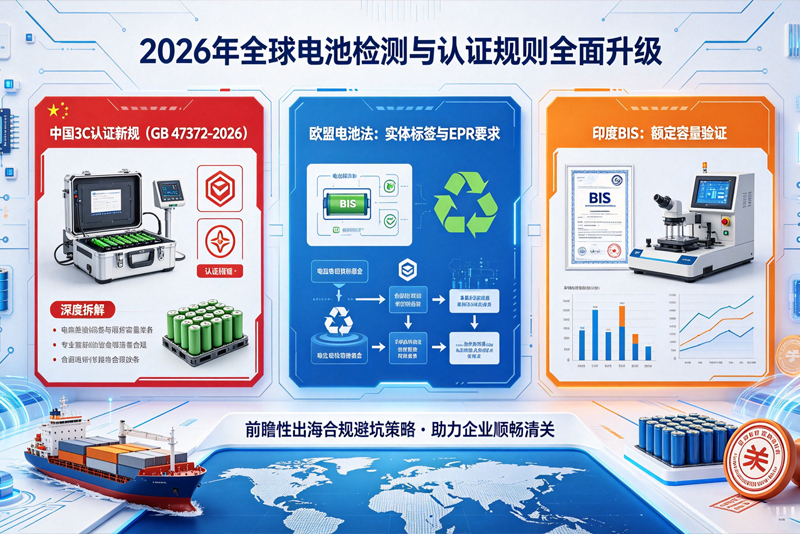
A Comprehensive Analysis of the New Battery Testing and Certification Regulations: Advanced Guidelines for Battery Customs Clearance and Compliance in Various Countries in 2026
With the continuous upgrading of global green and low-carbon transformation and consumer electronics safety regulation, the testing and certification standards of the battery industry have undergone an all-round iteration in 2026. From the update of the new national standards for domestic mobile power banks and the 3C certification rules, to the implementation of the entity labels under the new EU battery Law, and then to the tightening of testing requirements in emerging markets, major economies around the world are reshaping the battery supply chain with stricter "compliance access vouchers". This article provides you with an in-depth analysis of the new trends in global battery customs clearance and compliance in 2026, helping you make precise plans and break through to go global.
How to obtain certification for energy storage batteries? Standards, processes and frequently asked questions
 Click:179编辑: 诚测检测CCJC
 Time:2026-10-27 14:43:02
When exporting energy storage batteries or participating in domestic grid-connected energy storage projects, many manufacturers get stuck at the compliance stage. Purchasers, general contractors, and overseas customers all request certifications for energy storage batteries. However, many practitioners fail to distinguish the applicable boundaries of different certificates, choose the wrong standards, and omit test items. This can result in delays in the project delivery cycle at best, and at worst, the goods may be detained at the port and unable to be included in the project tender list. Many people mistakenly believe that the certification of energy storage batteries is just a general certificate. In fact, it is a compliance testing system that fits the usage scenarios and target markets, and it is also the basic threshold for energy storage products to enter the market.

Many beginners in the market tend to fall into a misunderstanding, thinking that as long as they obtain a certificate, they can be used in all scenarios. The certification of energy storage batteries needs to match the corresponding standards based on the product form, application scenarios and sales regions. The testing focuses of different standards vary greatly.
Transportation safety certification: mainly UN38.3, it is a basic test for the sea, land and air transportation of lithium batteries, including items such as vibration, shock, high and low temperature cycling, and external short circuit. As long as it involves battery freight transportation, this report is basically required to be accompanied.
Product safety certification: IEC 62619 is aimed at industrial energy storage battery systems, while IEC 62133 is mostly used for small energy storage cells and portable energy storage products, focusing on verifying safety risk points such as thermal runaway protection, overcharge protection, and insulation withstand voltage.
Grid connection performance tests: For grid-connected energy storage power stations, in addition to safety tests, it is also necessary to complete capacity calibration, cycle life, conversion efficiency, BMS communication, grid adaptability and other items. It is an important reference for the grid connection acceptance of domestic energy storage projects.
Overseas market specialized certification: UL1973 is commonly used for sales to the North American market. For the EU market, it is necessary to comply with the relevant requirements under the CE directive. Japan, South Korea, and Southeast Asia also have their own localized compliance norms.
In simple terms, before initiating the certification of energy storage batteries, enterprises should prioritize confirming two core pieces of information: whether this energy storage battery is for household, commercial and industrial use, or large-scale power station energy storage, and whether the product is planned to be sold in the domestic or overseas market. Only in this way can they accurately determine the testing standards and avoid repetitive testing and cost waste.
The basic process of energy storage battery certification
The entire certification process is logically clear, but sufficient time should be reserved for each step. It is not recommended to rush to obtain the certification at the last minute.
Demand sorting and confirmation: Determine the specifications of the battery cells, the capacity of the energy storage system, the scope of certification, and the target market. The laboratory or compliance consultant will sort out the test items that need to be carried out.
Sample submission for testing: Send the specified quantity of samples to a qualified third-party laboratory in accordance with the standard requirements to conduct tests on safety, electrical performance, environmental reliability and other items.
Problem rectification and re-testing: If any non-conformities occur during the testing process, the R&D and production ends need to adjust the structure, BMS strategy or cell selection. After the rectification is completed, samples should be resent for re-testing.
Certificate and Report issuance: After all items pass the tests, the issuing authority will issue a formal certificate and a complete test report.
Continuous maintenance of certificates: Some certifications include annual factory audits. When there are changes in the structure or materials of mass-produced products, timely reporting is also required to ensure the consistency between mass-produced products and certified samples.
The overall cycle is strongly related to the maturity of the product. A mature solution may be completed within a few weeks. For energy storage systems in the new product development stage, including the rectification period, it is also quite common for them to take several months. There is no fixed and uniform standard for the cost. It is mainly determined by battery capacity, the number of test items, the issuing authority, and whether multiple rectifications have been carried out. Enterprises can compare several qualified laboratories and make a comprehensive assessment.
Three easily overlooked compliance details
Many enterprises still encounter compliance risks after obtaining certificates, mostly due to the neglect of the following details. First, the mass-produced products must be consistent with the certified samples. Once the battery cell model, BMS version, casing structure or protection circuit is modified, the validity of the certificate will be affected. If you modify the model privately, you will face the risk of failing the inspection. Second, industry standards are in a state of dynamic update. The iteration speed of regulations related to energy storage safety is relatively fast. Before bidding or shipping, it is necessary to confirm with the customer whether the standard version corresponding to the certificate is recognized to avoid obtaining an old version of the certificate that cannot be used. Thirdly, the certification of energy storage batteries does not mean full compliance. In addition to battery body certification, some countries also have supporting requirements such as battery recycling, traceability, and customs declaration. Export business needs to be planned simultaneously and cannot only focus on battery inspection certificates.
For enterprises in the energy storage industry, the certification of energy storage batteries is not only a certificate for bidding and customs clearance, but also a comprehensive product safety check. Relying on the design flaws exposed during the testing process, enterprises can optimize the BMS protection logic and improve the thermal management plan, reducing the safety hazards of energy storage products in the later use from the source. Only by choosing the right standards in line with one's own business scenarios, planning the cycle in advance, and doing a good job in sample and mass production control can certification become a driving force for business expansion rather than a bottleneck hindering project progress.
相关BlOG
-
What certifications are required for battery exports to Europe? Key Points Analysis of CE Certification
The export of batteries to Europe requires not only production capacity but also compliance with the regulatory requirements of the target market. As an important compliance step in the European market, the EU CE certification requires enterprises to plan in combination with product types, safety standards and regulatory requirements.
13162026-07-10
-
How to obtain the EU CE certification? Compliance Guide for Battery Exports to Europe
For battery enterprises, entering the European market requires not only focusing on product performance but also attaching great importance to regulatory compliance. The EU CE certification is not only a testing requirement but also an important way for enterprises to establish a product safety system. Understanding the battery CE certification process in advance, clarifying the testing standards and improving the technical data can help enterprises reduce export risks and enhance the stability of their products entering the European market.
12272026-07-06
-
A Comprehensive Analysis of the New Battery Testing and Certification Regulations: Advanced Guidelines for Battery Customs Clearance and Compliance in Various Countries in 2026
With the continuous upgrading of global green and low-carbon transformation and consumer electronics safety regulation, the testing and certification standards of the battery industry have undergone an all-round iteration in 2026. From the update of the new national standards for domestic mobile power banks and the 3C certification rules, to the implementation of the entity labels under the new EU battery Law, and then to the tightening of testing requirements in emerging markets, major economies around the world are reshaping the battery supply chain with stricter "compliance access vouchers". This article provides you with an in-depth analysis of the new trends in global battery customs clearance and compliance in 2026, helping you make precise plans and break through to go global.
12072026-07-23