
 English
 中文
-

What are the battery certifications? What are the standards for battery certification
-
Leading Global Compliance: In-depth Dissection of the New IS/IEC 62368-1:2023 Electronic Safety Standard
-
2026 India BIS Update Barometer: Countdown to Mandatory Version Replacement for XR and Electronic Products
-
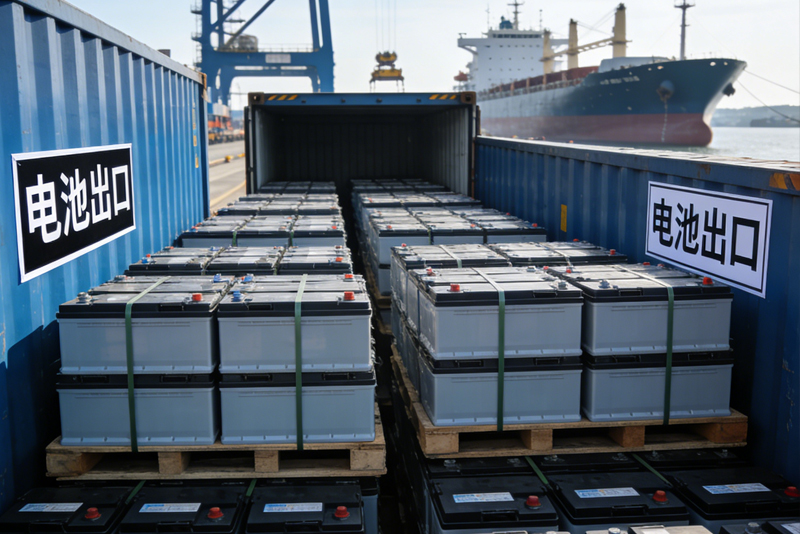
2026 Latest Guide: What Certification Materials are needed for Battery exports to the United States?
-
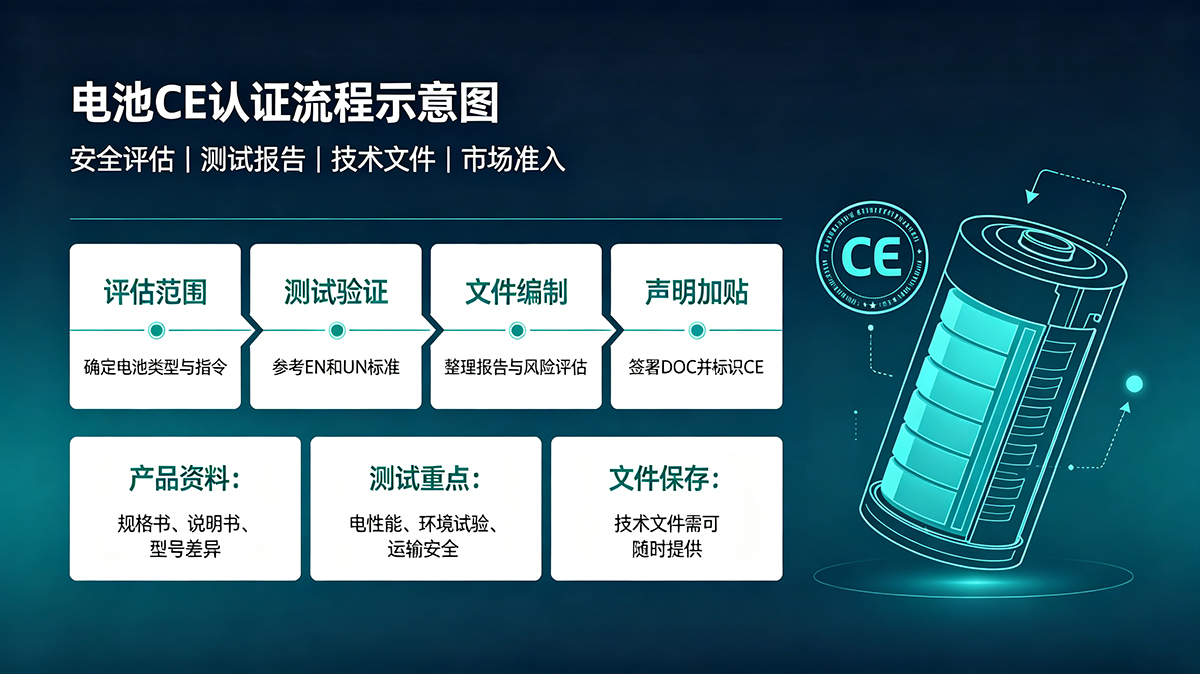
How to obtain the EU CE certification? Compliance Guide for Battery Exports to Europe
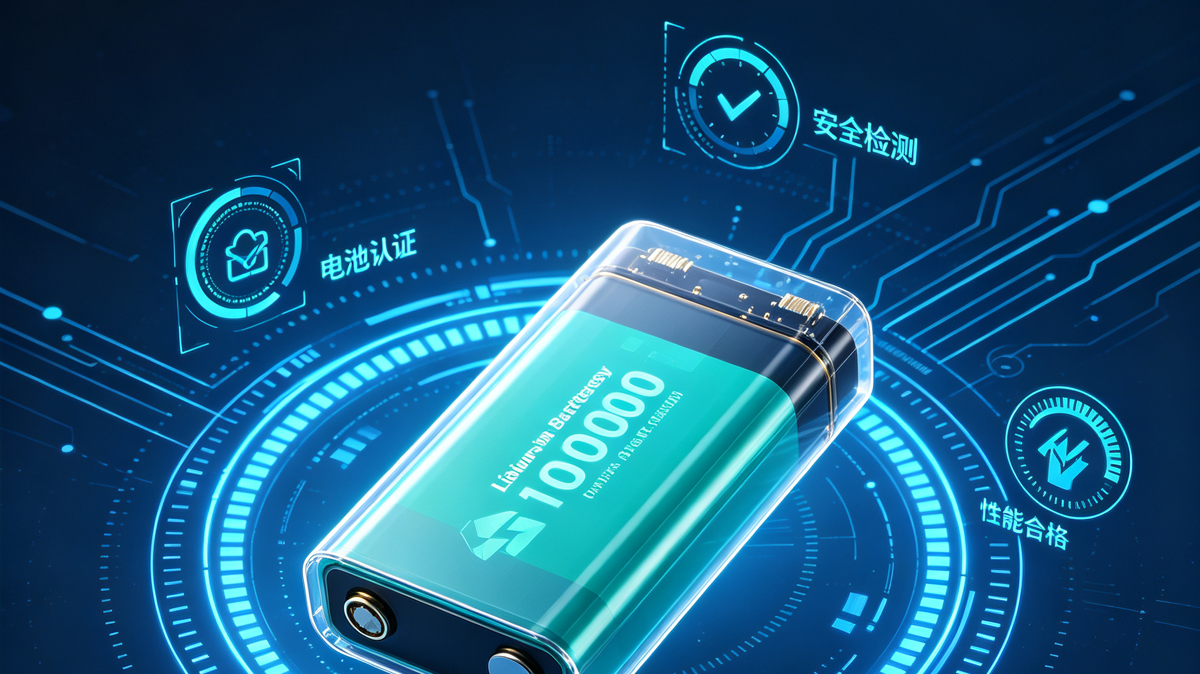
What certifications are required for battery exports to Europe? Key Points Analysis of CE Certification
The export of batteries to Europe requires not only production capacity but also compliance with the regulatory requirements of the target market. As an important compliance step in the European market, the EU CE certification requires enterprises to plan in combination with product types, safety standards and regulatory requirements.
How to obtain the EU CE certification? Compliance Guide for Battery Exports to Europe
For battery enterprises, entering the European market requires not only focusing on product performance but also attaching great importance to regulatory compliance. The EU CE certification is not only a testing requirement but also an important way for enterprises to establish a product safety system. Understanding the battery CE certification process in advance, clarifying the testing standards and improving the technical data can help enterprises reduce export risks and enhance the stability of their products entering the European market.
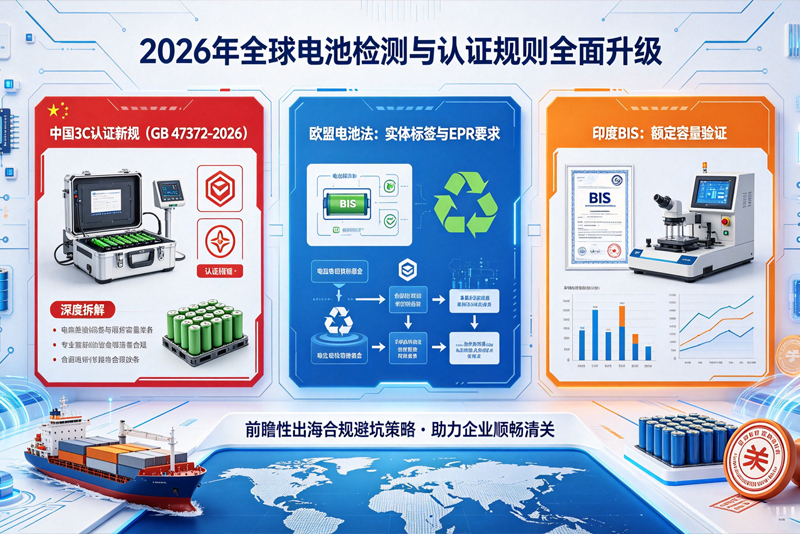
A Comprehensive Analysis of the New Battery Testing and Certification Regulations: Advanced Guidelines for Battery Customs Clearance and Compliance in Various Countries in 2026
With the continuous upgrading of global green and low-carbon transformation and consumer electronics safety regulation, the testing and certification standards of the battery industry have undergone an all-round iteration in 2026. From the update of the new national standards for domestic mobile power banks and the 3C certification rules, to the implementation of the entity labels under the new EU battery Law, and then to the tightening of testing requirements in emerging markets, major economies around the world are reshaping the battery supply chain with stricter "compliance access vouchers". This article provides you with an in-depth analysis of the new trends in global battery customs clearance and compliance in 2026, helping you make precise plans and break through to go global.
What are the certifications for lithium batteries? A Comprehensive Analysis of Essential Items for Export Transportation
 Click:227编辑: 诚测检测CCJC
 Time:2026-10-20 14:31:21
For friends engaged in the export of lithium batteries, the most headache-inducing issue is often not the products themselves, but rather "what exactly needs to be certified". After asking around, some people said UN38.3, some said CE, and some said UL. The prices and cycles also vary. The more I asked, the more confused it became. This article clearly explains the common types, essential items and process cycles of lithium battery certification, helping shipment avoid detours.
Lithium battery certification is not a single certificate but a set of compliance requirements for different uses, which can be roughly divided into three categories:
Transportation safety category: mainly UN38.3, involving the transportation of dangerous goods such as air, sea and express delivery.
Product access category: such as CE, CB, UL, corresponding to the access requirements of different target markets.
Chemicals and documentation: such as MSDS (Safety Data Sheet), transportation appraisal reports and other accompanying documents.
It is advisable to clarify the purpose before discussing the application for the certificate to avoid spending unnecessary money.
Ii. Must-do for Export: UN38.3
Almost all lithium batteries transported by air or sea must undergo UN38.3 certification. Based on the United Nations' Recommendations on the Transport of Dangerous Goods, it assesses eight test items including overcharging, overdischarging, external short circuit, thermal shock, vibration and drop, simulating extreme situations that may be encountered during transportation to prove the safety of battery transportation.
A often overlooked point: It's not "only done at the exit". For domestic delivery of lithium batteries, both express delivery and logistics may require UN38.3 reports and transportation appraisals. Preparing them in advance can avoid the trouble of being stuck at the last minute.
Iii. Common Product Access Certifications
CE certification: A common mark for entering the EU market. Lithium batteries usually involve the Battery Directive and harmonized standards such as EMC and LVD.
CB certification: A mutual recognition certificate under the IECEE system. One test report can be transferred in multiple countries and is suitable for multi-market layout.
UL/IEC 62133: A common safety standard for consumer and industrial batteries. In the North American market, UL is often used as the threshold.
Others: South Korea KC, Japan PSE, etc., will be supplemented and handled according to the target market.
Iv. Inspection Items, Cycles and Costs
The inspection items mainly focus on three aspects: safety (short circuit, overcharge, overdischarge), environment (temperature, vibration, shock), and transportation (T1-T8 of UN38.3). The overall cycle is usually 2 to 6 weeks. The cost varies depending on the number of projects and the selected laboratory. The quotations from regular laboratories are relatively transparent.
Here's a practical suggestion: Leave enough time for the delivery period and don't wait until the shipping deadline to handle it. Last-minute expedited delivery is not only expensive but may also delay the entire batch of shipments.
Five. Three common pitfalls to fall into
Just getting one type of certificate means you are fully compliant: Different uses and different markets have different requirements. First, make a list and then check each item one by one.
Cheap reports carry high risks: Make sure to choose qualified laboratories whose reports can be verified online to avoid "fake certificates failing to pass the inspection".
Ignoring the consistency between the certificate and the product: If the battery cell model, capacity or casing structure is changed, a re-evaluation is often required.
Ultimately, lithium battery certification is about building a bridge between "safety" and "market access". First, think clearly about the product's purpose and target market, and then check each of the mandatory items such as UN38.3 and CE one by one. Only in this way can the shipment be stable. I hope this summary of the types of certifications can help you save money and pass smoothly.
相关BlOG
-
What certifications are required for battery exports to Europe? Key Points Analysis of CE Certification
The export of batteries to Europe requires not only production capacity but also compliance with the regulatory requirements of the target market. As an important compliance step in the European market, the EU CE certification requires enterprises to plan in combination with product types, safety standards and regulatory requirements.
13162026-07-10
-
How to obtain the EU CE certification? Compliance Guide for Battery Exports to Europe
For battery enterprises, entering the European market requires not only focusing on product performance but also attaching great importance to regulatory compliance. The EU CE certification is not only a testing requirement but also an important way for enterprises to establish a product safety system. Understanding the battery CE certification process in advance, clarifying the testing standards and improving the technical data can help enterprises reduce export risks and enhance the stability of their products entering the European market.
12272026-07-06
-
A Comprehensive Analysis of the New Battery Testing and Certification Regulations: Advanced Guidelines for Battery Customs Clearance and Compliance in Various Countries in 2026
With the continuous upgrading of global green and low-carbon transformation and consumer electronics safety regulation, the testing and certification standards of the battery industry have undergone an all-round iteration in 2026. From the update of the new national standards for domestic mobile power banks and the 3C certification rules, to the implementation of the entity labels under the new EU battery Law, and then to the tightening of testing requirements in emerging markets, major economies around the world are reshaping the battery supply chain with stricter "compliance access vouchers". This article provides you with an in-depth analysis of the new trends in global battery customs clearance and compliance in 2026, helping you make precise plans and break through to go global.
12072026-07-23