
 English
 中文

-

What are the battery certifications? What are the standards for battery certification
-
Leading Global Compliance: In-depth Dissection of the New IS/IEC 62368-1:2023 Electronic Safety Standard
-
2026 India BIS Update Barometer: Countdown to Mandatory Version Replacement for XR and Electronic Products
-
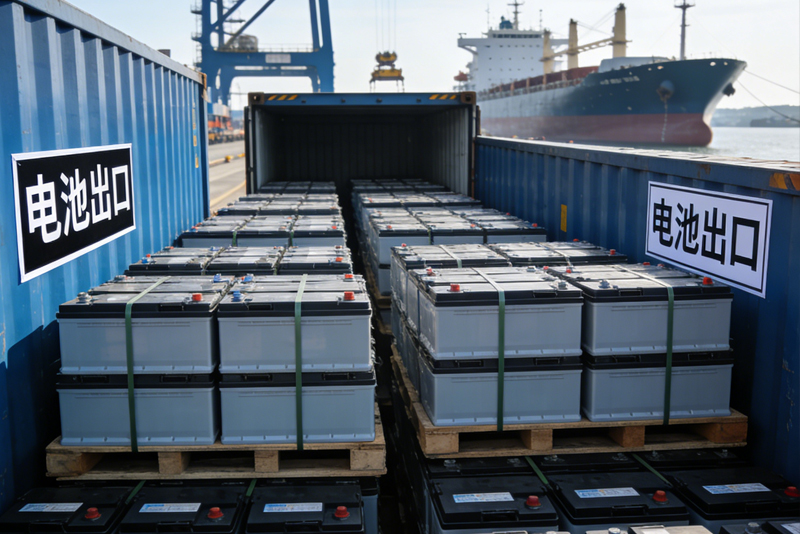
2026 Latest Guide: What Certification Materials are needed for Battery exports to the United States?
-
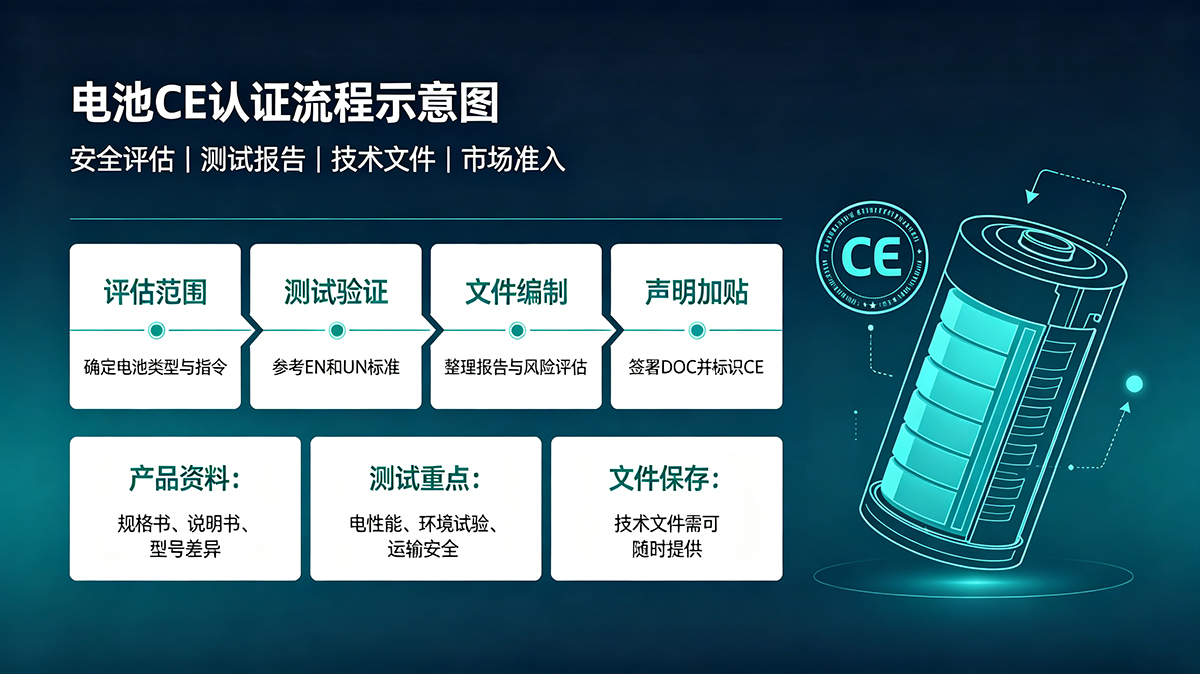
How to obtain the EU CE certification? Compliance Guide for Battery Exports to Europe
What certifications are required for battery exports to Europe? Key Points Analysis of CE Certification
The export of batteries to Europe requires not only production capacity but also compliance with the regulatory requirements of the target market. As an important compliance step in the European market, the EU CE certification requires enterprises to plan in combination with product types, safety standards and regulatory requirements.
How to obtain the EU CE certification? Compliance Guide for Battery Exports to Europe
For battery enterprises, entering the European market requires not only focusing on product performance but also attaching great importance to regulatory compliance. The EU CE certification is not only a testing requirement but also an important way for enterprises to establish a product safety system. Understanding the battery CE certification process in advance, clarifying the testing standards and improving the technical data can help enterprises reduce export risks and enhance the stability of their products entering the European market.
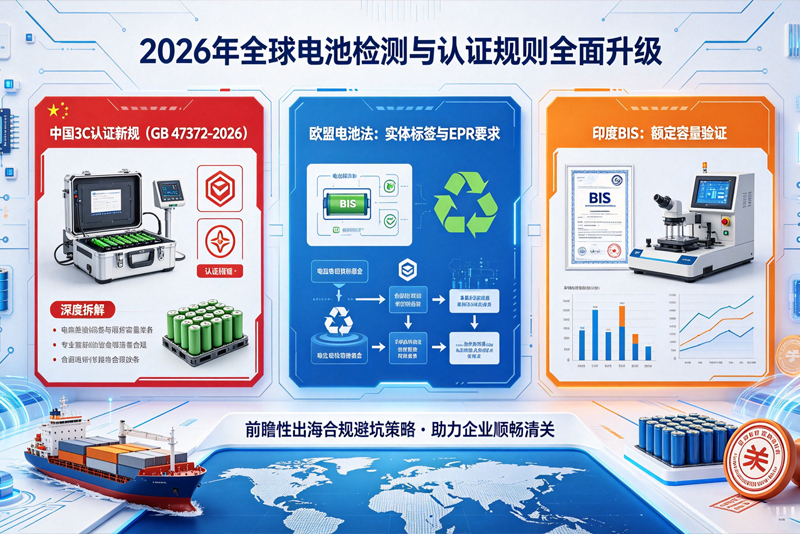
A Comprehensive Analysis of the New Battery Testing and Certification Regulations: Advanced Guidelines for Battery Customs Clearance and Compliance in Various Countries in 2026
With the continuous upgrading of global green and low-carbon transformation and consumer electronics safety regulation, the testing and certification standards of the battery industry have undergone an all-round iteration in 2026. From the update of the new national standards for domestic mobile power banks and the 3C certification rules, to the implementation of the entity labels under the new EU battery Law, and then to the tightening of testing requirements in emerging markets, major economies around the world are reshaping the battery supply chain with stricter "compliance access vouchers". This article provides you with an in-depth analysis of the new trends in global battery customs clearance and compliance in 2026, helping you make precise plans and break through to go global.
How to handle common problems related to battery certification for enterprises exporting battery products?
 Click:51编辑: 诚测检测CCJC-电池认证检测机构
 Time:2026-11-13 10:23:51

This is one of the most common problems for export enterprises. If the model, voltage, capacity, size, manufacturer or series name on the report does not match the actual shipped product, it may lead to the customer's review not being approved or the customs clearance being blocked.
Handling suggestions
Establish a correspondence table between product models and reports;
When there are different capacity versions of the same model, evaluate them separately.
After the product is revised, confirm in a timely manner whether supplementary testing is needed.
Check the label, packing list, invoice and report information before shipment.
Enterprises can regard the battery model parameters as "ID card information", and any inconsistency may affect the validity of the data.
Ii. Common Issues in Battery Certification II: Conflicts between customer Requirements and report Requirements
Some clients may put forward specific standards, specific institutions or specific format requirements that the enterprise's original reports cannot cover. In this case, enterprises cannot simply judge that "the customer's requirements are unreasonable", but should first determine whether the customer's requirements come from brand review, import from the destination country or supply chain compliance.
Handling suggestions
Ask the customer to provide written requirements or standard numbers;
Compare the items covered by the existing reports;
Evaluate whether supplementary testing is more efficient than new testing;
Reserve time for compliance confirmation during the quotation and delivery period.
Iii. Common Issues with Battery Certification Three: Not recognized during transportation
The obstruction of transportation of products with batteries is not necessarily due to the quality of the batteries themselves, but could also be caused by insufficient assessment of packaging, marking, documentation or transportation category.
Enterprises can focus on inspecting:
Is the UN 38.3 test summary complete?
Whether the transportation appraisal certificate covers the current shipped products;
Whether the packaging meets the requirements of the corresponding mode of transportation;
Whether the shipping marks and warning signs are clear;
Whether the transportation labels of lithium batteries are correctly affixed.
Air transportation is more sensitive to battery-related products. Enterprises should confirm the requirements of the carrier and freight forwarder before booking space.
Four. Common Issues in Battery Certification Four: The import requirements of the destination country are not clear
Different countries and regions have different understandings and implementations of battery-related regulations, and sometimes customers may not be able to fully explain the import requirements. Enterprises cannot rely solely on customers' oral confirmation.
Handling suggestions
Specify the export country or region;
Understand the compliance practices of the client's industry;
Check whether local registration, certification or supporting documents are required;
Keep the customer's written confirmation record.
V. Common Issues Regarding Battery Certification Five: Tight delivery time and last-minute request for additional documents
Many export enterprises are accustomed to handling battery certification only when orders are close to delivery, which results in insufficient testing cycles and affects shipment.
Suggested approach
When new customers make inquiries, understand the compliance requirements simultaneously.
The sample stage begins to organize battery data.
Complete key inspections before bulk shipment;
Establish a pre-evaluation mechanism for high-frequency export models.
For products with stable exports, enterprises can establish a "list of commonly used battery certifications" to reduce the cost of repetitive communication.
Vi. Practical Methods for Enterprises to Establish Battery Certification Compliance Lists
Product list
Record information such as battery type, model, voltage, capacity, energy, manufacturer, and whether it is equipped with a protection circuit.
2. Destination list
Record the major export countries or regions, as well as the corresponding customer requirements and regulatory changes.
3. List of materials
Including test reports, test summaries, transportation appraisal certificates, MSDS/SDS, label samples, packaging instructions, etc.
4. Validity period management
Battery-related reports and materials may also be updated. Enterprises should pay attention to the updates of standards, changes in customer audits and product revisions.
Vii. Key Judgments in Battery Certification Processing
Enterprises do not need to pursue complex terms, but they should possess the following judgment abilities:
Does the report correspond to the product?
Are the customer's requirements clear?
Are the transportation documents complete?
Does the destination country require coverage?
Are the materials consistent with each other?
These five questions can solve most common problems in the export of battery-powered products.
Conclusion
Many of the battery certification issues encountered by enterprises exporting battery-powered products are not technical obstacles but rather problems in data management and process management. As long as enterprises sort out product information, customer requirements, transportation conditions and compliance requirements of the destination country in advance and establish a basic compliance list, they can reduce common problems such as non-recognition of reports, inconsistent materials and transportation disruptions.
- Previous Article:
- Next Article: How can battery certification be processed more smoothly when exporting products with batteries?
相关BlOG
-
What certifications are required for battery exports to Europe? Key Points Analysis of CE Certification
The export of batteries to Europe requires not only production capacity but also compliance with the regulatory requirements of the target market. As an important compliance step in the European market, the EU CE certification requires enterprises to plan in combination with product types, safety standards and regulatory requirements.
13162026-07-10
-
How to obtain the EU CE certification? Compliance Guide for Battery Exports to Europe
For battery enterprises, entering the European market requires not only focusing on product performance but also attaching great importance to regulatory compliance. The EU CE certification is not only a testing requirement but also an important way for enterprises to establish a product safety system. Understanding the battery CE certification process in advance, clarifying the testing standards and improving the technical data can help enterprises reduce export risks and enhance the stability of their products entering the European market.
12272026-07-06
-
A Comprehensive Analysis of the New Battery Testing and Certification Regulations: Advanced Guidelines for Battery Customs Clearance and Compliance in Various Countries in 2026
With the continuous upgrading of global green and low-carbon transformation and consumer electronics safety regulation, the testing and certification standards of the battery industry have undergone an all-round iteration in 2026. From the update of the new national standards for domestic mobile power banks and the 3C certification rules, to the implementation of the entity labels under the new EU battery Law, and then to the tightening of testing requirements in emerging markets, major economies around the world are reshaping the battery supply chain with stricter "compliance access vouchers". This article provides you with an in-depth analysis of the new trends in global battery customs clearance and compliance in 2026, helping you make precise plans and break through to go global.
12072026-07-23