
 English
 中文
-

What are the battery certifications? What are the standards for battery certification
-
Leading Global Compliance: In-depth Dissection of the New IS/IEC 62368-1:2023 Electronic Safety Standard
-
2026 India BIS Update Barometer: Countdown to Mandatory Version Replacement for XR and Electronic Products
-
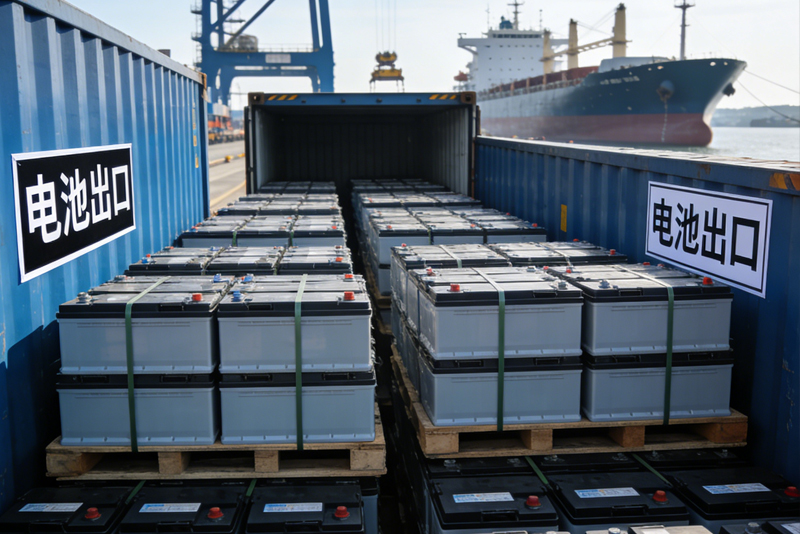
2026 Latest Guide: What Certification Materials are needed for Battery exports to the United States?
-
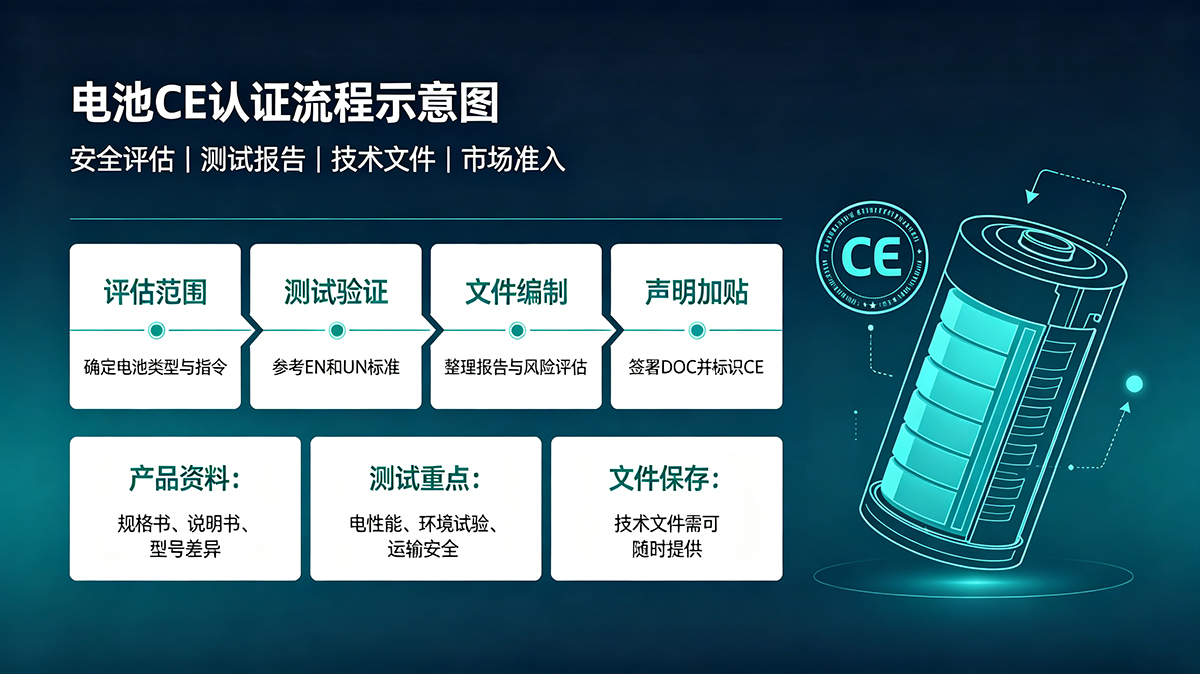
How to obtain the EU CE certification? Compliance Guide for Battery Exports to Europe
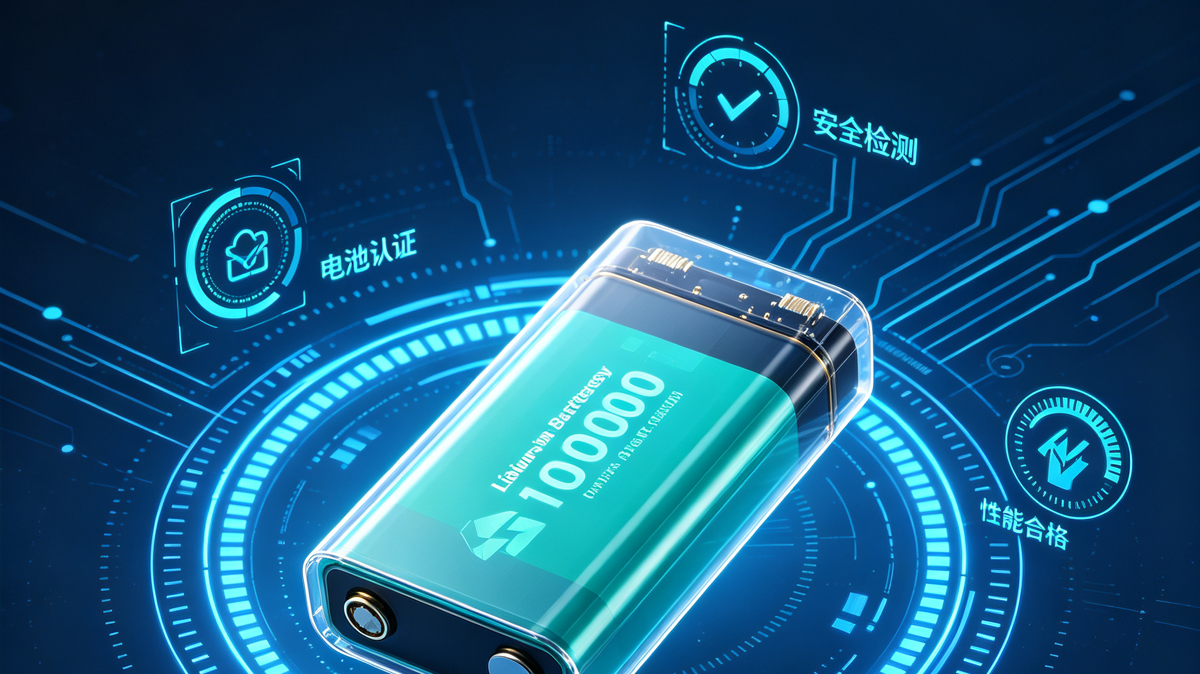
What certifications are required for battery exports to Europe? Key Points Analysis of CE Certification
The export of batteries to Europe requires not only production capacity but also compliance with the regulatory requirements of the target market. As an important compliance step in the European market, the EU CE certification requires enterprises to plan in combination with product types, safety standards and regulatory requirements.
How to obtain the EU CE certification? Compliance Guide for Battery Exports to Europe
For battery enterprises, entering the European market requires not only focusing on product performance but also attaching great importance to regulatory compliance. The EU CE certification is not only a testing requirement but also an important way for enterprises to establish a product safety system. Understanding the battery CE certification process in advance, clarifying the testing standards and improving the technical data can help enterprises reduce export risks and enhance the stability of their products entering the European market.
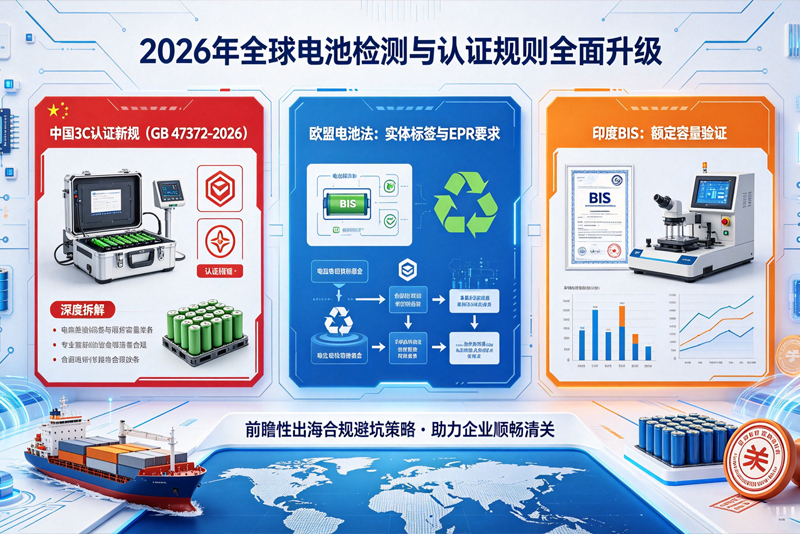
A Comprehensive Analysis of the New Battery Testing and Certification Regulations: Advanced Guidelines for Battery Customs Clearance and Compliance in Various Countries in 2026
With the continuous upgrading of global green and low-carbon transformation and consumer electronics safety regulation, the testing and certification standards of the battery industry have undergone an all-round iteration in 2026. From the update of the new national standards for domestic mobile power banks and the 3C certification rules, to the implementation of the entity labels under the new EU battery Law, and then to the tightening of testing requirements in emerging markets, major economies around the world are reshaping the battery supply chain with stricter "compliance access vouchers". This article provides you with an in-depth analysis of the new trends in global battery customs clearance and compliance in 2026, helping you make precise plans and break through to go global.
The certification process, document preparation and common questions for lithium batteries in small household appliance enterprises
 Click:95编辑: 诚测检测CCJC-电池认证检测机构
 Time:2026-11-07 10:46:56
For small household appliance enterprises, lithium battery certification is often an underestimated but far-reaching aspect in product development. Even if a wireless small household appliance meets expectations in terms of function, appearance and cost, if the safety tests, label information or supply chain records of the battery part are incomplete, it may still delay the time to market.
Lithium battery certification involves multiple aspects such as battery safety, electrical performance, marking instructions, transportation rules and factory quality capabilities. It is more efficient for enterprises to establish a clear certification plan at the project initiation stage than to temporarily supplement materials later.
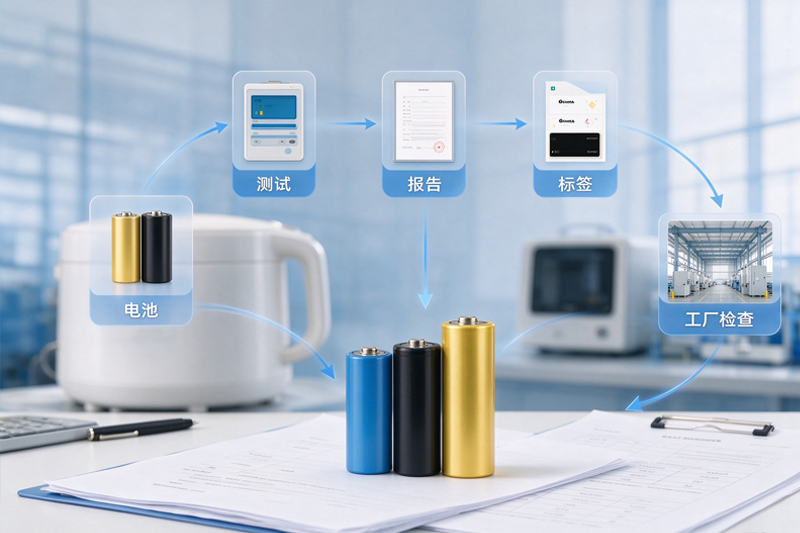
1. Determine the product category and target market
Different small household appliances, such as electric toothbrushes, vacuum cleaners, handheld vacuum cleaners, beauty devices and kitchen appliances, have different working methods and battery usage environments, and the certification requirements may also vary. Enterprises should first clarify the product category, battery type, capacity range and sales market.
This step determines the subsequent testing standards, data list and certification path, and is the starting point of the entire compliance work.
2. Evaluate battery suppliers and the completeness of the data
Enterprises should confirm in advance whether battery suppliers can provide materials such as cell specification sheets, battery pack specification sheets, BOM, protection circuit descriptions, label samples, instruction manuals and test reports. If the supplier's information is incomplete, the subsequent certification progress will be directly affected.
It is recommended to verify the data simultaneously during the sample selection stage instead of starting to collect it after the prototype is completed.
3. Conduct sample testing and technical data review
Lithium battery certification usually requires safety tests on battery samples and reviews of technical documents. The test items may include overcharging, overdischarging, short circuit, overcurrent, compression, thermal cycling, vibration and drop, etc. The specific items shall be subject to the applicable standards and the requirements of the certification body.
Enterprises should ensure that the samples sent for testing are consistent with the materials for measurement, and avoid the situation where "one set of test samples and another set of measurement materials" occur.
4. Complete factory inspections or quality system audits
Some certifications will also involve factory inspections or quality system audits, with a focus on whether the enterprise has the ability to achieve stable production and consistency control. This includes contents such as material management, production processes, inspection records, control of non-conforming products and change management.
For small household appliance enterprises, factory inspections are not just a formality but an important step to verify whether the products can be produced continuously and stably.
Ii. What documents are needed for lithium battery certification
1. Battery technology data
Battery technical data mainly include cell specification sheets, battery pack specification sheets, circuit schematic diagrams, BOM tables, key component lists, label samples, instruction manuals and structural descriptions, etc. These materials are used to prove the battery design parameters and functional configurations.
2. Test reports and compliance documents
Enterprises need to provide relevant test reports of battery cells or battery packs and confirm that the model, parameters and supplier in the report are consistent with the actual product. If the report is issued by a subcontracted laboratory, it is also necessary to confirm whether the certification body accepts the qualifications of this laboratory.
3. Production and quality records
When conducting factory inspections, enterprises usually need to provide documents such as production processes, inspection standards, equipment calibration records, supplier management records, and records of handling non-conforming products. These materials are used to prove that the enterprise has a stable mass production capacity.
Iii. Common Issues in Lithium Battery Certification
1. The information does not match the sample
This is a relatively common problem for small household appliance enterprises. For instance, if the battery cell model, capacity or protection board parameters in the sample do not match the data, it will lead to the failure of the review.
2. The labels and instructions are incomplete
Battery labels and instructions are one of the key points of certification audits. The absence of model, capacity, voltage, warning words, manufacturer information and instructions for use may all affect the results.
3. Change management is not standardized
During the mass production process of the product, if the battery supplier, cell model, protection circuit or structure changes, the enterprise should assess whether it affects the certification result. Replacing materials directly without assessment may lead to problems with the validity of the certificate.
Iv. How to Shorten the Certification Cycle of Lithium Batteries
1. Develop a compliance plan in the early stage of the project
During the product definition stage, enterprises should clearly define the target market, product category, battery parameters and certification path, and simultaneously notify R&D, procurement, quality control and suppliers.
2. Choose a battery supplier with complete documentation
Suppliers with complete data can reduce the pressure on enterprises to organize data and also lower the risk of supplementary testing caused by missing data. Enterprises should take the data capabilities of suppliers as one of the assessment items for factory selection.
3. Establish an internal certification list
Enterprises can establish an internal list for lithium battery certification, implementing each item of data, samples, tests, factory inspections and change management one by one to avoid missing key links.
For small household appliance enterprises, lithium battery certification is a compliance task that runs through product design, supply chain and production management. The earlier an enterprise establishes a sense of process, the less likely it is to reduce project delays and repetitive testing costs.
For small household appliance enterprises that hope to steadily expand their market, lithium battery certification is not only a condition for entering the market, but also an important means to improve product quality and supply chain management capabilities.
相关BlOG
-
What certifications are required for battery exports to Europe? Key Points Analysis of CE Certification
The export of batteries to Europe requires not only production capacity but also compliance with the regulatory requirements of the target market. As an important compliance step in the European market, the EU CE certification requires enterprises to plan in combination with product types, safety standards and regulatory requirements.
13162026-07-10
-
How to obtain the EU CE certification? Compliance Guide for Battery Exports to Europe
For battery enterprises, entering the European market requires not only focusing on product performance but also attaching great importance to regulatory compliance. The EU CE certification is not only a testing requirement but also an important way for enterprises to establish a product safety system. Understanding the battery CE certification process in advance, clarifying the testing standards and improving the technical data can help enterprises reduce export risks and enhance the stability of their products entering the European market.
12272026-07-06
-
A Comprehensive Analysis of the New Battery Testing and Certification Regulations: Advanced Guidelines for Battery Customs Clearance and Compliance in Various Countries in 2026
With the continuous upgrading of global green and low-carbon transformation and consumer electronics safety regulation, the testing and certification standards of the battery industry have undergone an all-round iteration in 2026. From the update of the new national standards for domestic mobile power banks and the 3C certification rules, to the implementation of the entity labels under the new EU battery Law, and then to the tightening of testing requirements in emerging markets, major economies around the world are reshaping the battery supply chain with stricter "compliance access vouchers". This article provides you with an in-depth analysis of the new trends in global battery customs clearance and compliance in 2026, helping you make precise plans and break through to go global.
12072026-07-23