
 English
 中文
中文
-

What are the battery certifications? What are the standards for battery certification
-
Leading Global Compliance: In-depth Dissection of the New IS/IEC 62368-1:2023 Electronic Safety Standard
-
2026 India BIS Update Barometer: Countdown to Mandatory Version Replacement for XR and Electronic Products
-
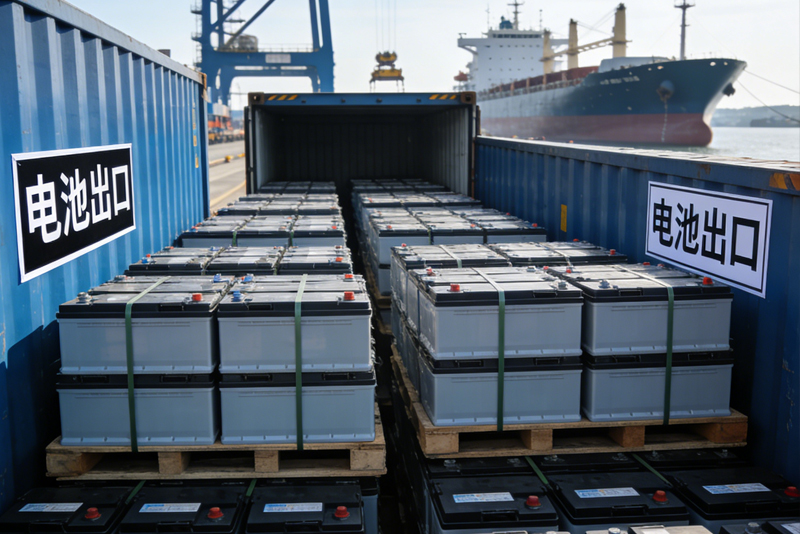
2026 Latest Guide: What Certification Materials are needed for Battery exports to the United States?
-
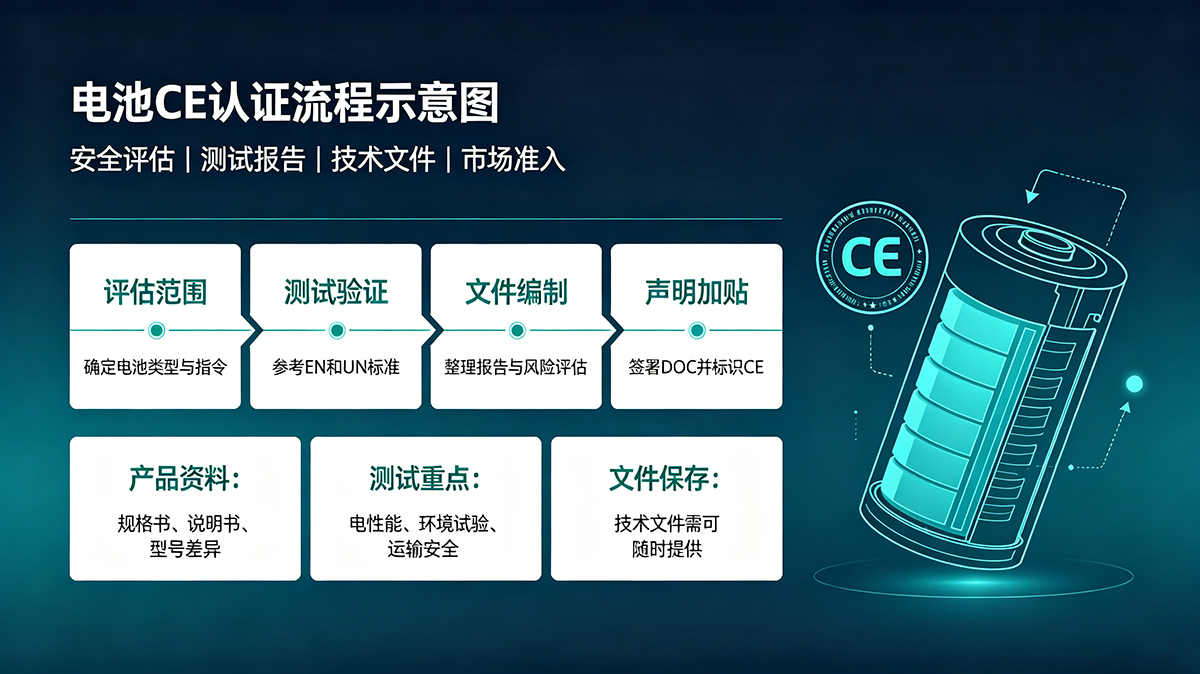
How to obtain the EU CE certification? Compliance Guide for Battery Exports to Europe
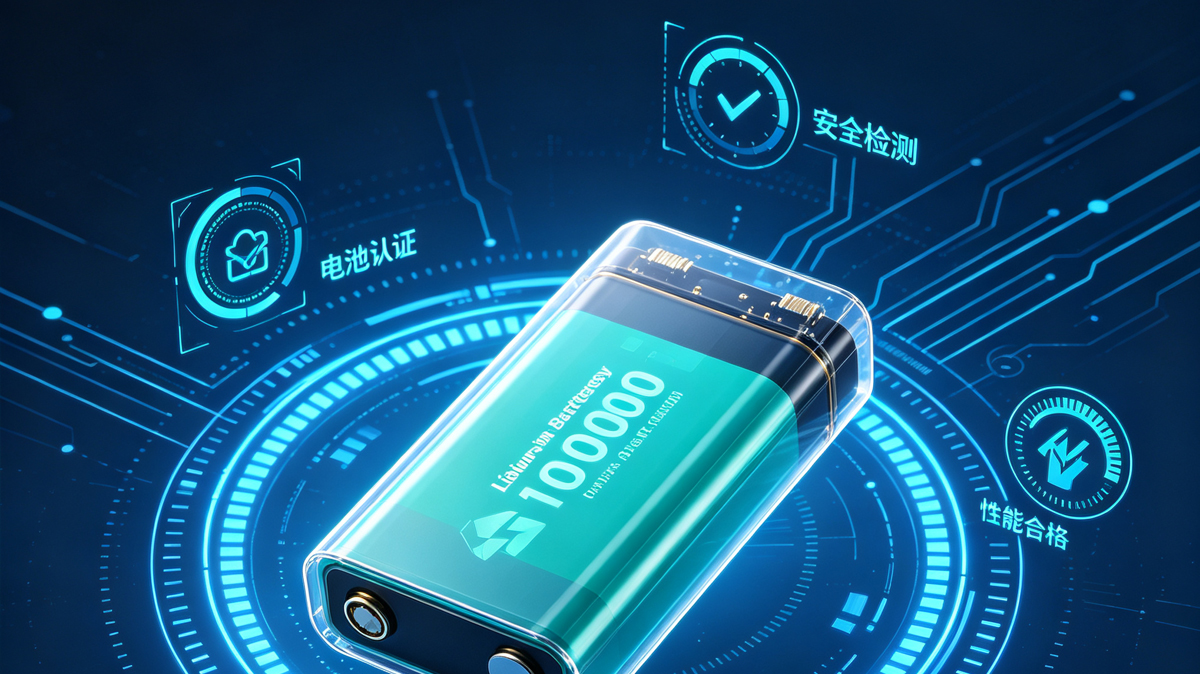
What certifications are required for battery exports to Europe? Key Points Analysis of CE Certification
The export of batteries to Europe requires not only production capacity but also compliance with the regulatory requirements of the target market. As an important compliance step in the European market, the EU CE certification requires enterprises to plan in combination with product types, safety standards and regulatory requirements.
How to obtain the EU CE certification? Compliance Guide for Battery Exports to Europe
For battery enterprises, entering the European market requires not only focusing on product performance but also attaching great importance to regulatory compliance. The EU CE certification is not only a testing requirement but also an important way for enterprises to establish a product safety system. Understanding the battery CE certification process in advance, clarifying the testing standards and improving the technical data can help enterprises reduce export risks and enhance the stability of their products entering the European market.
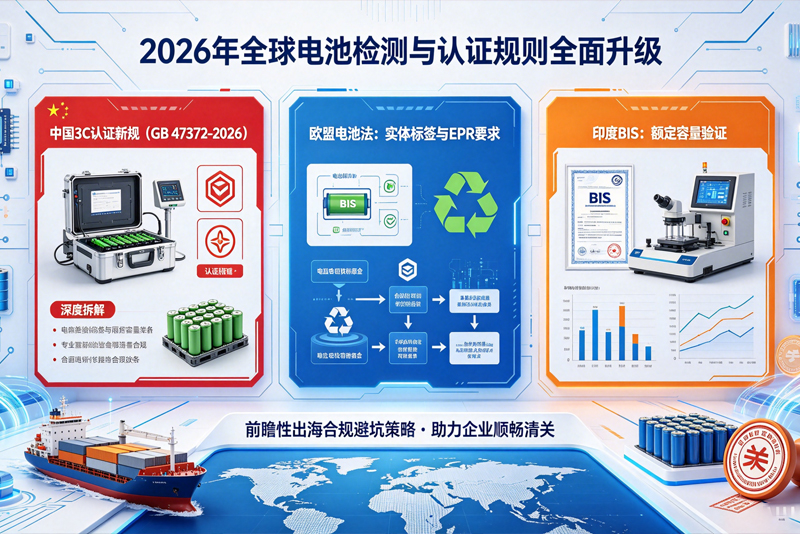
A Comprehensive Analysis of the New Battery Testing and Certification Regulations: Advanced Guidelines for Battery Customs Clearance and Compliance in Various Countries in 2026
With the continuous upgrading of global green and low-carbon transformation and consumer electronics safety regulation, the testing and certification standards of the battery industry have undergone an all-round iteration in 2026. From the update of the new national standards for domestic mobile power banks and the 3C certification rules, to the implementation of the entity labels under the new EU battery Law, and then to the tightening of testing requirements in emerging markets, major economies around the world are reshaping the battery supply chain with stricter "compliance access vouchers". This article provides you with an in-depth analysis of the new trends in global battery customs clearance and compliance in 2026, helping you make precise plans and break through to go global.
The Philippines will implement PS/ICC mandatory certification for power banks and portable power sources! A Guide for Enterprises to Avoid Pitfalls in Compliance Overseas Expansion
 Click:622编辑: 诚测认证
 Time:2026-07-23 14:58:02
To ensure the safety of consumer use, the Bureau of Standards of the Department of Trade and Industry of the Philippines (DTI-BPS) officially issued Circular G/TBT/N/PHL/357 on February 27, 2026. Explicitly include Power Banks and Portable Power Packs within the scope of mandatory certification.
This means that in the future, charging and energy storage products for export or distribution within the Philippines must pass the tests of BPS-recognized laboratories and obtain the PS quality mark or ICC/SOC certificate; otherwise, they will not be able to enter the Philippine market.
1. Core time nodes (critical transition period)
Enterprises need to pay close attention to the following key time points and arrange the testing and certification schedules reasonably:
The release date of the notice is February 27, 2026
Proposed approval date: June 30, 2026
Effective date: 15 days after the official gazette is released (expected to be in mid-July 2026)
Full enforcement: A 12-month transition period will be granted after it takes effect, and it will be officially enforced starting from July 2027. At that time, all unlicensed products will be strictly prohibited from import, sale and customs clearance.
2. Scope of applicable products and technical definition
This new regulation covers charging and energy storage equipment produced, imported, distributed and sold in the Philippines. The specific determination criteria are as follows:
Applicable product types
Power Banks/Mobile power bank
Portable Power Packs (which can be equipped with photovoltaic charging function or integrated with equipment)
Technical conditions and limitations
Voltage requirement: Input/output rated voltage ≤ 60VDC;
Interface requirements: It should have at least one of the following output methods: USB, AC/DC socket, wireless charging or vehicle-mounted interface.
Weight limit: The weight of the equipment that a single person can carry is ≤ 18kg. Portable devices with wheels or handles weigh no more than 23 kilograms.
Exclusion scope: Fixed installation equipment, on-board starting batteries and industrial-grade large-scale energy storage systems are not within the scope of this mandatory requirement.
3. Certification Path and Mandatory Enforcement Standards
Three certification paths (choose one of the three)
Overseas enterprises can choose compliance paths based on their business models:
PS Certification (License Mark) : It is applicable to manufacturers with long-term stable exports and requires factory audits, type tests, and market spot checks.
ICC Certification (Import Compliance Certificate) : Batch inspection and sampling testing are conducted for each batch of imported goods.
SOC Certification (Compliance Statement) : Proof of franchise compliance under specific conditions.
(2) Enforce the testing standards
The product must comply with the following Philippine National Standards (PNS) :
Power bank standard: PNS UL 2056:2025
Portable power supply standard: PNS UL 2743:2026
Core inspection items: temperature rise test, overcharge/overdischarge protection, external short circuit, drop test, heavy object compression, flame retardant grade of the casing and durability of the marking, etc.
(3) Sampling requirements
All samples must be sent to a BPS-accredited laboratory (CAB) for testing
Application for PS certification: Sample 3 sets/model/brand
Application for ICC/SOC certification: Sample 2 sets/model/brand
4. Mandatory Labeling and marking standards
On products and their packaging sold in the Philippine market, the following information must be clearly and permanently marked (any missing, blurred or forged information will be directly determined as a violation) :
Trademark/brand name and product model
Input and output parameters (voltage V/current A/watt-hour Wh)
Rated capacity and energy
Basic information of battery cells (Suggested to be marked
Compliance certification mark (PS or ICC mark and traceability code)
Origin identification (e.g. : MADE IN CHINA)
Safety warnings and safety usage guidelines
5. Application Process and Compliance Suggestions for Overseas Manufacturers
Chinese and other overseas manufacturers must meet the following special requirements when applying for certification:
Overview of the application process
Submit the application: Prepare the technical materials and submit the application to BPS.
Document review: BPS reviews product specification sheets, circuit diagrams, label drafts, certification reports, etc.
Sample submission for inspection: Send the sample to a BPS-accredited laboratory to complete the full set of PNS standard tests.
Factory audit/Inspection: The application for PS requires cooperation with the annual factory audit. Applying for ICC requires cooperation with batch spot checks.
Certification and affiping: Only after obtaining the certificate and affiping the PS/ICC mark on the product and its packaging can customs clearance and sales be arranged.
Special attention from overseas manufacturers:
Overseas manufacturers must appoint a Local legal Representative in the Philippines to initiate the PS certification application.It is necessary to establish a complete factory quality management system (such as ISO 9001), and cooperate with the subsequent annual factory audits and market spot checks.
6. Violation penalties and risk control tips
The law enforcement authorities in the Philippines impose extremely severe penalties on unlicensed and substandard products:
Customs seizure: Products that have not obtained certification will be refused customs clearance and face confiscation, destruction or forced return.
Market seizure: Non-compliant products that have been put on the market will be forcibly recalled and subject to heavy fines.
Enterprise blacklist: Enterprises that violate regulations will be placed on the BPS blacklist and their import qualifications for all subsequent products will be restricted.
Summary and suggestions: Given that the certification cycle includes "laboratory testing + factory inspection + document review", it is recommended that relevant energy storage and power bank export enterprises make early preparations for the pre-test of the PNS standard and the establishment of local agents in the second half of 2026 to ensure a smooth transition before the mandatory period in July 2027.
- Previous Article:A Comprehensive Analysis of the New Battery Testing and Certification Regulations: Advanced Guidelines for Battery Customs Clearance and Compliance in Various Countries in 2026
- Next Article: Must-read for Exports: In-depth Analysis of the BIS Certification Process and IS 16046 Standard for Energy Storage and Power Batteries in India
相关BlOG
-
What certifications are required for battery exports to Europe? Key Points Analysis of CE Certification
The export of batteries to Europe requires not only production capacity but also compliance with the regulatory requirements of the target market. As an important compliance step in the European market, the EU CE certification requires enterprises to plan in combination with product types, safety standards and regulatory requirements.
9122026-07-10
-
How to obtain the EU CE certification? Compliance Guide for Battery Exports to Europe
For battery enterprises, entering the European market requires not only focusing on product performance but also attaching great importance to regulatory compliance. The EU CE certification is not only a testing requirement but also an important way for enterprises to establish a product safety system. Understanding the battery CE certification process in advance, clarifying the testing standards and improving the technical data can help enterprises reduce export risks and enhance the stability of their products entering the European market.
8062026-07-06
-
A Comprehensive Analysis of the New Battery Testing and Certification Regulations: Advanced Guidelines for Battery Customs Clearance and Compliance in Various Countries in 2026
With the continuous upgrading of global green and low-carbon transformation and consumer electronics safety regulation, the testing and certification standards of the battery industry have undergone an all-round iteration in 2026. From the update of the new national standards for domestic mobile power banks and the 3C certification rules, to the implementation of the entity labels under the new EU battery Law, and then to the tightening of testing requirements in emerging markets, major economies around the world are reshaping the battery supply chain with stricter "compliance access vouchers". This article provides you with an in-depth analysis of the new trends in global battery customs clearance and compliance in 2026, helping you make precise plans and break through to go global.
5852026-07-23