
 English
 中文
中文
-

What are the battery certifications? What are the standards for battery certification
-
Leading Global Compliance: In-depth Dissection of the New IS/IEC 62368-1:2023 Electronic Safety Standard
-
2026 India BIS Update Barometer: Countdown to Mandatory Version Replacement for XR and Electronic Products
-
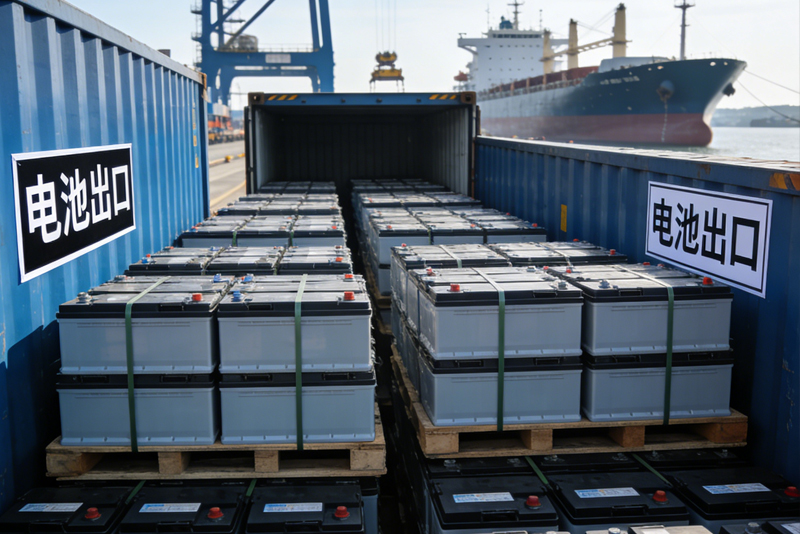
2026 Latest Guide: What Certification Materials are needed for Battery exports to the United States?
-
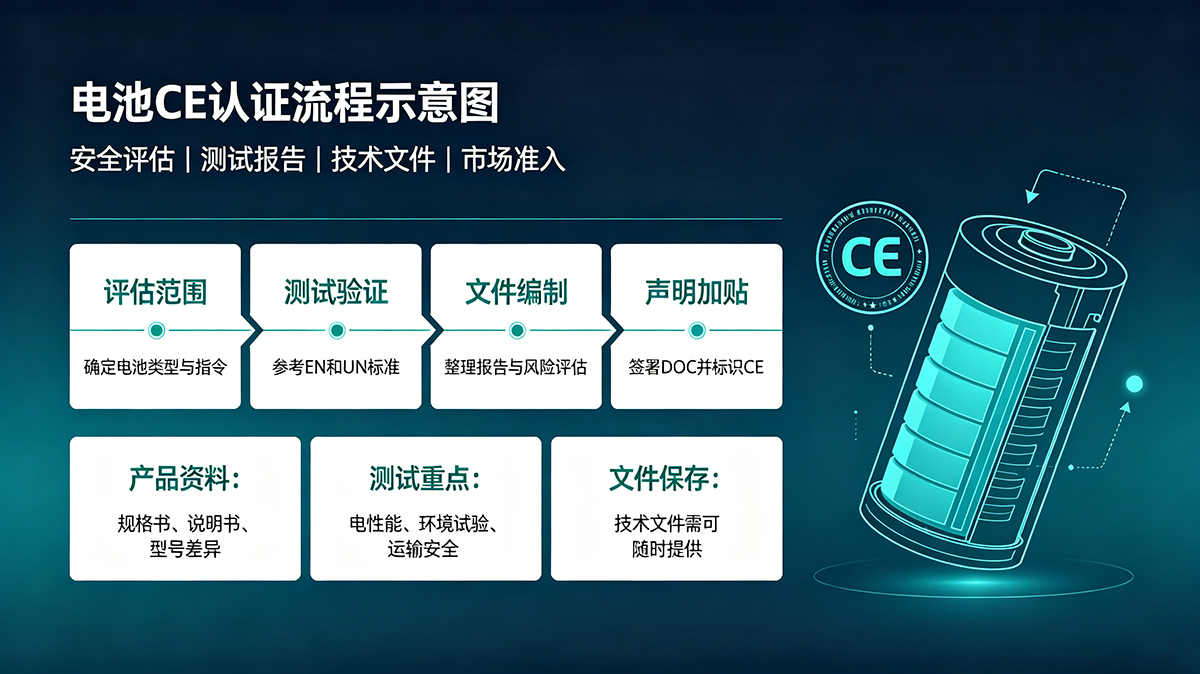
How to obtain the EU CE certification? Compliance Guide for Battery Exports to Europe
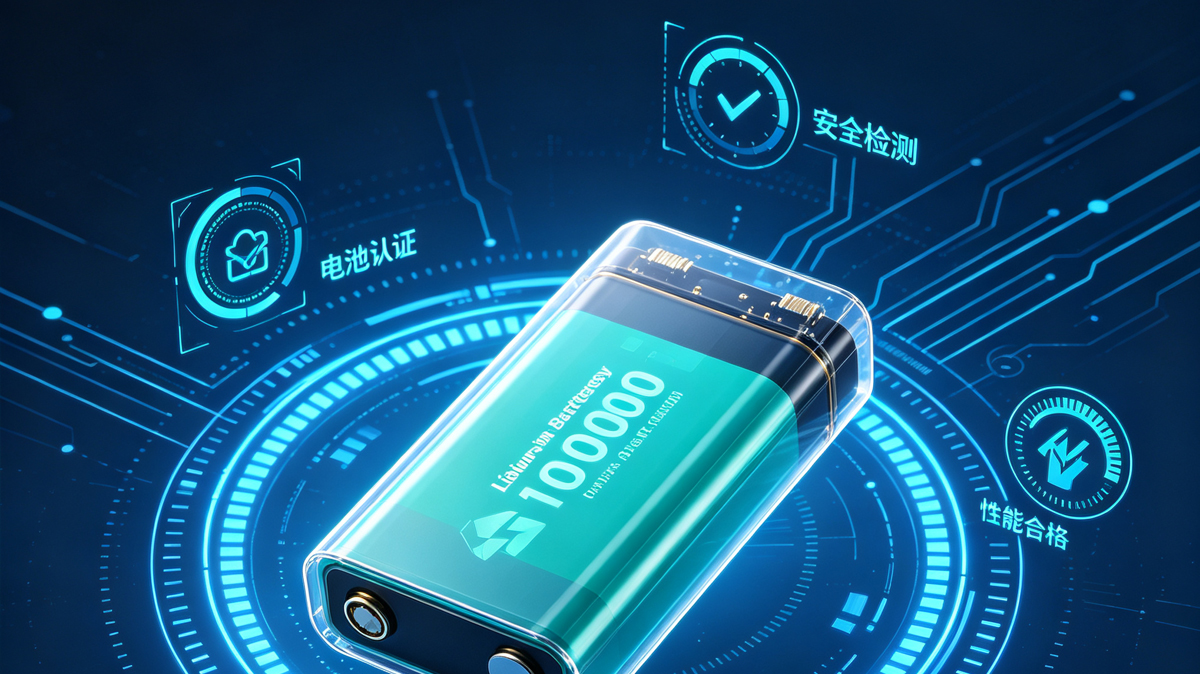
What certifications are required for battery exports to Europe? Key Points Analysis of CE Certification
The export of batteries to Europe requires not only production capacity but also compliance with the regulatory requirements of the target market. As an important compliance step in the European market, the EU CE certification requires enterprises to plan in combination with product types, safety standards and regulatory requirements.
How to obtain the EU CE certification? Compliance Guide for Battery Exports to Europe
For battery enterprises, entering the European market requires not only focusing on product performance but also attaching great importance to regulatory compliance. The EU CE certification is not only a testing requirement but also an important way for enterprises to establish a product safety system. Understanding the battery CE certification process in advance, clarifying the testing standards and improving the technical data can help enterprises reduce export risks and enhance the stability of their products entering the European market.
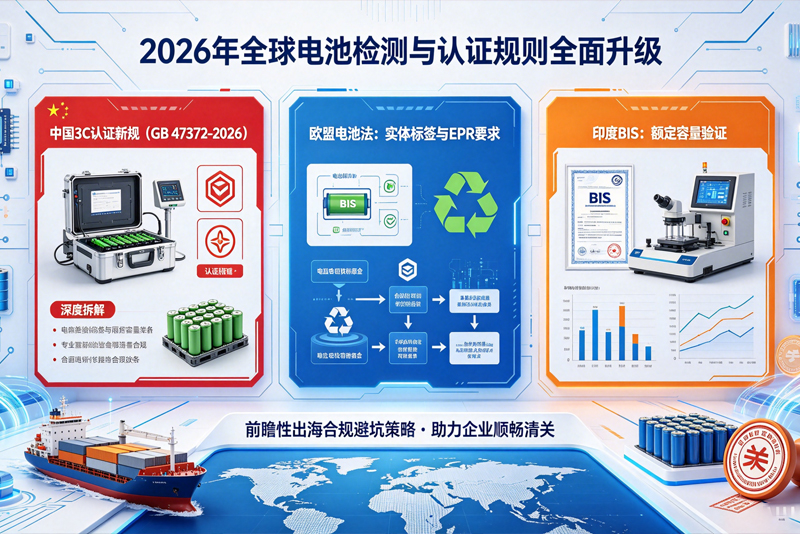
A Comprehensive Analysis of the New Battery Testing and Certification Regulations: Advanced Guidelines for Battery Customs Clearance and Compliance in Various Countries in 2026
With the continuous upgrading of global green and low-carbon transformation and consumer electronics safety regulation, the testing and certification standards of the battery industry have undergone an all-round iteration in 2026. From the update of the new national standards for domestic mobile power banks and the 3C certification rules, to the implementation of the entity labels under the new EU battery Law, and then to the tightening of testing requirements in emerging markets, major economies around the world are reshaping the battery supply chain with stricter "compliance access vouchers". This article provides you with an in-depth analysis of the new trends in global battery customs clearance and compliance in 2026, helping you make precise plans and break through to go global.
Must-read for Exports: In-depth Analysis of the BIS Certification Process and IS 16046 Standard for Energy Storage and Power Batteries in India
 Click:655编辑: 诚测检测
 Time:2026-06-30 02:25:18
As one of the world's fastest-growing markets for new energy and electronic consumption, India's technical trade barriers to imported battery products are also constantly escalating. According to the Mandatory Registration Act (CRS) of the Bureau of Indian Standards (BIS), all rechargeable lithium batteries, cells and energy storage battery packs exported to the Indian market must be compulsibly certified by BIS And affix the BIS label on the product.
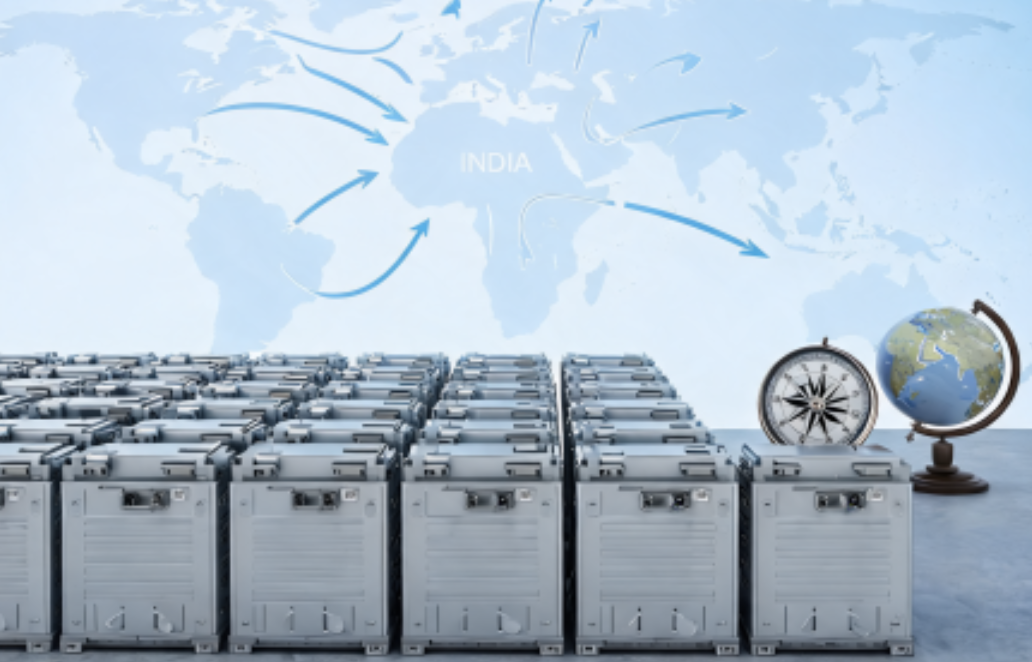
The core testing basis for batteries entering India IS IS 16046 (equivalent to the international IEC 62133 standard). This certification system has distinct particularities:
- Local testing principle: Samples must be sent to a laboratory recognized by BIS in India for blind testing. Reports from domestic laboratories are usually not directly substitutable.
- Indian Local Representative (AIR) : During the application process, a long-term and legal Indian local agent must be bound for contact.
Due to the involvement of cross-border sample transportation, overseas laboratory scheduling and complex document approval, enterprises often experience delays in obtaining certificates because of their unfamiliarity with the process.
CCJC (Chengce Testing) always keeps an eye on the international trade situation and has rich and mature experience in providing certification consulting services to multiple international countries. We offer a comprehensive BIS certification solution for India, assisting enterprises in completing pre-testing and document pre-review in China before their products are exported, minimizing the risks of overseas order cancellations and test failures to the greatest extent. Welcome to call Chengce Testing for one-stop overseas support.
- Previous Article:The Philippines will implement PS/ICC mandatory certification for power banks and portable power sources! A Guide for Enterprises to Avoid Pitfalls in Compliance Overseas Expansion
- Next Article: Guide to the Processing of GB 31241 Quality Inspection Report for Digital Lithium Batteries: Analysis of Compliance Requirements for E-commerce Random Inspection
相关BlOG
-
What certifications are required for battery exports to Europe? Key Points Analysis of CE Certification
The export of batteries to Europe requires not only production capacity but also compliance with the regulatory requirements of the target market. As an important compliance step in the European market, the EU CE certification requires enterprises to plan in combination with product types, safety standards and regulatory requirements.
9132026-07-10
-
How to obtain the EU CE certification? Compliance Guide for Battery Exports to Europe
For battery enterprises, entering the European market requires not only focusing on product performance but also attaching great importance to regulatory compliance. The EU CE certification is not only a testing requirement but also an important way for enterprises to establish a product safety system. Understanding the battery CE certification process in advance, clarifying the testing standards and improving the technical data can help enterprises reduce export risks and enhance the stability of their products entering the European market.
8072026-07-06
-
A Comprehensive Analysis of the New Battery Testing and Certification Regulations: Advanced Guidelines for Battery Customs Clearance and Compliance in Various Countries in 2026
With the continuous upgrading of global green and low-carbon transformation and consumer electronics safety regulation, the testing and certification standards of the battery industry have undergone an all-round iteration in 2026. From the update of the new national standards for domestic mobile power banks and the 3C certification rules, to the implementation of the entity labels under the new EU battery Law, and then to the tightening of testing requirements in emerging markets, major economies around the world are reshaping the battery supply chain with stricter "compliance access vouchers". This article provides you with an in-depth analysis of the new trends in global battery customs clearance and compliance in 2026, helping you make precise plans and break through to go global.
5852026-07-23