
 English
 中文
中文
-

The new IATA DGR regulations on the state of charge of lithium battery goods in 2026
-

Good News: Shenzhen Chengce Testing has been awarded the recognition certificate by China Classification Society (CCS)
-
The latest TIC verification requirements for lithium battery small appliances on Amazon Canada: A report issued by an SCC-accredited laboratory is required to pass the verification
-
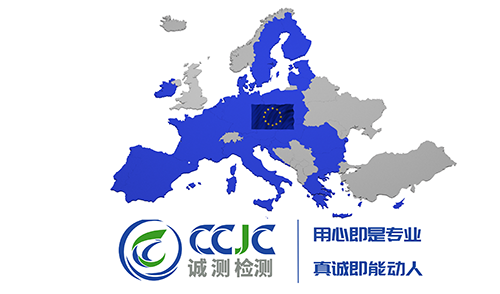
Draft Supplementary authorization regulation for Regulation (EU) 2023/1542 on exemptions for removable and replaceable portable batteries
-
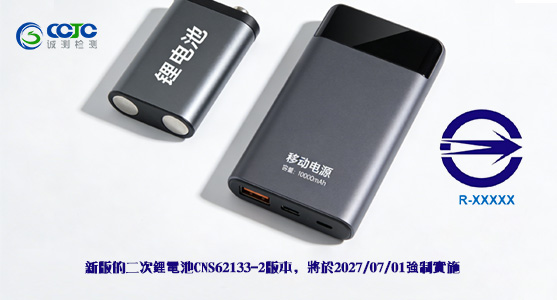
BSMI made an explanation and announcement regarding secondary lithium batteries and power banks on October 28, 2021
Draft Supplementary authorization regulation for Regulation (EU) 2023/1542 on exemptions for removable and replaceable portable batteries
 Click:6078Edit: 诚测认证
 Time:2026-05-11 09:37:12
Draft Supplementary authorization regulation for Regulation (EU) 2023/1542 on exemptions for removable and replaceable portable batteries
The Directorate-General for Environment of the European Commission (DG ENV) released a draft authorization regulation on April 28, 2026, expanding the exemption list for "replaceable only by professionals". Draft exemption list for "removable/replaceable" portable batteries: released on April 28, 2026, for comments until May 26.
https://environment.ec.europa.eu/news/commission-seeks-views-battery-removability-exemptions-2026-04-28_en
Regulatory background
Mother law
Article 11 of the Battery Regulation (EU)2023/1542
Effective
Starting from February 18, 2027-02-18, portable batteries must, in principle, be detachable and replaceable by the end user themselves (without the need for professional tools/training) EUR-Lex
Original exemption (already in effect)
Wet Environment equipment (washable products such as electric toothbrushes and water flossers) European Commission Environment
2. Professional medical imaging equipment
3. Disposable e-cigarettes and closed-end e-cigarettes
The draft adds exemptions
Wearable devices: smartwatches, bracelets, wireless headphones (including charging cases), glasses, etc. (classified as "Devices for damp environments")
2. Electric toys: Toys with built-in lithium batteries, remote control models, interactive game consoles, etc
3. ATEX explosion-proof Equipment: Equipment for explosive environments (explosion-proof motors, sensors, pumps, forklifts, etc.)
4. Small wireless devices: Size ≤5cm, capacity ≤1000mAh, and IPX4 + waterproof (such as Bluetooth headphones, remote controls)
5. Medical implantable/invasive devices: Medical devices that are inside the body or in long-term contact with the human body
6. Industrial sensors/measurement and control equipment: Sealed, low-power, and long-term unattended devices
Exemption core conditions
Exempted products do not require end users to disassemble them, but they must:
1. Disassemble and replace by independent professionals (after-sales service/third-party service provider)
2. In terms of design, it cannot be disassembled by force. It is designed to prevent short circuits, accidental touches, and children's accidental ingestion
3. Provide replacement manuals and safety guidelines, and reserve spare parts supply (usually ≥5 years)
Key timeline
April 28, 2026: The draft was released and public consultation was initiated
May 26, 2026: Deadline for soliciting opinions
2026 Q3: It is expected to be officially approved and released
2027-02-18: Implemented simultaneously with the parent law
The impact on enterprises
1. Exempted categories (such as watches, TWS headphones): There is no need to force users to disassemble them. The sealed/waterproof design is retained, but professional replacement must be supported
2. Non-exempt categories (mobile phones, tablets, power banks, and general household appliances): After 2027-02-18, they must be disassemblable by users; otherwise, they are prohibited from being sold in the EU
Related News
-
The latest TIC verification requirements for lithium battery small appliances on Amazon Canada: A report issued by an SCC-accredited laboratory is required to pass the verification
The latest TIC verification requirements for lithium battery small appliances on Amazon Canada: A report issued by an SCC-accredited laboratory is required to pass the verification
912026-09-11
-
The BIS Bureau of India has released the latest guidelines for wearable glasses and extended reality product categories
The Bureau of Indian Standards (BIS) issued guidance on product categories under the Mandatory Registration Scheme (CRS) on August 13, 2026, clearly stipulating the mandatory registration product categories and product names for wearable glasses and extended reality products.
3002026-08-17
-
Good News: Shenzhen Chengce Testing has been awarded the recognition certificate by China Classification Society (CCS)
Recently, Shenzhen Chengce Testing Technology Co., LTD. (CCJC) successfully passed the strict review of the entire process by China Classification Society (CCS) and officially obtained the CCS Product Testing and Experimental Institution Accreditation Certificate
9612026-06-29