
 English
 中文
中文
-

What are the battery certifications? What are the standards for battery certification
-
Leading Global Compliance: In-depth Dissection of the New IS/IEC 62368-1:2023 Electronic Safety Standard
-

2026 India BIS Update Barometer: Countdown to Mandatory Version Replacement for XR and Electronic Products
-
2026 Latest Guide: What Certification Materials are needed for Battery exports to the United States?
-
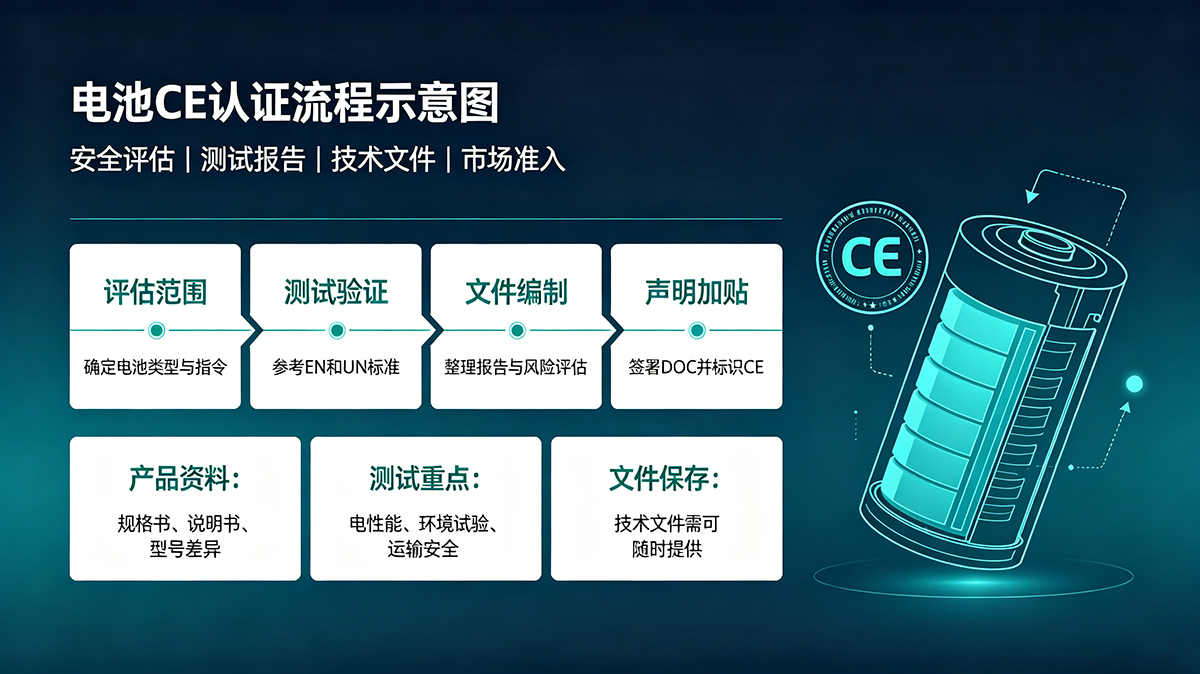
How to obtain the EU CE certification? Compliance Guide for Battery Exports to Europe
What certifications are required for battery exports to Europe? Key Points Analysis of CE Certification
The export of batteries to Europe requires not only production capacity but also compliance with the regulatory requirements of the target market. As an important compliance step in the European market, the EU CE certification requires enterprises to plan in combination with product types, safety standards and regulatory requirements.
How to obtain the EU CE certification? Compliance Guide for Battery Exports to Europe
For battery enterprises, entering the European market requires not only focusing on product performance but also attaching great importance to regulatory compliance. The EU CE certification is not only a testing requirement but also an important way for enterprises to establish a product safety system. Understanding the battery CE certification process in advance, clarifying the testing standards and improving the technical data can help enterprises reduce export risks and enhance the stability of their products entering the European market.
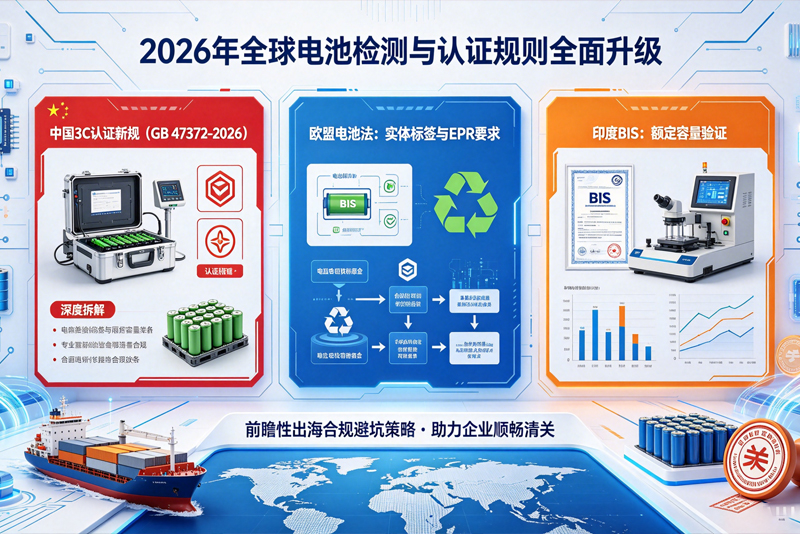
A Comprehensive Analysis of the New Battery Testing and Certification Regulations: Advanced Guidelines for Battery Customs Clearance and Compliance in Various Countries in 2026
With the continuous upgrading of global green and low-carbon transformation and consumer electronics safety regulation, the testing and certification standards of the battery industry have undergone an all-round iteration in 2026. From the update of the new national standards for domestic mobile power banks and the 3C certification rules, to the implementation of the entity labels under the new EU battery Law, and then to the tightening of testing requirements in emerging markets, major economies around the world are reshaping the battery supply chain with stricter "compliance access vouchers". This article provides you with an in-depth analysis of the new trends in global battery customs clearance and compliance in 2026, helping you make precise plans and break through to go global.
How to choose battery certification? CB certification helps lithium batteries export to the global market
 Click:209编辑: 诚测检测CCJC
 Time:2026-08-17 15:20:55
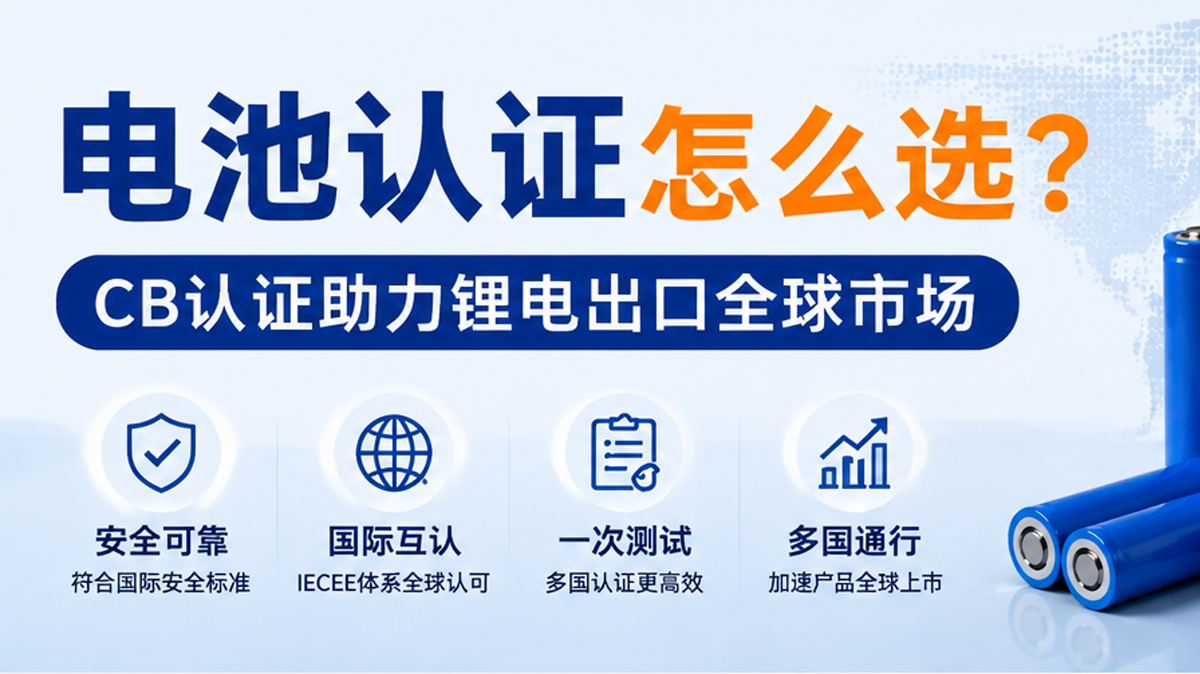
CB certification belongs to the IECEE CB Scheme system and is a product certification system based on IEC international standards.
In simple terms, after enterprises complete tests in accordance with IEC standards, they can obtain CB test reports and certificates, and apply for local certification conversion based on the requirements of different countries.
For battery products, CB certification mainly focuses on safety performance.
Lithium-ion battery cell
Lithium-ion battery pack
Rechargeable battery
Portable device battery
Some energy storage battery products
Different types of batteries correspond to different standards. For instance, portable lithium batteries usually involve the safety requirements of the IEC 62133 series.
In the past, when enterprises exported to different countries, they often needed to prepare separately:
European certification
"Korean certification"
"Japanese certification"
Australian certification
Each market has its own regulatory requirements.
Test repetition
Time increases
The cost of certification has increased.
The advantages of the CB system lie in:
Once a test is completed in accordance with IEC standards, it can serve as an important technical basis for certification applications in multiple countries.
For battery enterprises that are simultaneously expanding into multiple overseas markets, this approach can enhance the efficiency of certification planning.
In the battery certification project, safety testing is the core link.
IEC 62133 mainly focuses on the safety requirements for portable secondary batteries and battery packs.
1. Charging safety test
The main verification is whether the battery is stable under the specified charging conditions.
Follow
Overcharging risk
Temperature change
Abnormal state manifestation
Simulate the safety performance when abnormal connections occur between the positive and negative terminals of a battery.
Test purpose:
Verify whether the battery may appear
"Fire"
"Explosion"
Structural damage
Including:
Vibration
Fall
Squeeze
The main assessment focuses on the safety capability after being affected by external forces during transportation and use.
When enterprises apply for battery CB certification, they generally need to go through several stages:
First of all, it needs to be clear:
Cell type
Battery capacity
Application field
Export countries
Because the standards corresponding to different products may vary.
For example:
There are obvious differences in the testing directions between consumer electronics batteries and industrial energy storage batteries.
Step 2: Prepare technical materials
Usually includes:Product Specification Sheet
Battery structure data
Circuit protection scheme
Label information
Sample information
Data consistency is of great importance.
In actual projects, many certification delays are not due to testing issues but rather the inconsistency of data parameters.
Step 3: Product testing
Conduct safety tests in accordance with applicable standards.The key points of the test revolve around
Electrical performance
Mechanical safety
Environmental adaptability
Abnormal usage situation
Step 4: Obtain the CB report and certificate
After the test is completed, enterprises can further apply for local certification based on the demands of the target market.
Misconception One: Believing that CB certification can directly replace all national certifications
CB certification is an international mutual recognition system.
However, there may still be different requirements among different countries, which need to be confirmed in combination with local regulations.
Many enterprises believe that as long as the battery cells pass the test, it is fine.
In fact, in the battery pack:
Protective plate
Structural design
Management System
All of these will affect the final safety performance.
If it is found during the authentication stage:
The battery cell model has changed
Insufficient protection plan
The structure needs to be adjusted
It may affect the product launch plan.
For enterprises that hope to expand their overseas markets, it is suggested that
First, determine the export direction during the product design stage.
Understanding the requirements of the target market in advance can reduce the need for later modifications.
Including:
Product version record
Test data
Structural data
If an enterprise plans to enter multiple national markets, CB certification is usually worth including in the certification plan.
For instance, Shenzhen Chengce Testing has long been providing international certification services for battery products and can assist enterprises in evaluating certification plans and arranging tests.
With the rapid development of new energy and portable devices, battery safety has become a key focus in the international market.
For export enterprises, choosing the right battery certification scheme not only determines whether their products can enter the target market but also affects the stability of their long-term supply chain.Understanding the CB certification system, the IEC62133 standard and the testing process can help battery enterprises plan their international market layout more reasonably.
相关BlOG
-
What certifications are required for battery exports to Europe? Key Points Analysis of CE Certification
The export of batteries to Europe requires not only production capacity but also compliance with the regulatory requirements of the target market. As an important compliance step in the European market, the EU CE certification requires enterprises to plan in combination with product types, safety standards and regulatory requirements.
9102026-07-10
-
How to obtain the EU CE certification? Compliance Guide for Battery Exports to Europe
For battery enterprises, entering the European market requires not only focusing on product performance but also attaching great importance to regulatory compliance. The EU CE certification is not only a testing requirement but also an important way for enterprises to establish a product safety system. Understanding the battery CE certification process in advance, clarifying the testing standards and improving the technical data can help enterprises reduce export risks and enhance the stability of their products entering the European market.
8042026-07-06
-
A Comprehensive Analysis of the New Battery Testing and Certification Regulations: Advanced Guidelines for Battery Customs Clearance and Compliance in Various Countries in 2026
With the continuous upgrading of global green and low-carbon transformation and consumer electronics safety regulation, the testing and certification standards of the battery industry have undergone an all-round iteration in 2026. From the update of the new national standards for domestic mobile power banks and the 3C certification rules, to the implementation of the entity labels under the new EU battery Law, and then to the tightening of testing requirements in emerging markets, major economies around the world are reshaping the battery supply chain with stricter "compliance access vouchers". This article provides you with an in-depth analysis of the new trends in global battery customs clearance and compliance in 2026, helping you make precise plans and break through to go global.
5812026-07-23