
 English
 中文
中文
-

What are the battery certifications? What are the standards for battery certification
-
Leading Global Compliance: In-depth Dissection of the New IS/IEC 62368-1:2023 Electronic Safety Standard
-
2026 India BIS Update Barometer: Countdown to Mandatory Version Replacement for XR and Electronic Products
-
2026 Latest Guide: What Certification Materials are needed for Battery exports to the United States?
-
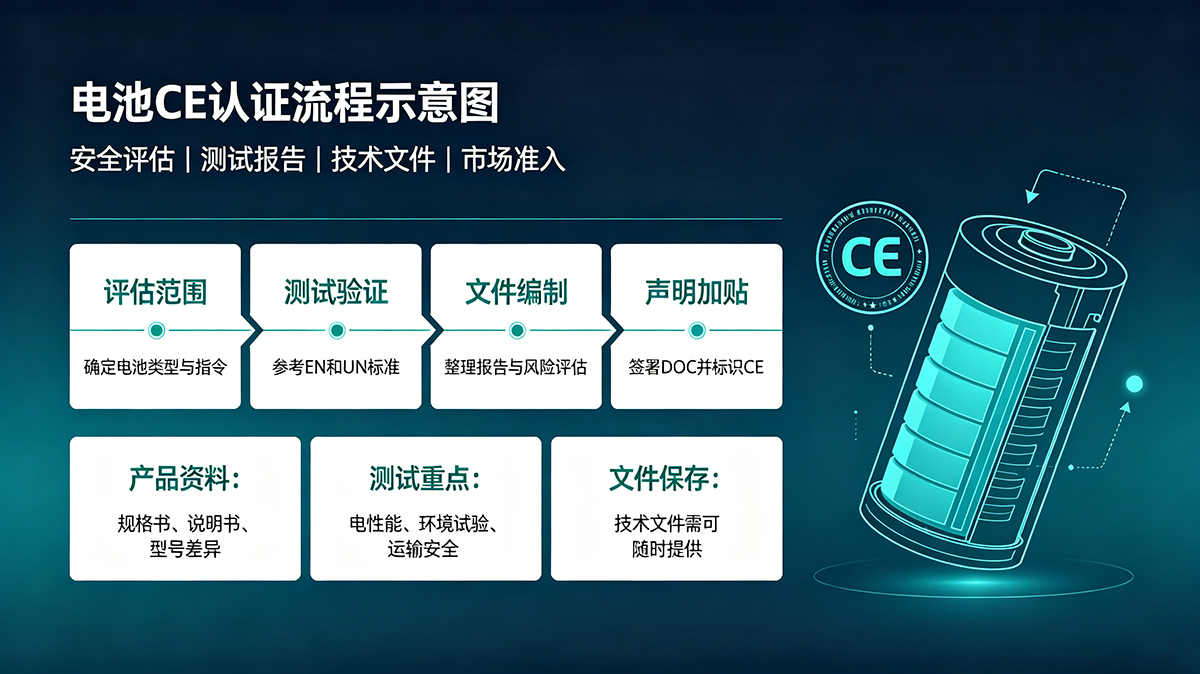
How to obtain the EU CE certification? Compliance Guide for Battery Exports to Europe
What certifications are required for battery exports to Europe? Key Points Analysis of CE Certification
The export of batteries to Europe requires not only production capacity but also compliance with the regulatory requirements of the target market. As an important compliance step in the European market, the EU CE certification requires enterprises to plan in combination with product types, safety standards and regulatory requirements.
How to obtain the EU CE certification? Compliance Guide for Battery Exports to Europe
For battery enterprises, entering the European market requires not only focusing on product performance but also attaching great importance to regulatory compliance. The EU CE certification is not only a testing requirement but also an important way for enterprises to establish a product safety system. Understanding the battery CE certification process in advance, clarifying the testing standards and improving the technical data can help enterprises reduce export risks and enhance the stability of their products entering the European market.
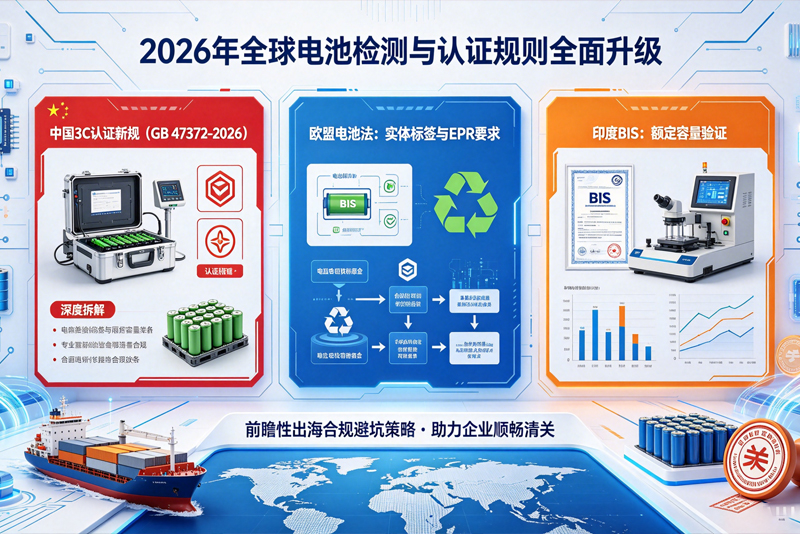
A Comprehensive Analysis of the New Battery Testing and Certification Regulations: Advanced Guidelines for Battery Customs Clearance and Compliance in Various Countries in 2026
With the continuous upgrading of global green and low-carbon transformation and consumer electronics safety regulation, the testing and certification standards of the battery industry have undergone an all-round iteration in 2026. From the update of the new national standards for domestic mobile power banks and the 3C certification rules, to the implementation of the entity labels under the new EU battery Law, and then to the tightening of testing requirements in emerging markets, major economies around the world are reshaping the battery supply chain with stricter "compliance access vouchers". This article provides you with an in-depth analysis of the new trends in global battery customs clearance and compliance in 2026, helping you make precise plans and break through to go global.
How to obtain SIRIM certification for e-cigarettes in Malaysia? Analysis of Export Compliance Process
 Click:110编辑: 诚测检测CCJC
 Time:2026-08-27 16:46:28
As e-cigarette products enter the markets of different countries and regions, enterprises are not only confronted with product design and market promotion issues, but more importantly, they need to meet local regulations and safety requirements.
For e-cigarette enterprises planning to export to Malaysia, the SIRIM certification for e-cigarettes in Malaysia has become a key compliance step that needs to be focused on when their products enter the local market.
Many enterprises tend to fall into misunderstandings when preparing for exports:
The product has already passed international testing. Does it still need to be certified in Malaysia?
"Can it be sold directly if there is a battery safety report?" "
"Why do the application procedures for the same e-cigarette product vary among different enterprises?" "
The core of these issues lies in the fact that different countries have varying safety management systems for electronic devices. Malaysia has established corresponding safety requirements for e-cigarette devices. E-cigarette devices need to complete tests and certifications in accordance with relevant standards. Only after meeting the requirements can they be sold on the market as stipulated.
Therefore, if enterprises understand the SIRIM certification requirements before exporting their products, it can not only reduce trade risks but also help them plan product design, document preparation and supply chain arrangements in advance.
I. What is the SIRIM certification for e-cigarettes in Malaysia?
SIRIM is one of the important product certification systems in Malaysia.
For e-cigarette devices, the relevant departments in Malaysia have issued requirements for the certification and marking of e-cigarette devices. Imported or locally produced e-cigarette devices need to meet the prescribed safety requirements.
The main basis for the current certification of electronic cigarette devices is:
MS 2716:2019 "Electronic Cigarette Device - Safety Requirements and Test Methods"
This standard mainly focuses on the safety performance of electronic cigarette devices during use, including device structure, electrical performance and related functional safety.
In simple terms:
SIRIM certification is not merely about inspecting the appearance of products, but rather assesses from multiple aspects such as product design, materials, electrical safety, and actual usage risks.
Ii. Which e-cigarette products need to pay attention to SIRIM certification?
Electronic cigarette products usually contain multiple functional modules, such as:
- Host equipment;
- Battery system
- Atomization component
- Charging interface;
- Control chip.
As electronic cigarettes are electrical devices, their interiors involve:
- Battery management
- Heating control
- Circuit protection
- Material safety.
Therefore, before entering the Malaysian market, it is necessary to confirm whether the product falls within the scope of relevant certifications.
Common products involved include:
- Disposable electronic cigarette devices;
- Rechargeable electronic cigarette devices;
- Electronic atomization host
- Electronic cigarette devices with intelligent control functions.
Whether a specific product is applicable or not needs to be judged based on the product structure and sales model.
Iii. What are the main contents tested for the SIRIM certification of e-cigarettes in Malaysia?
Many enterprises believe that the certification of electronic cigarettes only requires the testing of batteries.
In fact, complete certification requires attention to multiple aspects.
Electrical safety test
Electrical testing mainly assesses the safety risks during the operation of equipment.
Usually focus on:
- Battery working stability;
- Charging safety;
- Circuit protection function;
- Structural insulation performance.
For example:
If the equipment has problems such as abnormal overcharge protection or unreasonable circuit design, it may affect the safety of product use.
2. Mechanical property testing
Electronic cigarettes are portable electronic devices. During transportation and daily use, they may be subject to:
- Vibration;
- Fall;
- External shock.
Therefore, it is necessary to verify whether the structure of the equipment can meet the requirements for normal use.
The test content may involve:
- Shell structure;
- Sealing performance;
- Component fixation reliability.
3. Chemical safety testing
Some components of electronic cigarettes come into contact with users.
For example:
- Nozzle material
- Contact components.
The relevant materials need to meet safety requirements to avoid material risks affecting product compliance.
4. Functional testing
Functional testing mainly confirms whether the promotional functions of the product can be realized normally.
For example:
- Switch function;
- Automatic control function;
- Protective function;
- The product manual describes the functions.
During the certification process, it is necessary to ensure that the actual product is consistent with the technical data.
5. Wireless connection test (if applicable)
If the e-cigarette product contains:
- Bluetooth;"
- "WiFi;
- Other communication modules;
It may also involve tests related to wireless connections.
Ordinary products without wireless functions usually do not involve this project.
What is the process for obtaining SIRIM certification for electronic cigarettes?
When enterprises apply for certification, they generally need to go through the following steps:
Step 1: Confirm the product information
Preparation
- Product model;
- Product specifications;
- Circuit data;
- Product Manual
- Trademark information.
Confirming the product structure in advance is helpful for determining the test scope.
Step 2: Submit the certification application
The applicant subjects may include:
- Manufacturer;
- Importer
- Trading enterprises.
The documents that need to be prepared vary among different applicants.
For example, foreign manufacturers usually need:
- Product certification application materials;
- Manufacturer's statement;
- Trademark-related documents;
- Authorization document (if applicable).
Step 3: Product testing and review
The certification body will carry out as required
- Document review
- Sample testing
- Factory-related audits (where applicable).
After the test is passed, it enters the certification assessment stage.
Step 4: Obtain certification and manage the identification
Electronic cigarette devices that meet the requirements need to use the relevant SIRIM labels as stipulated.
During the production, packaging and sales processes, enterprises need to ensure that the product information is consistent with the certification materials.
V. Common Misunderstandings of E-cigarette Enterprises in Obtaining SIRIM Certification
Misconception 1: If one already has CE/FCC certification, there is no need for SIRIM
This is a problem that many export enterprises tend to overlook.
CE, FCC and others fall under other market regulatory systems.
For example:
Europe is paying attention to the requirements of CE regulations.
The United States is paying attention to the relevant requirements of the FCC.
Malaysia has its own product compliance system.
Different certifications cannot completely replace each other.
Misconception 2: Only testing the battery is needed
Although e-cigarettes contain batteries, they are overall electronic devices.
In addition to battery safety, attention also needs to be paid to:
- Overall machine structure;
- Circuit design
- Functional safety
- Material requirements.
Misconception 3: Consider certification only after the product has gone into mass production
If certification issues are found after the product has been mass-produced, it may involve:
- Structural modification
- Packaging adjustment;
- Label change;
- Retest.
Therefore, a more reasonable approach is to plan the certification requirements simultaneously during the product development stage.
Vi. How can export enterprises improve the efficiency of SIRIM Certification preparation?
For e-cigarette enterprises, certification is not only a testing process but also a part of product quality management.
It is recommended to do it in advance
Product information organization
Including:
- BOM data;
- Circuit diagram;
- Product specifications;
- Instructions for Use.
Sample consistency management
The submitted test samples need to be consistent with the subsequent mass production products.
Otherwise, the following may occur:
The test samples passed, but there are differences in the mass-produced products.
Assess the product structure in advance
Pay particular attention to
- Battery solution;
- Charging design;
- Protective function;
- Material selection.
All these factors will affect the certification process.
Vii. How do professional testing services help enterprises complete export preparations?
Electronic cigarette products involve multiple fields such as electronics, batteries, materials and structures. When enterprises handle certification on their own, they are prone to problems such as misunderstandings of standards and insufficient preparation of materials.
Professional testing institutions can usually assist enterprises
- Determine the scope of application of the certification;
- Formulate a test plan;
- Prepare technical materials;
- Follow up on the certification process.
Shenzhen Chengce Testing Technology Co., Ltd. provides international certification services for electronic cigarettes and other products, helping enterprises improve product compliance preparations in accordance with the requirements of target markets and enhance the certification efficiency during the export process.
As the global market's requirements for the safety of electronic products continue to rise, electronic cigarette export enterprises need to pay more attention to product compliance management.
For enterprises planning to enter the Malaysian market, understanding the SIRIM certification requirements for e-cigarettes in Malaysia is an important step in their product export planning.
From the requirements of the MS 2716:2019 standard, to electrical, mechanical, chemical and functional tests, and then to the preparation of certification materials, each link will affect the final market launch plan.
Conducting certification planning in advance not only reduces the uncertainties in the export process but also helps enterprises establish a more standardized product management system.
相关BlOG
-
What certifications are required for battery exports to Europe? Key Points Analysis of CE Certification
The export of batteries to Europe requires not only production capacity but also compliance with the regulatory requirements of the target market. As an important compliance step in the European market, the EU CE certification requires enterprises to plan in combination with product types, safety standards and regulatory requirements.
9102026-07-10
-
How to obtain the EU CE certification? Compliance Guide for Battery Exports to Europe
For battery enterprises, entering the European market requires not only focusing on product performance but also attaching great importance to regulatory compliance. The EU CE certification is not only a testing requirement but also an important way for enterprises to establish a product safety system. Understanding the battery CE certification process in advance, clarifying the testing standards and improving the technical data can help enterprises reduce export risks and enhance the stability of their products entering the European market.
8042026-07-06
-
A Comprehensive Analysis of the New Battery Testing and Certification Regulations: Advanced Guidelines for Battery Customs Clearance and Compliance in Various Countries in 2026
With the continuous upgrading of global green and low-carbon transformation and consumer electronics safety regulation, the testing and certification standards of the battery industry have undergone an all-round iteration in 2026. From the update of the new national standards for domestic mobile power banks and the 3C certification rules, to the implementation of the entity labels under the new EU battery Law, and then to the tightening of testing requirements in emerging markets, major economies around the world are reshaping the battery supply chain with stricter "compliance access vouchers". This article provides you with an in-depth analysis of the new trends in global battery customs clearance and compliance in 2026, helping you make precise plans and break through to go global.
5812026-07-23