
 English
 中文
中文
-

What are the battery certifications? What are the standards for battery certification
-
Leading Global Compliance: In-depth Dissection of the New IS/IEC 62368-1:2023 Electronic Safety Standard
-
2026 India BIS Update Barometer: Countdown to Mandatory Version Replacement for XR and Electronic Products
-
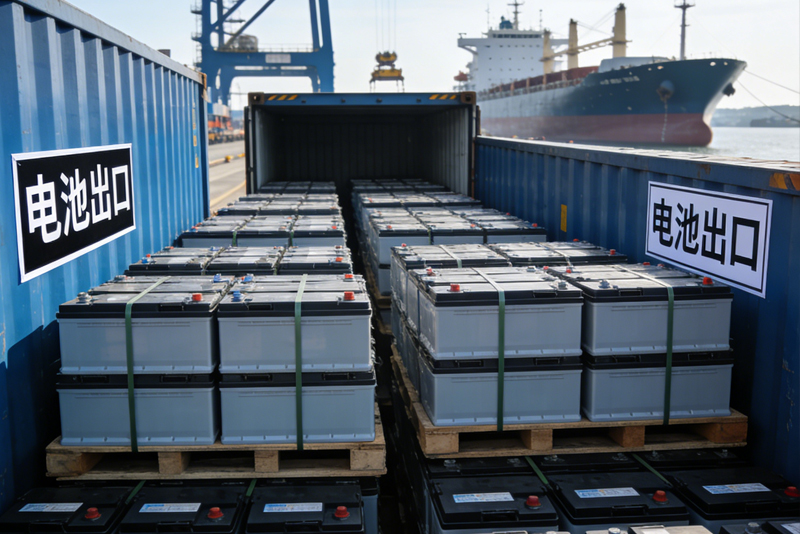
2026 Latest Guide: What Certification Materials are needed for Battery exports to the United States?
-
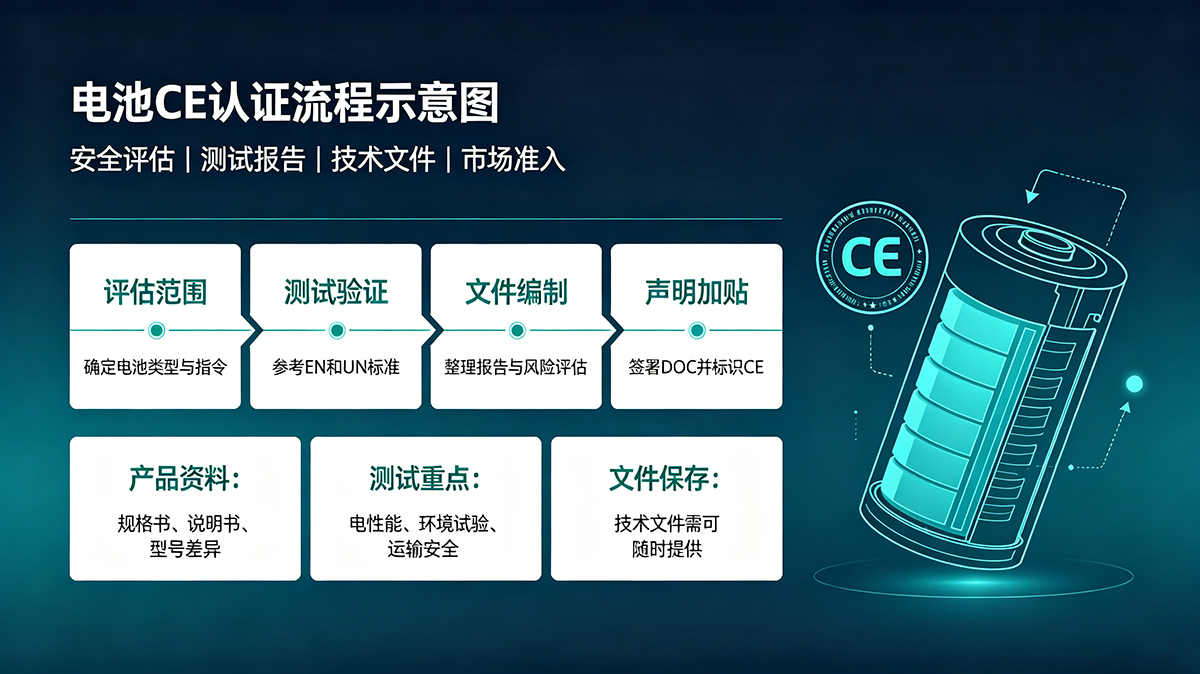
How to obtain the EU CE certification? Compliance Guide for Battery Exports to Europe
What certifications are required for battery exports to Europe? Key Points Analysis of CE Certification
The export of batteries to Europe requires not only production capacity but also compliance with the regulatory requirements of the target market. As an important compliance step in the European market, the EU CE certification requires enterprises to plan in combination with product types, safety standards and regulatory requirements.
How to obtain the EU CE certification? Compliance Guide for Battery Exports to Europe
For battery enterprises, entering the European market requires not only focusing on product performance but also attaching great importance to regulatory compliance. The EU CE certification is not only a testing requirement but also an important way for enterprises to establish a product safety system. Understanding the battery CE certification process in advance, clarifying the testing standards and improving the technical data can help enterprises reduce export risks and enhance the stability of their products entering the European market.
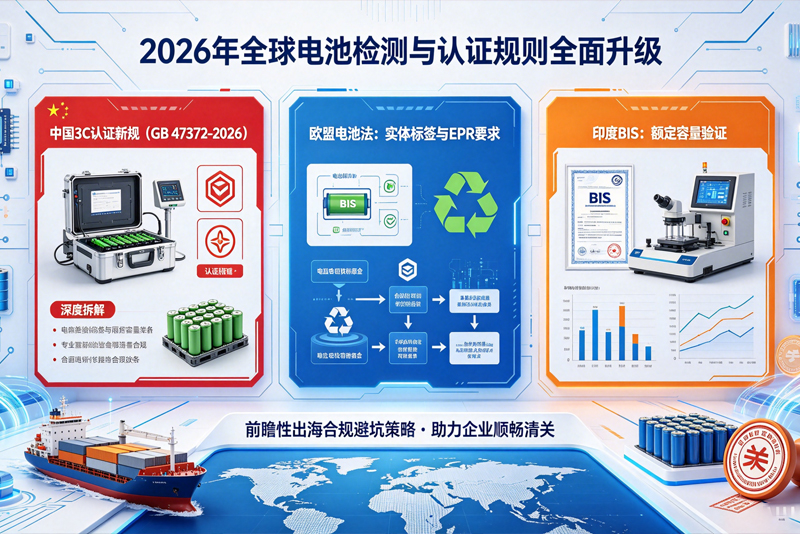
A Comprehensive Analysis of the New Battery Testing and Certification Regulations: Advanced Guidelines for Battery Customs Clearance and Compliance in Various Countries in 2026
With the continuous upgrading of global green and low-carbon transformation and consumer electronics safety regulation, the testing and certification standards of the battery industry have undergone an all-round iteration in 2026. From the update of the new national standards for domestic mobile power banks and the 3C certification rules, to the implementation of the entity labels under the new EU battery Law, and then to the tightening of testing requirements in emerging markets, major economies around the world are reshaping the battery supply chain with stricter "compliance access vouchers". This article provides you with an in-depth analysis of the new trends in global battery customs clearance and compliance in 2026, helping you make precise plans and break through to go global.
How to apply for battery certification? Guidelines for Compliance of Lithium Battery Product Exports
 Click:91编辑: 诚测检测CCJC-电池认证机构
 Time:2026-09-01 11:48:48
However, for manufacturing enterprises, for a product to enter different markets, merely completing production and manufacturing does not mean it can be directly sold.
Especially for products such as lithium batteries, energy storage batteries, and consumer batteries, due to the involvement of transportation safety, electrical safety, and usage reliability, they usually need to meet the relevant regulations and standards of the target market.
Many enterprises encounter similar problems when preparing for exports:
"Which projects should be handled for battery certification?" "
What certifications are required in different countries?
"Since there is already a test report, is re-certification still necessary?" "
In fact, battery certification is not a single certificate, but a series of testing and compliance assessment processes that match the product type, application field and sales market.
In simple terms:
Enterprises need to determine the certification direction based on the battery's application, and then complete sample testing, document review, rectification confirmation, and acquisition of certificates or reports in accordance with the corresponding standards.

In the past, some enterprises paid more attention to battery capacity, cycle life and production costs.
However, as global market regulation becomes stricter, product safety and compliance requirements have gradually become important conditions for entering the market.
Battery certification mainly addresses three issues:
Verify the safety performance of the product
During the use of batteries, it involves:
Charging and discharging;
Temperature change;
Mechanical shock
Long-term operation.
Relevant tests can help assess the safety performance of the product under abnormal conditions.
For example:
Lithium batteries may need attention
Overcharging risk;
Short-circuit risk;
Extrusion test
Temperature test.
2. Meet the market access requirements of different countries
The requirements for battery products vary in different regions.
For example:
Exporting to the European market may involve CE requirements.
Exporting to the US market may involve UL-related standards.
When transporting lithium battery products, it is usually necessary to pay attention to the UN38.3 transportation test requirements.
Different certifications correspond to different usage scenarios, and not all products need to obtain all certifications.
3. Reduce risks in the trade process
Many enterprises tend to overlook:
Product certification not only affects sales, but also:
International logistics
Customs review;
Platform sales
Customer procurement review.
Completing compliance preparations in advance can reduce the cost of later adjustments.
Before applying for certification, enterprises need to first determine the category of their products.
Common batteries include:
Consumer lithium batteries;
Energy storage battery
Power battery;
Button battery
Battery cells and battery packs.
Different products correspond to different certification systems.
1. UN38.3 certification: An important requirement for lithium battery transportation
For lithium battery products that require air or sea transportation, UN38.3 testing is a project that enterprises pay more attention to.
The test content usually involves:
Highly simulated
Temperature cycling
Vibration;
"Impact;
External short circuit;
Overcharge test, etc.
Its main purpose is to verify the safety of the battery in the transportation environment.
2. CE certification: An important compliance requirement for entering the European market
If battery products enter the EU market, it is necessary to confirm the applicable regulations based on the product type.
The CE marking indicates that the product complies with the relevant safety, health and environmental protection requirements of the European Union.
But it should be noted:
CE is not a universal test for all products; instead, the applicable standards need to be determined based on specific products.
3. UL certification: A common certification in the North American market
The US market pays relatively high attention to battery safety.
Some battery products may involve UL-related standards.
For example:
Consumer electronics battery
Energy storage system
Power application batteries.
The specific certification items need to be determined in combination with the product's application.
Many enterprises believe that certification is merely about sending samples for testing.
In fact, a complete battery certification process typically includes:
Step 1: Confirm the product information
It needs to be made clear
Battery type;
Battery cell model;
Usage scenarios;
Sales countries.
This is an important basis for choosing certification standards.
Step 2: Develop a certification plan
The testing agency will confirm based on the product conditions:
Test project;
Technical standards;
Sample quantity;
Required documents.
Step 3: Sample testing
The laboratory conducts tests in accordance with standards.
If problems are found during the testing process, the following steps need to be taken:
Technical analysis;
Product rectification;
Re-verify.
Step 4: Review the materials and complete the certification
After the test is passed, output according to the project requirements:
Test report
Certification certificate
Compliance documents.
Misconception 1: All battery certifications are the same
This is a relatively common problem.
In fact:
The requirements for mobile phone batteries, energy storage batteries and electric vehicle batteries are completely different.
It cannot be simply applied.
Misconception Two: Focusing only on certificates but not on product design
Some enterprises only discover during the certification stage that:
The battery structure needs to be adjusted.
Insufficient protection plans;
The materials do not meet the requirements.
If compliance assessment is conducted in advance, repetitive testing can be reduced.
Misconception 3: Once the certification is completed, the product cannot be changed
Please note:
If replaced:
Battery cell model;
Battery structure
Key materials;
A re-evaluation might be necessary.
When enterprises choose certification service providers, they can pay attention to:
Whether the target market is understood
Regulations in different countries change rapidly, so it is necessary to have international certification experience.
Whether one possesses technical communication skills
The certification process may involve:
Test anomaly;
Product rectification;
Standard understanding.
Professional technical communication can enhance the efficiency of project advancement.
Whether it covers multiple battery fields
For example:
Products such as consumer batteries, energy storage batteries, and power batteries have different requirements for testing experience.
Shenzhen Chengce Testing has long been serving the fields of digital batteries, button batteries, electric bicycle batteries, energy storage batteries, etc., and provides domestic and international certification testing services including UN38.3, CE, CB, UL, etc.
With the continuous development of the new energy industry, battery safety standards are constantly being improved.
In the future, enterprises should not only focus on:
Capacity
Cost;
Performance.
Also need to pay attention to
Safety design
Life cycle management
Changes in international market regulations.
Especially in the fields of energy storage, new energy vehicles and smart devices, compliance capabilities will become an important factor in enterprise competition.
For battery manufacturers, battery certification is not only a market access requirement but also an important link to ensure product safety and enhance international competitiveness.
During the application process, enterprises should select the corresponding certification scheme based on the product type, sales market and application environment.
Planning the certification process in advance and making technical preparations can help battery products enter the target market more smoothly.
相关BlOG
-
What certifications are required for battery exports to Europe? Key Points Analysis of CE Certification
The export of batteries to Europe requires not only production capacity but also compliance with the regulatory requirements of the target market. As an important compliance step in the European market, the EU CE certification requires enterprises to plan in combination with product types, safety standards and regulatory requirements.
9102026-07-10
-
How to obtain the EU CE certification? Compliance Guide for Battery Exports to Europe
For battery enterprises, entering the European market requires not only focusing on product performance but also attaching great importance to regulatory compliance. The EU CE certification is not only a testing requirement but also an important way for enterprises to establish a product safety system. Understanding the battery CE certification process in advance, clarifying the testing standards and improving the technical data can help enterprises reduce export risks and enhance the stability of their products entering the European market.
8042026-07-06
-
A Comprehensive Analysis of the New Battery Testing and Certification Regulations: Advanced Guidelines for Battery Customs Clearance and Compliance in Various Countries in 2026
With the continuous upgrading of global green and low-carbon transformation and consumer electronics safety regulation, the testing and certification standards of the battery industry have undergone an all-round iteration in 2026. From the update of the new national standards for domestic mobile power banks and the 3C certification rules, to the implementation of the entity labels under the new EU battery Law, and then to the tightening of testing requirements in emerging markets, major economies around the world are reshaping the battery supply chain with stricter "compliance access vouchers". This article provides you with an in-depth analysis of the new trends in global battery customs clearance and compliance in 2026, helping you make precise plans and break through to go global.
5812026-07-23