
 English
 中文
中文
-

What are the battery certifications? What are the standards for battery certification
-
Leading Global Compliance: In-depth Dissection of the New IS/IEC 62368-1:2023 Electronic Safety Standard
-

2026 India BIS Update Barometer: Countdown to Mandatory Version Replacement for XR and Electronic Products
-
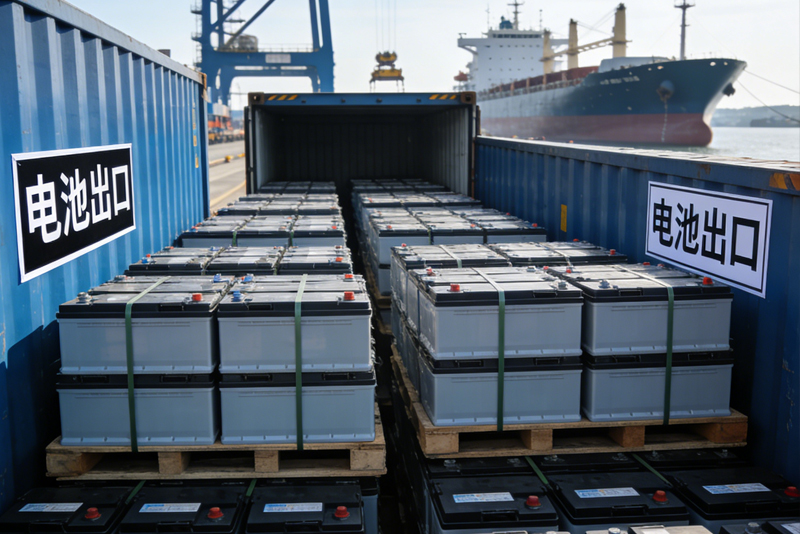
2026 Latest Guide: What Certification Materials are needed for Battery exports to the United States?
-
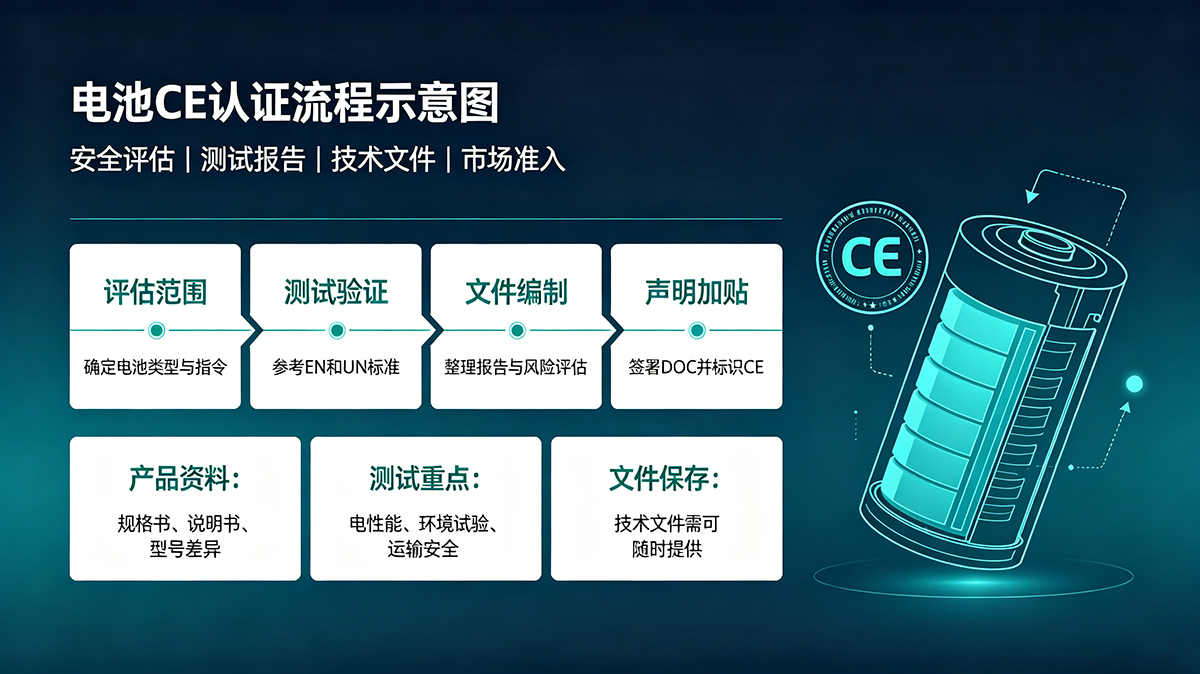
How to obtain the EU CE certification? Compliance Guide for Battery Exports to Europe
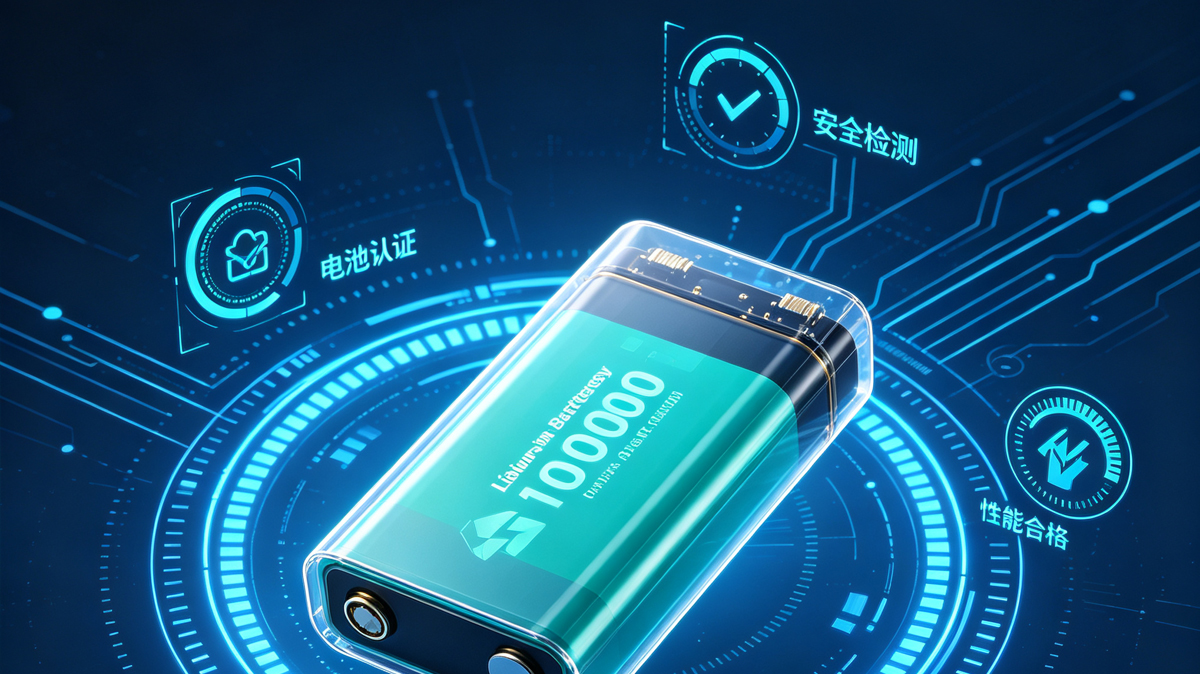
What certifications are required for battery exports to Europe? Key Points Analysis of CE Certification
The export of batteries to Europe requires not only production capacity but also compliance with the regulatory requirements of the target market. As an important compliance step in the European market, the EU CE certification requires enterprises to plan in combination with product types, safety standards and regulatory requirements.
How to obtain the EU CE certification? Compliance Guide for Battery Exports to Europe
For battery enterprises, entering the European market requires not only focusing on product performance but also attaching great importance to regulatory compliance. The EU CE certification is not only a testing requirement but also an important way for enterprises to establish a product safety system. Understanding the battery CE certification process in advance, clarifying the testing standards and improving the technical data can help enterprises reduce export risks and enhance the stability of their products entering the European market.
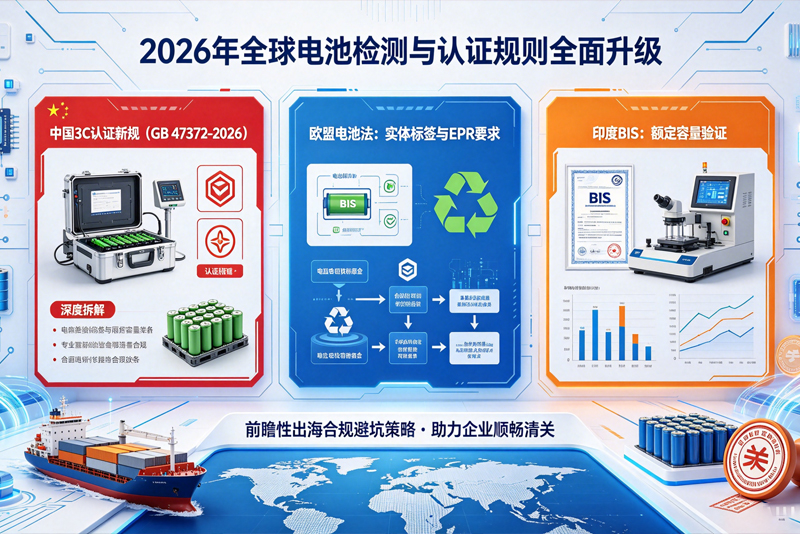
A Comprehensive Analysis of the New Battery Testing and Certification Regulations: Advanced Guidelines for Battery Customs Clearance and Compliance in Various Countries in 2026
With the continuous upgrading of global green and low-carbon transformation and consumer electronics safety regulation, the testing and certification standards of the battery industry have undergone an all-round iteration in 2026. From the update of the new national standards for domestic mobile power banks and the 3C certification rules, to the implementation of the entity labels under the new EU battery Law, and then to the tightening of testing requirements in emerging markets, major economies around the world are reshaping the battery supply chain with stricter "compliance access vouchers". This article provides you with an in-depth analysis of the new trends in global battery customs clearance and compliance in 2026, helping you make precise plans and break through to go global.
How much does battery certification cost? Analysis of Key Factors Affecting Testing Costs
 Click:69编辑: 诚测检测CCJC-电池认证机构
 Time:2026-09-05 12:02:26
When many enterprises first come into contact with battery certification, they tend to think that the certification fee should have a fixed price. However, the actual situation is not like this. This is because there are many types of battery products, and the corresponding testing items and standard requirements vary significantly in different application fields and sales markets.
For example:
Lithium batteries for consumer electronics
Electric vehicle power battery;
Energy storage battery
Button battery
Industrial equipment batteries
Although they all belong to battery products, the certification paths are not exactly the same.
In simple terms:
The cost of battery certification is mainly determined by the product type, certification standards, the number of test items, sample conditions and the requirements of the target market. Enterprises need to first clarify their export direction and then formulate a reasonable certification plan.
Common certifications currently available in the market include:
UN38.3 Transport Safety Test
CE certification
CB certification;
UL certification
Iec-related safety tests;
Domestic relevant testing and certification.
Different projects correspond to different test contents, so the costs will also vary.
When many enterprises inquire about the price of certification, they only focus on the final quotation. However, in fact, the complete cost of certification usually involves multiple links.
1. Product testing fees
This is the main component of the battery certification fee.
The laboratory needs to test battery samples in accordance with the corresponding standards.
For example:
UN38.3 mainly focuses on the safety performance during transportation, including:
Highly simulated
Temperature cycling
Vibration;
"Impact;
External short circuit;
Test items such as overcharging.
Batteries of different capacities and structures have different testing difficulties, and thus the costs will also vary.
2. Technical data review fee
Battery certification is not only about testing the product itself, but also involves reviewing relevant technical documents.
It usually involves
Product Specification sheet
Battery parameters;
Battery cell information;
Structural information;
Instructions for Use.
If the materials are not prepared adequately, it may increase the time for communication and rectification.
3. Sample and rectification costs
During the certification process, enterprises usually need to provide test samples.
If the first test fails, you may need to:
Analyze the reasons for the failure;
Modify the product design;
Re-provide the sample.
Therefore, conducting regulatory assessment in the early design stage of a product can reduce repetitive investment in the later stage.
The requirements for battery products vary in different markets.
Enterprises need to select appropriate certifications based on their sales regions.
UN38.3 certification fee
UN38.3 is mainly used for the safety assessment of lithium battery transportation.
Applicable to:
Air-transport lithium batteries;
Marine lithium battery
Including battery products for export.
Fees are usually subject to:
Battery capacity;
Battery type;
Test project;
Sample quantity;
It is influenced by other factors.
The testing costs for small battery products in the market are usually relatively low. However, for large-capacity power batteries and energy storage batteries, due to more testing items, the costs will increase.
Please note:
The UN38.3 test report and the transportation appraisal document are different documents. When enterprises export, they need to prepare the corresponding materials according to the logistics requirements.
2. Battery CE certification fees
If a product enters the European market, enterprises usually need to pay attention to the CE compliance requirements.
Battery CE certification may involve:
Safety testing
Emc-related requirements;
Battery standard compliance assessment.
The specific cost needs to be determined based on the product category.
For example:
There is a significant difference in the complexity of testing between ordinary consumer batteries and batteries for energy storage systems.
3. UL certification fees
The North American market has relatively high requirements for battery safety.
Some products may involve
UL1642;"
UL2054;"
And other relevant tests.
UL certification typically involves:
Product structure review
Safety testing
Document evaluation.
Due to the high testing cycle and technical requirements, the overall investment is usually higher than that of ordinary testing items.
When enterprises budget for certification expenses, they need to focus on the following factors.
The cost varies depending on the type of battery
For example:
Backup battery for mobile phones
The structure is relatively simple.
Energy storage battery
It has a large capacity and involves more security verifications.
Power battery
More rigorous reliability tests are usually required.
Therefore, the price cannot be simply judged by the "battery" category.
2. Different export countries have different requirements
There are differences in the regulatory systems of different markets.
For example:
European market
Pay attention to CE and related regulatory requirements.
The US market
It may involve the UL system.
Transport for export
Attention should be paid to UN38.3.
Enterprises need to plan certification routes based on their sales regions.
3. Whether the product is mature
Mature product
Stable parameters;
The information is complete.
The test pass rate is relatively high.
Newly developed product
More technical communication and rectification may be needed.
Therefore, the certification cost may increase.
4. Certification project portfolio
Some enterprises do not only apply for one certification.
For example, exports to Europe:
It may be needed simultaneously:
"UN38.3;"
CE;"
Iec-related tests.
Reasonable planning of certification combinations can reduce repetitive testing.
5. Is an expedited service needed
Under normal circumstances, certification requires a certain testing period.
If an enterprise needs to complete the order delivery ahead of schedule, it may involve expedited arrangements.
However, expedited service is not applicable to all projects and needs to be confirmed based on the laboratory's schedule.
Misconception 1: The lower the price, the more cost-effective it is
Some enterprises only focus on the institutions with the lowest quotations.
But certification is not merely about obtaining documents; more importantly, it is about ensuring that the test results meet market requirements.
If the low-price plan lacks necessary tests, it may affect:
Product sales;
Customer audit
Export transportation.
Misconception 2: Obtaining a certification means global sales
This is a misunderstanding that many new enterprises tend to have.
In fact:
Regulations vary from country to country and region to region.
For example:
European certification cannot directly replace the requirements of the US market.
Enterprises need to plan based on the target market.
Misconception 3: Consider certification only after the product has gone into mass production
If the product structure has already been fixed and it is found that it does not meet the certification requirements, the cost of modification will be higher.
It is suggested that enterprises consider simultaneously during the product development stage:
Battery structure
Protection plan;
Material selection;
Target market standards.
When enterprises choose testing and certification services, they can pay attention to several aspects
Whether it has the corresponding testing capability
Different institutions cover different projects.
It is necessary to confirm whether it can be supported
Battery safety testing
International certification;
Transportation test.
Are you familiar with the application scenarios of the product
For example:
Consumer batteries and energy storage batteries have different testing focuses.
Institutions with industry experience are more likely to understand the actual needs of enterprises.
Whether technical communication support is provided
During the certification process, you may encounter:
Test anomaly;
Standard understanding problem;
Product rectification issues.
Technical communication skills can affect the efficiency of project advancement.
Shenzhen Chengce Testing Technology Co., Ltd. has long been serving the field of battery and electronic product testing and certification, covering products such as digital batteries, energy storage batteries, and electric vehicle batteries. It also provides related testing and certification services including UN38.3, CE, CB, UL, etc., helping enterprises formulate appropriate certification plans based on product applications and market demands.
With the continuous development of the new energy industry and intelligent devices, the safety supervision of battery products has been constantly improved.
In the future, what enterprises will focus on is not only
"Is there any certification?"
It also includes
Whether it complies with the regulations of the target market;
Whether it has long-term stability;
Whether it meets the requirements of the supply chain audit.
Especially in the fields of energy storage, new energy vehicles and cross-border sales, compliance capabilities have become an important foundation for products to enter the market.
There is no uniform and fixed answer as to how much battery certification costs.
The factors that truly affect the cost include:
Battery type;
Product application;
Target market
Test standard;
The number of certified projects.
When enterprises plan battery certification, they should not only compare prices but also combine the product life cycle and market sales plans to choose a certification path that suits their own products.
Making certification plans in advance not only reduces the cost of repeated testing but also helps battery products enter domestic and international markets more smoothly.
相关BlOG
-
What certifications are required for battery exports to Europe? Key Points Analysis of CE Certification
The export of batteries to Europe requires not only production capacity but also compliance with the regulatory requirements of the target market. As an important compliance step in the European market, the EU CE certification requires enterprises to plan in combination with product types, safety standards and regulatory requirements.
9102026-07-10
-
How to obtain the EU CE certification? Compliance Guide for Battery Exports to Europe
For battery enterprises, entering the European market requires not only focusing on product performance but also attaching great importance to regulatory compliance. The EU CE certification is not only a testing requirement but also an important way for enterprises to establish a product safety system. Understanding the battery CE certification process in advance, clarifying the testing standards and improving the technical data can help enterprises reduce export risks and enhance the stability of their products entering the European market.
8042026-07-06
-
A Comprehensive Analysis of the New Battery Testing and Certification Regulations: Advanced Guidelines for Battery Customs Clearance and Compliance in Various Countries in 2026
With the continuous upgrading of global green and low-carbon transformation and consumer electronics safety regulation, the testing and certification standards of the battery industry have undergone an all-round iteration in 2026. From the update of the new national standards for domestic mobile power banks and the 3C certification rules, to the implementation of the entity labels under the new EU battery Law, and then to the tightening of testing requirements in emerging markets, major economies around the world are reshaping the battery supply chain with stricter "compliance access vouchers". This article provides you with an in-depth analysis of the new trends in global battery customs clearance and compliance in 2026, helping you make precise plans and break through to go global.
5812026-07-23