
 English
 中文
中文
-

What are the battery certifications? What are the standards for battery certification
-
Leading Global Compliance: In-depth Dissection of the New IS/IEC 62368-1:2023 Electronic Safety Standard
-

2026 India BIS Update Barometer: Countdown to Mandatory Version Replacement for XR and Electronic Products
-
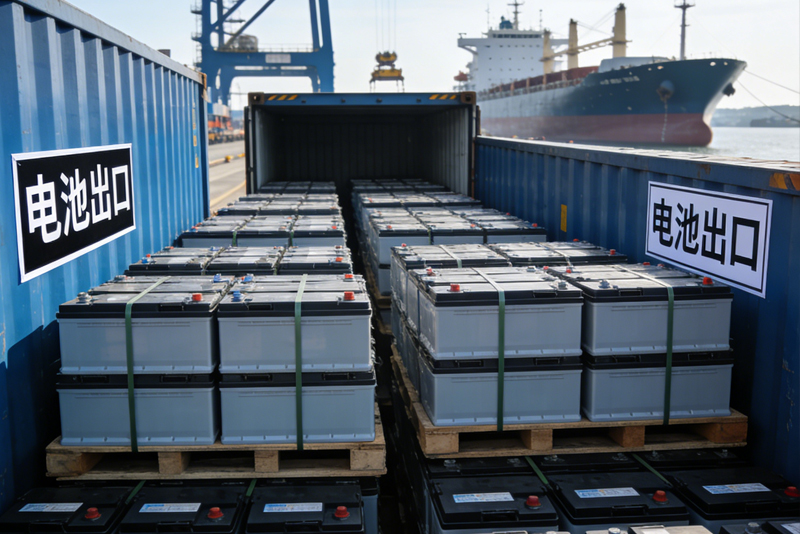
2026 Latest Guide: What Certification Materials are needed for Battery exports to the United States?
-
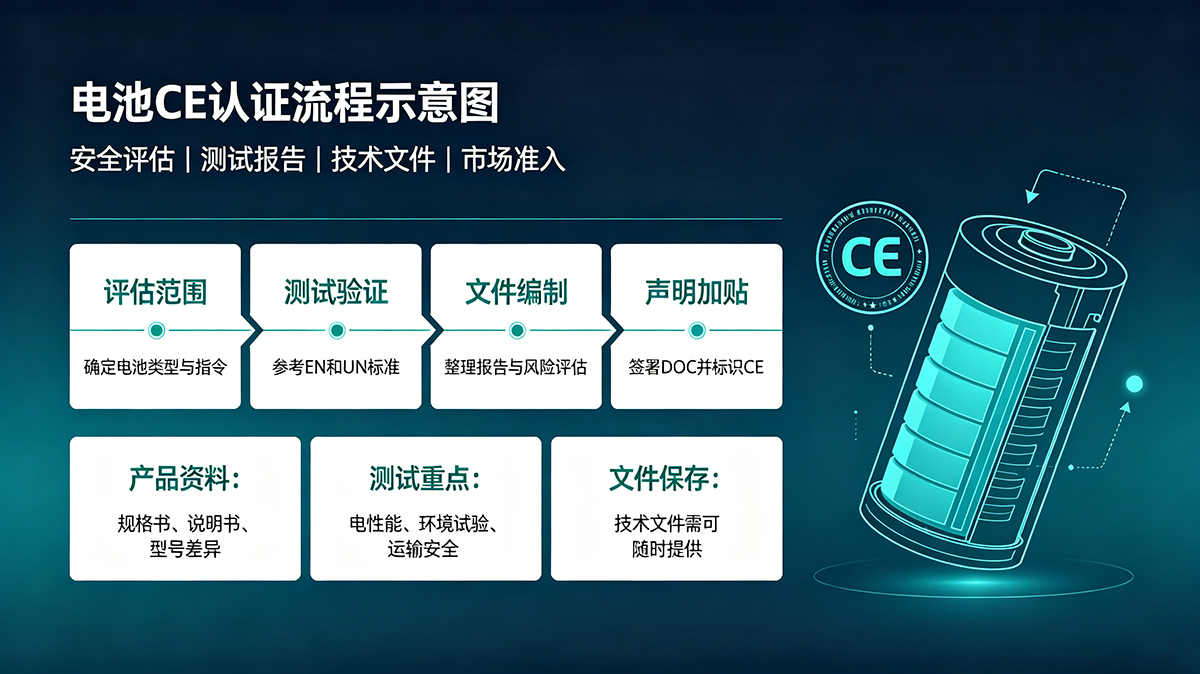
How to obtain the EU CE certification? Compliance Guide for Battery Exports to Europe
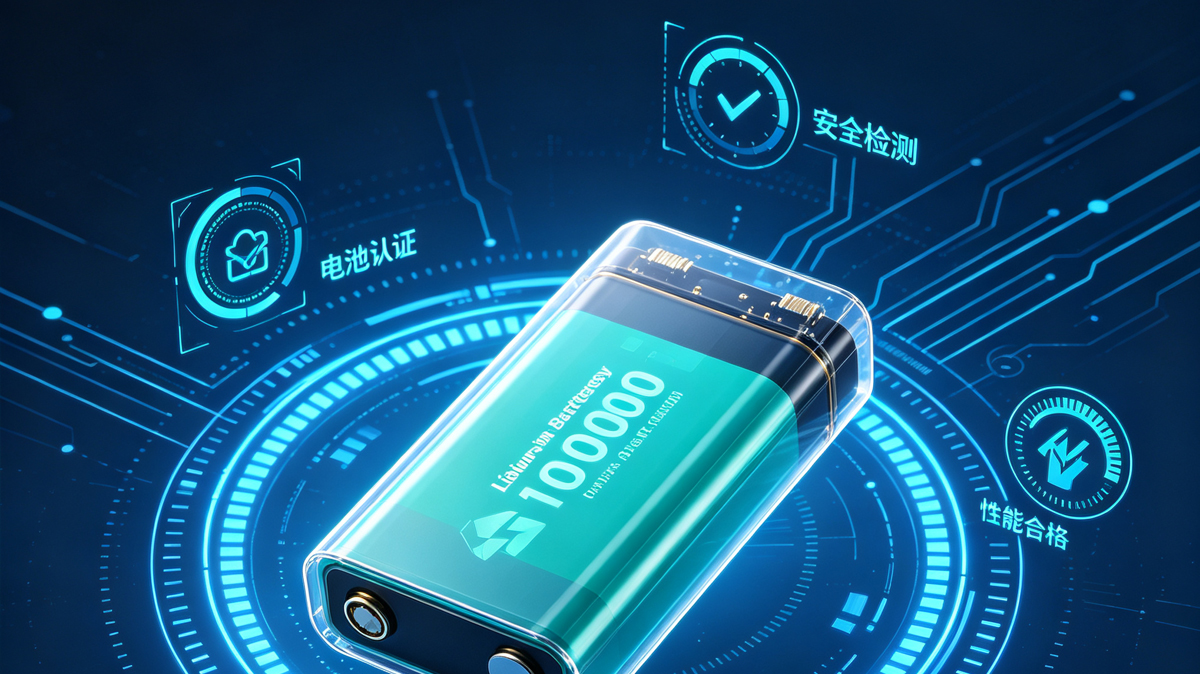
What certifications are required for battery exports to Europe? Key Points Analysis of CE Certification
The export of batteries to Europe requires not only production capacity but also compliance with the regulatory requirements of the target market. As an important compliance step in the European market, the EU CE certification requires enterprises to plan in combination with product types, safety standards and regulatory requirements.
How to obtain the EU CE certification? Compliance Guide for Battery Exports to Europe
For battery enterprises, entering the European market requires not only focusing on product performance but also attaching great importance to regulatory compliance. The EU CE certification is not only a testing requirement but also an important way for enterprises to establish a product safety system. Understanding the battery CE certification process in advance, clarifying the testing standards and improving the technical data can help enterprises reduce export risks and enhance the stability of their products entering the European market.
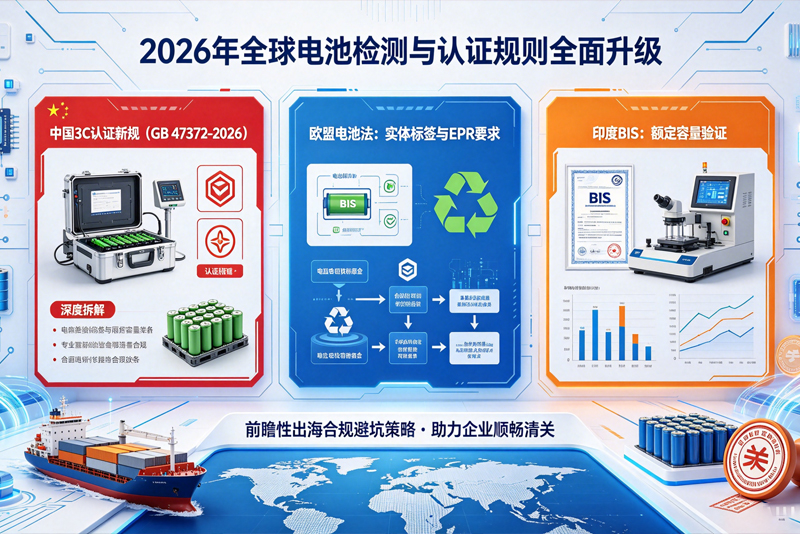
A Comprehensive Analysis of the New Battery Testing and Certification Regulations: Advanced Guidelines for Battery Customs Clearance and Compliance in Various Countries in 2026
With the continuous upgrading of global green and low-carbon transformation and consumer electronics safety regulation, the testing and certification standards of the battery industry have undergone an all-round iteration in 2026. From the update of the new national standards for domestic mobile power banks and the 3C certification rules, to the implementation of the entity labels under the new EU battery Law, and then to the tightening of testing requirements in emerging markets, major economies around the world are reshaping the battery supply chain with stricter "compliance access vouchers". This article provides you with an in-depth analysis of the new trends in global battery customs clearance and compliance in 2026, helping you make precise plans and break through to go global.
How to obtain battery certification for export? Key Points and Pitfalls to Avoid for Lithium Battery Compliance in Multiple Countries
 Click:36编辑: 诚测检测CCJC-电池认证机构
 Time:2026-09-11 16:07:47
In actual business operations, the regulatory rules for batteries vary greatly among different countries and regions. Transportation safety, market access, and platform reviews fall under different systems, and a single report cannot cover all scenarios. Many small and medium-sized enterprises lack full-time compliance personnel and fail to receive standard updates in a timely manner, which can easily lead to project delays and economic losses. Shenzhen Chengce Testing, as a comprehensive third-party testing and certification institution, has a 3,000-square-meter supporting laboratory. It provides full-process technical services for categories such as button batteries, energy storage, and electric bicycle batteries, helping enterprises clarify the battery certification requirements of different markets and avoid compliance risks in advance.

The mainstream battery certification categories should be clearly distinguished between transportation and market access
Transportation test: UN38.3UN38.3 is an internationally recognized transportation safety test. Whether it is for lithium batteries by air or sea, this report serves as the fundamental document for logistics booking. The test simulates extreme working conditions such as high-altitude low-pressure, temperature cycling, vibration and shock, short circuit, and overcharging to verify that the battery will not catch fire or explode during transportation. It should be noted that UN38.3 only addresses the transportation link and cannot replace the market access certification of various countries. If the product is to be sold locally, it still needs to complete the compliance project of the corresponding region.
Overseas market access certification
Different sales regions have independent mandatory requirements: the EU requires CE certification, South Korea implements KC certification, Japan requires PSE certification, the North American market commonly uses UL-related tests, Russia and the Eurasian Economic Union require EAC certification, and India's BIS and Taiwan's BSMI also set control rules for batteries. The requirements for different categories also vary. The standard provisions for consumer digital batteries, energy storage batteries, and batteries for electric two-wheelers are significantly different, and reports cannot be directly applied to each other.
Domestic compliance project
For battery products sold in the domestic market, it is necessary to pay attention to CCC certification and relevant standards of GB31241, do a good job in safety regulations testing and data archiving, and meet domestic regulatory requirements.
Common misunderstandings in the battery certification industry for enterprises
Misconception One: One report dominates the entire marketSome enterprises, upon obtaining the UN38.3 report, believe that they can directly sell their products globally. Transportation testing does not equal sales access. CE is still required for exports to the European Union, and KC is needed for sales to South Korea. The purposes, items and review subjects of the two types of tests are completely different and cannot replace each other.
Misconception 2: Directly applying the battery cell report to the finished battery pack
Many manufacturers only provide test reports for the battery cells, and the finished battery packs do not undergo corresponding tests. When the platform and customs conduct reviews, they will require that both the battery cell and battery pack reports be complete. If only the battery cell report fails to pass the review, this is also a common reason for the rejection of foreign trade shipments.
Misconception 3: Continuing to use the old report after a product update
Changes in battery capacity, protection board solutions, and battery cell suppliers all fall under product design alterations, and the original battery certification reports are no longer applicable. After many enterprises make minor reforms, they do not update the tests. As a result, when they encounter random tests later, the problem of certificate invalidation will occur.
Mistake Four: Ignoring the update of regulations
Battery-related regulations overseas have been constantly evolving. For instance, the new battery regulations of the European Union have added requirements such as carbon footprint and battery replaceability. Some Southeast Asian countries are also updating their battery control lists. If the old standard reports are always used, even if the customs can be cleared that year, compliance will become invalid after the new regulations are implemented.
Practical suggestions for enterprises to carry out battery certification
In the early stage, sort out the target market: First, determine which countries the product is mainly sold to, distinguish the transportation requirements and sales access requirements, list the certifications that need to be completed clearly, avoid repeated testing, and reasonably control the cycle and cost.Distinguish between battery cells and finished products: Evaluate battery cells and battery packs separately to confirm the model and parameter range covered by the report. Do not borrow reports across specifications.
Reserve sufficient testing period: Battery testing involves sample testing, document review, and factory inspection guidance. Complex projects have a long cycle. Try not to start the certification work just before shipment.
Follow up on standard developments: Continuously monitor the regulatory updates in the target market. When there are revisions or iterations, simultaneously assess whether the existing reports remain valid.
Emphasize the authenticity and validity of reports: Give priority to third-party laboratories with corresponding capabilities, and reject invalid and duplicate reports to prevent them from becoming invalid during customs and cross-border platform verifications.
Overall, battery certification is an important foundation for the circulation of battery products in both domestic and international markets. Enterprises should not simply understand certification as merely obtaining a paper report. They need to clearly distinguish the boundary between transportation safety and market access, match the standards of corresponding countries and product categories, and plan the testing cycle in advance. Only in this way can they reduce risks such as customs detention and product removal, and ensure that their products smoothly open up sales channels both at home and abroad.
相关BlOG
-
What certifications are required for battery exports to Europe? Key Points Analysis of CE Certification
The export of batteries to Europe requires not only production capacity but also compliance with the regulatory requirements of the target market. As an important compliance step in the European market, the EU CE certification requires enterprises to plan in combination with product types, safety standards and regulatory requirements.
9102026-07-10
-
How to obtain the EU CE certification? Compliance Guide for Battery Exports to Europe
For battery enterprises, entering the European market requires not only focusing on product performance but also attaching great importance to regulatory compliance. The EU CE certification is not only a testing requirement but also an important way for enterprises to establish a product safety system. Understanding the battery CE certification process in advance, clarifying the testing standards and improving the technical data can help enterprises reduce export risks and enhance the stability of their products entering the European market.
8042026-07-06
-
A Comprehensive Analysis of the New Battery Testing and Certification Regulations: Advanced Guidelines for Battery Customs Clearance and Compliance in Various Countries in 2026
With the continuous upgrading of global green and low-carbon transformation and consumer electronics safety regulation, the testing and certification standards of the battery industry have undergone an all-round iteration in 2026. From the update of the new national standards for domestic mobile power banks and the 3C certification rules, to the implementation of the entity labels under the new EU battery Law, and then to the tightening of testing requirements in emerging markets, major economies around the world are reshaping the battery supply chain with stricter "compliance access vouchers". This article provides you with an in-depth analysis of the new trends in global battery customs clearance and compliance in 2026, helping you make precise plans and break through to go global.
5812026-07-23