
 English
 中文
中文
-

What are the battery certifications? What are the standards for battery certification
-
Leading Global Compliance: In-depth Dissection of the New IS/IEC 62368-1:2023 Electronic Safety Standard
-
2026 India BIS Update Barometer: Countdown to Mandatory Version Replacement for XR and Electronic Products
-
2026 Latest Guide: What Certification Materials are needed for Battery exports to the United States?
-
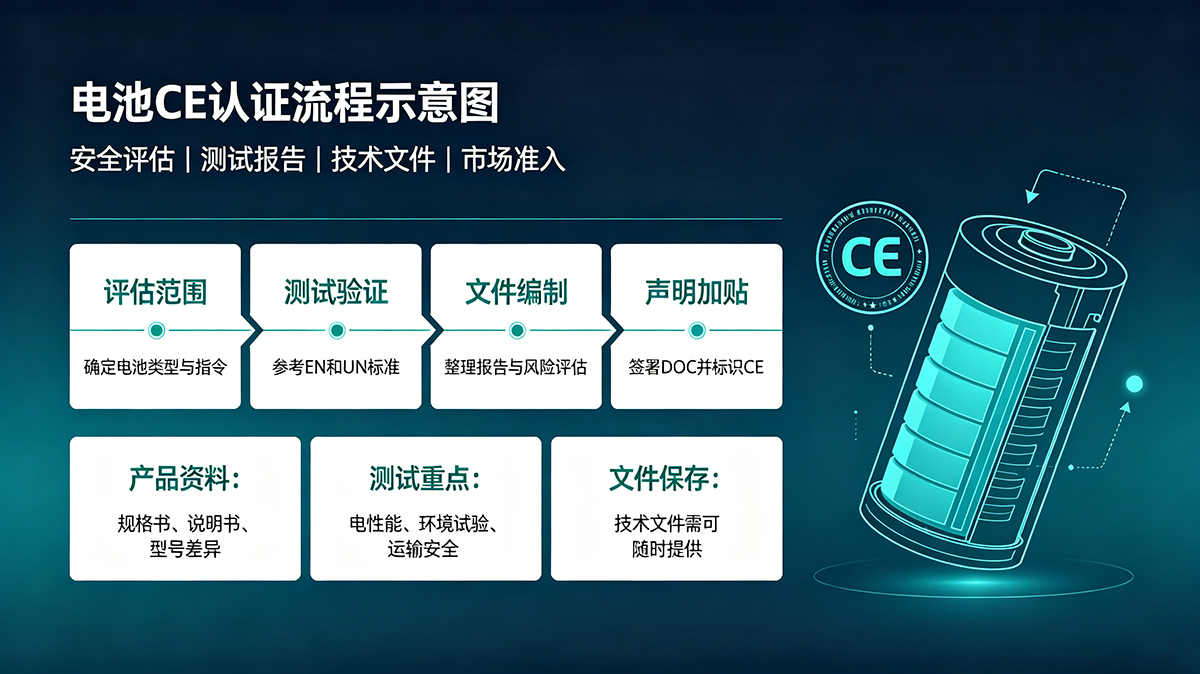
How to obtain the EU CE certification? Compliance Guide for Battery Exports to Europe
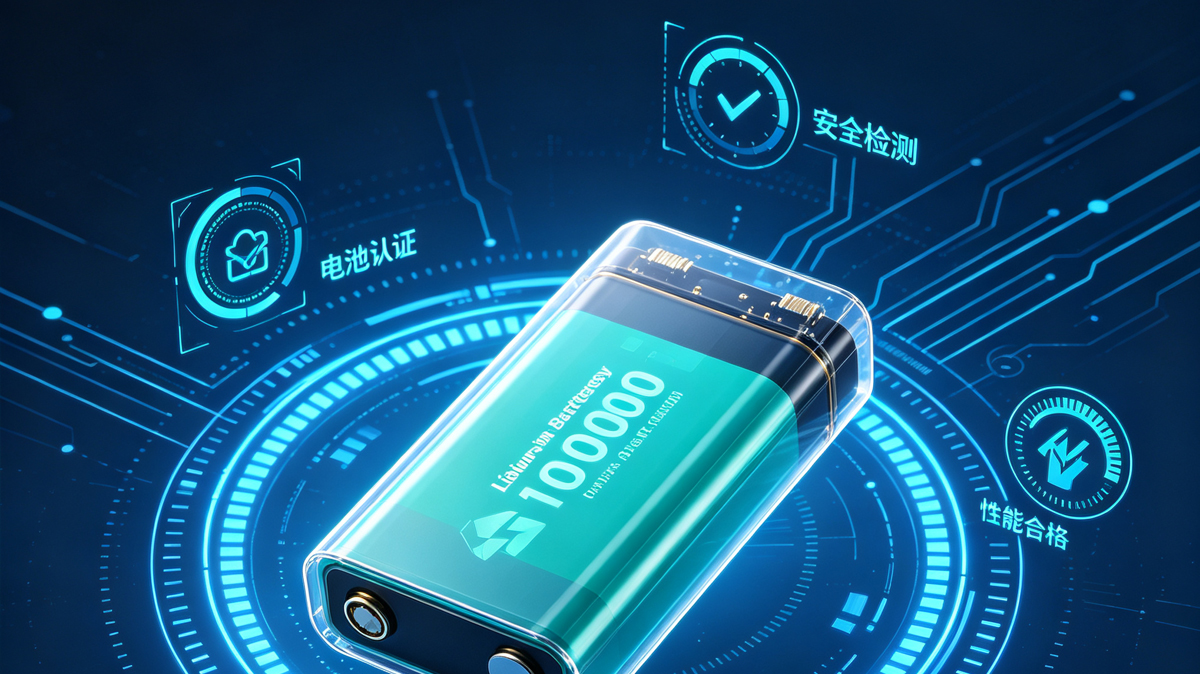
What certifications are required for battery exports to Europe? Key Points Analysis of CE Certification
The export of batteries to Europe requires not only production capacity but also compliance with the regulatory requirements of the target market. As an important compliance step in the European market, the EU CE certification requires enterprises to plan in combination with product types, safety standards and regulatory requirements.
How to obtain the EU CE certification? Compliance Guide for Battery Exports to Europe
For battery enterprises, entering the European market requires not only focusing on product performance but also attaching great importance to regulatory compliance. The EU CE certification is not only a testing requirement but also an important way for enterprises to establish a product safety system. Understanding the battery CE certification process in advance, clarifying the testing standards and improving the technical data can help enterprises reduce export risks and enhance the stability of their products entering the European market.
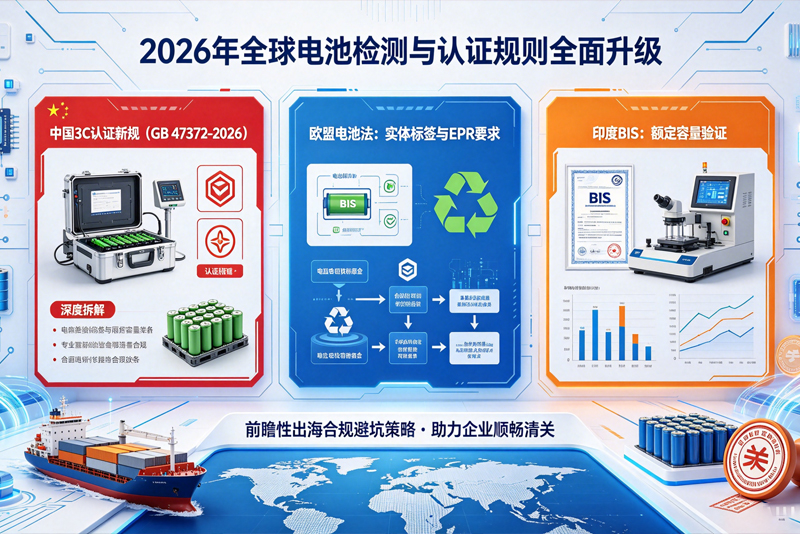
A Comprehensive Analysis of the New Battery Testing and Certification Regulations: Advanced Guidelines for Battery Customs Clearance and Compliance in Various Countries in 2026
With the continuous upgrading of global green and low-carbon transformation and consumer electronics safety regulation, the testing and certification standards of the battery industry have undergone an all-round iteration in 2026. From the update of the new national standards for domestic mobile power banks and the 3C certification rules, to the implementation of the entity labels under the new EU battery Law, and then to the tightening of testing requirements in emerging markets, major economies around the world are reshaping the battery supply chain with stricter "compliance access vouchers". This article provides you with an in-depth analysis of the new trends in global battery customs clearance and compliance in 2026, helping you make precise plans and break through to go global.
How to apply for battery certification? A must-read compliance beginner's guide for enterprises in 2026
 Click:5编辑: 诚测检测CCJC-电池认证机构
 Time:2026-09-18 16:40:14
Enterprises that produce batteries, power banks, energy storage power sources, Bluetooth headset batteries or electric bicycle batteries often encounter the same problem: What battery certifications are needed for their products to enter the domestic market or be exported overseas? Many enterprises initially think that certification is very complicated, mistakenly believing that "getting just one certificate is enough." In fact, battery certification is not a single certificate. Instead, it is a combination of different safety tests, performance tests and market access documents selected based on product categories, sales regions, application scenarios and transportation methods.
For enterprises, the value of battery certification is not merely about "clearing and closing the shelves", but also relates to product safety consistency, factory quality capabilities, customer procurement trust, and the response to regulatory spot checks. This article will start from the real business scenarios of enterprises, sort out the common types of battery certification, the processing logic and the links that are prone to pitfalls.
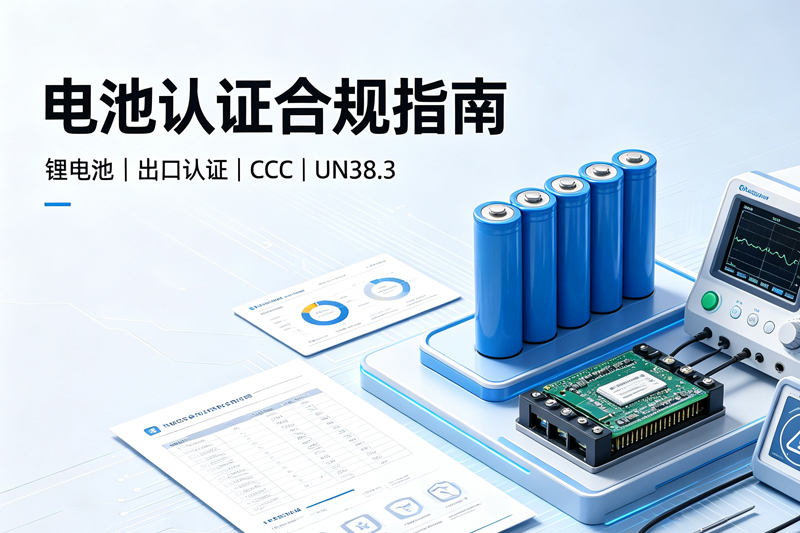
When enterprises are planning battery certification, it is recommended that they first make judgments based on the following four dimensions instead of directly following the trend to obtain a certain certificate.
1. Judged by product category: Different batteries have different requirements
Battery products have complex forms, and the requirements for battery cells, battery packs, power banks, energy storage batteries, and power batteries are not the same. Enterprises need to first clarify the product structure, rated voltage, capacity, protection circuit, application terminal and sales form.
Common product categories include:
Lithium-ion batteries and battery packs for portable electronic products
Power bank/Mobile power bank
Energy storage batteries and battery systems
Batteries for electric bicycles
Power battery modules and systems
Button batteries, small lithium battery packs
The core point is that battery certification should not be a one-size-fits-all approach. Even though they are all called lithium batteries, when applied in mobile phones, power banks, energy storage cabinets and electric vehicles, the key points of inspection will be significantly different.
2. Judged by sales regions: Domestic and export requirements are different
Domestic sales and overseas exports usually correspond to the access rules of different markets respectively.
Common requirements in the domestic market
CCC Compulsory Certification: It is applicable to products such as power banks, lithium-ion batteries and battery packs for portable electronic products listed in the catalogue
GB 31241 series standards: Focus on assessing the safety performance of lithium-ion batteries and battery packs
Other industry standards or technical specifications: To be supplemented and implemented in accordance with specific application fields
Common requirements in export markets:
Eu: CE, CB, etc
The United States: UL, FCC, etc
Japan: PSE, TELEC, etc
South Korea: KC, etc
India: BIS, etc
Australia: RCM, etc
International transportation: UN38.3, etc
The core point is that if an enterprise engages in both domestic sales and exports, it should establish a three-level compliance list of "domestic access + target country access + transportation safety".
3. Judged by application scenarios: Different security requirements
The certification path may also vary when the same type of battery is used in different products. For example:
Bluetooth headset battery: Focusing on the safety of small lithium batteries, overcharge and overdischarge protection, and transportation compliance
Power banks: Focus on output functions, battery safety, marking instructions, and domestic mandatory certification requirements
Energy storage power supply: Focusing on battery management system, overcurrent protection, short-circuit protection, and thermal runaway protection
Electric bicycle batteries: Focus on electrical safety, mechanical strength, environmental adaptability and consistency control
The core point is that battery certification should not only focus on the "battery itself", but also on what product it is ultimately installed in and how it is sold.
4. Judging by the mode of transportation: Air transportation has special requirements
If lithium battery products are involved in air transportation, UN38.3 is a transportation safety test that enterprises often come into contact with. It mainly simulates the situations that may be encountered during transportation, such as low air pressure, temperature cycling, vibration, shock, short circuit, and compression, to determine whether the battery will catch fire, break or leak and other dangers.
Please note:
UN38.3 does not equal market access certification for all countries
Even with the UN38.3 report, it may still be necessary to meet the safety certification requirements of the destination country
Transportation conditions may also involve packaging, labels, instructions and quantity restrictions
The core point is that battery certification should distinguish between "market access" and "transportation safety", and the two cannot replace each other.
Iii. General Process for Enterprises to Handle battery certification
The processes for different institutions and products may vary, but enterprises can prepare according to the following general steps:
Step 1: Product classification and compliance identification
First, confirm the product name, model specification, electrical parameters, structural description, BMS solution, application field and target market. This stage determines whether the subsequent certification list is accurate.
Step 2: Determine the certification and testing list
Select the corresponding certification program based on the product category and market. For example:
Domestic sales: Focus on confirming the scope of CCC certification and applicable standards
For exports to the EU: Consider CE, CB, etc
For exports to the United States: Consider UL, FCC, etc
Air transport: Prepare for UN38.3-related tests
Battery products with wireless functionality: EMC or wireless radio frequency requirements may also need to be considered
Step 3: Prepare technical materials
Common materials include:
Product Manual
Specification sheet
Circuit diagram
BMS Protection Instructions
List of key components
Battery specification parameter table
Business license of enterprise
Factory quality document
The more complete the materials are, the smoother the subsequent testing and review will be.
Step 4: Sample submission for testing
The laboratory will conduct safety and performance tests in accordance with the corresponding standards. Common test items for battery products may include: overcharging, overdischarging, short circuit, compression, vibration, shock, temperature cycling, low air pressure, free drop, thermal abuse, etc.
Step 5: Factory inspection or quality capability audit
Many certifications do not only look at samples but also check whether the factory has the ability to achieve stable production and consistency control. Enterprises need to focus on retaining:
Material purchase Record
Production process record
Routine inspection record
Finished product inspection record
Equipment calibration record
Record of handling non-conforming products
Step 6: Maintenance after certification
Obtaining a certificate does not mean the end of compliance. Enterprises also need to pay attention to
Validity period of the certificate
Standard revision requirements
Does product change require re-certification
Post-certification supervision and inspection
Labels, instructions and consistency control
The core point is that battery certification is a closed loop of "sample testing + factory capability + continuous compliance", not a one-time task.
Four. The Five Most Common Pitfalls that Enterprises Fall into
Misconception 1: One certificate is globally valid
The standard systems vary from country to country and region to region, and certificates are usually not directly universal. Enterprises should establish compliance files separately for their target markets.
Misconception 2: Only conducting tests without attaching importance to factory consistency
Battery safety does not only depend on the samples but also on the mass production process. If there are changes in the battery cells, protection boards, structures or processes during the production process and the enterprise fails to assess them, it may lead to the invalidation of the certificate or failure to pass the spot check.
Misconception 3: Not re-evaluating after product changes
After changing the battery cell model, BMS solution, housing structure, rated capacity or manufacturer, a re-evaluation should be conducted to determine whether it affects the certification scope. Simply applying old certificates carries a relatively high risk.
Misconception 4: Treating UN38.3 as a market access permit
UN38.3 mainly serves air transport safety and is not equivalent to domestic CCC or overseas market access certification.
Misconception 5: The instruction manual and labels are not compliant
The identification, parameters, warning instructions and usage methods of battery products are of great significance. Regulatory authorities and purchasers often check whether labels are consistent with certificates and reports.
V. Several Suggestions for Enterprises to Obtain Battery Certification in 2026
First, make a compliance list, and then decide on the project sequence
It is recommended to sort out the list in four levels: domestic mandatory requirements, customer procurement requirements, export country requirements, and transportation requirements, to avoid omissions.
2. Focus on standard updates and certificate conversions
In recent years, the update frequency of battery-related standards and implementation rules has been relatively high. Enterprises should pay close attention to official announcements and assess the impact of the new standards on product testing, factory inspections and certificate conversions.
3. Establish technical data archives
Battery certification involves a large amount of materials. It is recommended to establish a dedicated folder to uniformly file the instruction manual, specification sheet, circuit diagram, BMS description, test report, certificate, and factory inspection record.
4. Move the certification requirements forward to the R&D stage
If it is found that the protection circuit, structure or label does not meet the requirements only after the product is finalized, the rectification cost will increase significantly. A better approach is to introduce compliance requirements at the R&D stage.
5. Select a third-party institution with the corresponding qualifications and industry experience
When choosing a cooperative institution, enterprises can pay close attention to whether it has the corresponding testing capabilities, whether it has experience in similar battery projects, and whether it can provide complete support from document preparation to factory inspection guidance.
Vi. Conclusion
Battery certification is not an "optional action" for enterprises, but a necessary step for products to enter the market, ensure safety and build procurement trust. For enterprises, a truly effective battery certification solution is not simply about pursuing the number of certificates, but rather about establishing a clear, executable and sustainably maintained compliance system around product categories, application scenarios, target markets and transportation methods.
In 2026, as regulatory rules continue to be refined, enterprises should incorporate battery certification into the full life cycle management of their products as soon as possible, forming a closed loop from research and development, production, testing to post-certification maintenance. Only in this way can compliance risks be reduced and the market accessibility of products be enhanced in an increasingly strict market environment.
相关BlOG
-
What certifications are required for battery exports to Europe? Key Points Analysis of CE Certification
The export of batteries to Europe requires not only production capacity but also compliance with the regulatory requirements of the target market. As an important compliance step in the European market, the EU CE certification requires enterprises to plan in combination with product types, safety standards and regulatory requirements.
9102026-07-10
-
How to obtain the EU CE certification? Compliance Guide for Battery Exports to Europe
For battery enterprises, entering the European market requires not only focusing on product performance but also attaching great importance to regulatory compliance. The EU CE certification is not only a testing requirement but also an important way for enterprises to establish a product safety system. Understanding the battery CE certification process in advance, clarifying the testing standards and improving the technical data can help enterprises reduce export risks and enhance the stability of their products entering the European market.
8042026-07-06
-
A Comprehensive Analysis of the New Battery Testing and Certification Regulations: Advanced Guidelines for Battery Customs Clearance and Compliance in Various Countries in 2026
With the continuous upgrading of global green and low-carbon transformation and consumer electronics safety regulation, the testing and certification standards of the battery industry have undergone an all-round iteration in 2026. From the update of the new national standards for domestic mobile power banks and the 3C certification rules, to the implementation of the entity labels under the new EU battery Law, and then to the tightening of testing requirements in emerging markets, major economies around the world are reshaping the battery supply chain with stricter "compliance access vouchers". This article provides you with an in-depth analysis of the new trends in global battery customs clearance and compliance in 2026, helping you make precise plans and break through to go global.
5812026-07-23