
 English
 中文
-

What are the battery certifications? What are the standards for battery certification
-
Leading Global Compliance: In-depth Dissection of the New IS/IEC 62368-1:2023 Electronic Safety Standard
-
2026 India BIS Update Barometer: Countdown to Mandatory Version Replacement for XR and Electronic Products
-
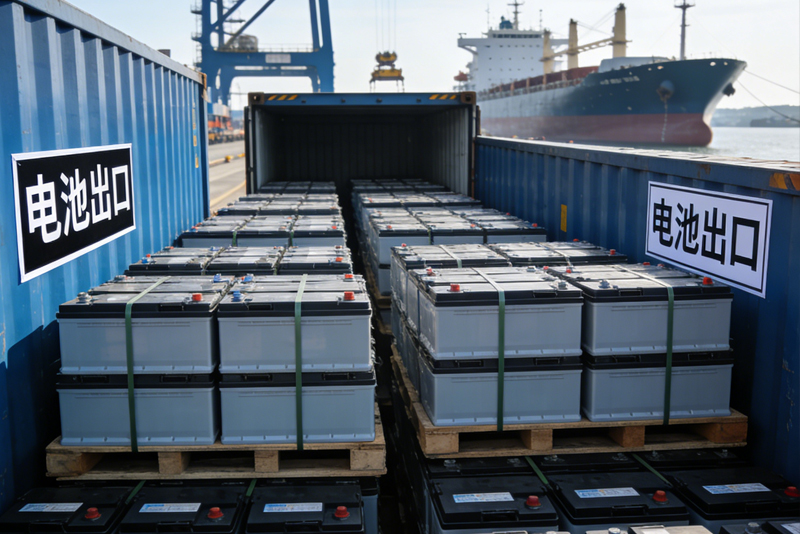
2026 Latest Guide: What Certification Materials are needed for Battery exports to the United States?
-
How to obtain the EU CE certification? Compliance Guide for Battery Exports to Europe
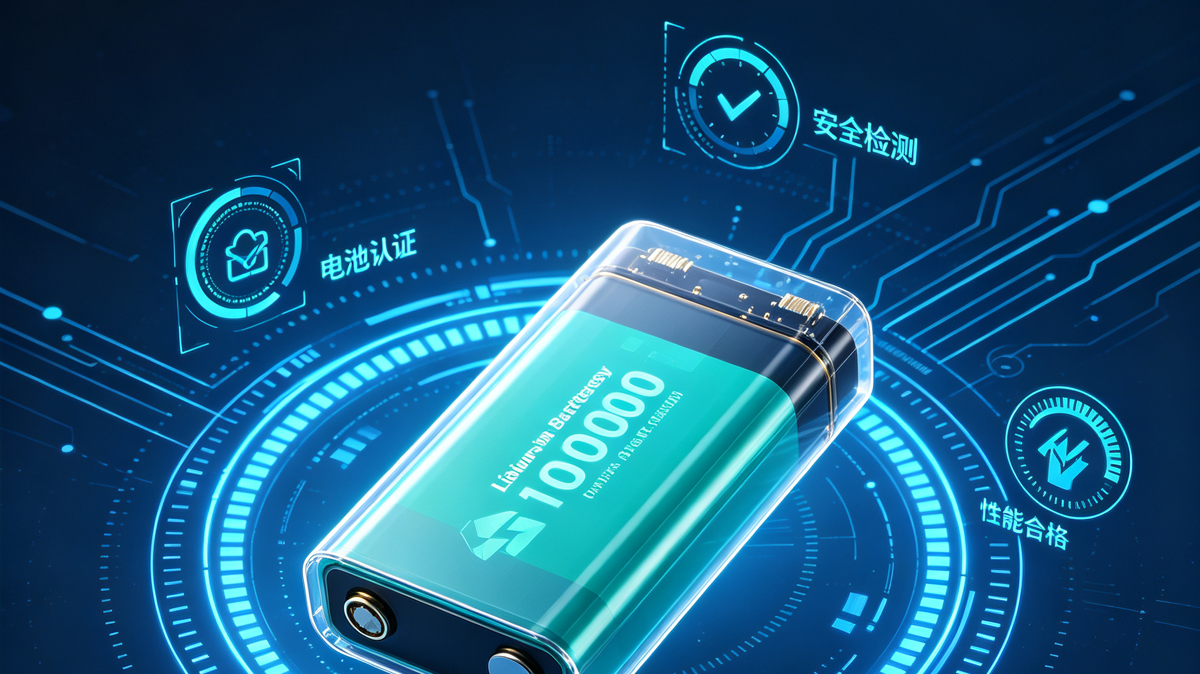
What certifications are required for battery exports to Europe? Key Points Analysis of CE Certification
The export of batteries to Europe requires not only production capacity but also compliance with the regulatory requirements of the target market. As an important compliance step in the European market, the EU CE certification requires enterprises to plan in combination with product types, safety standards and regulatory requirements.
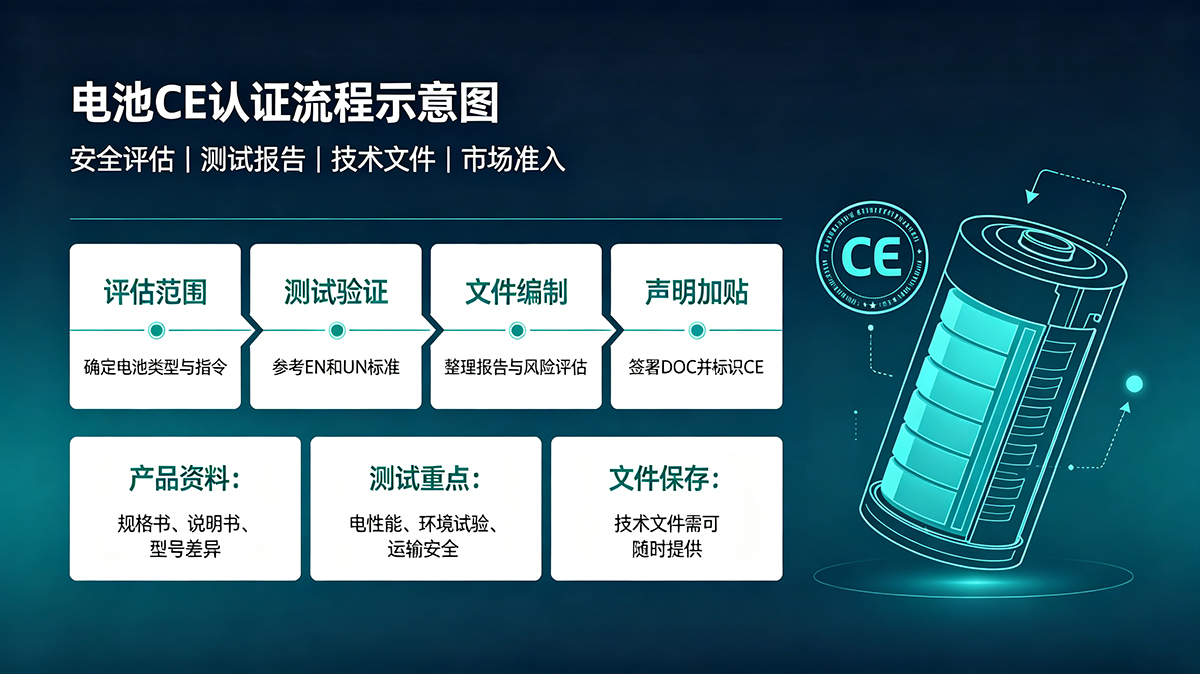
How to obtain the EU CE certification? Compliance Guide for Battery Exports to Europe
For battery enterprises, entering the European market requires not only focusing on product performance but also attaching great importance to regulatory compliance. The EU CE certification is not only a testing requirement but also an important way for enterprises to establish a product safety system. Understanding the battery CE certification process in advance, clarifying the testing standards and improving the technical data can help enterprises reduce export risks and enhance the stability of their products entering the European market.
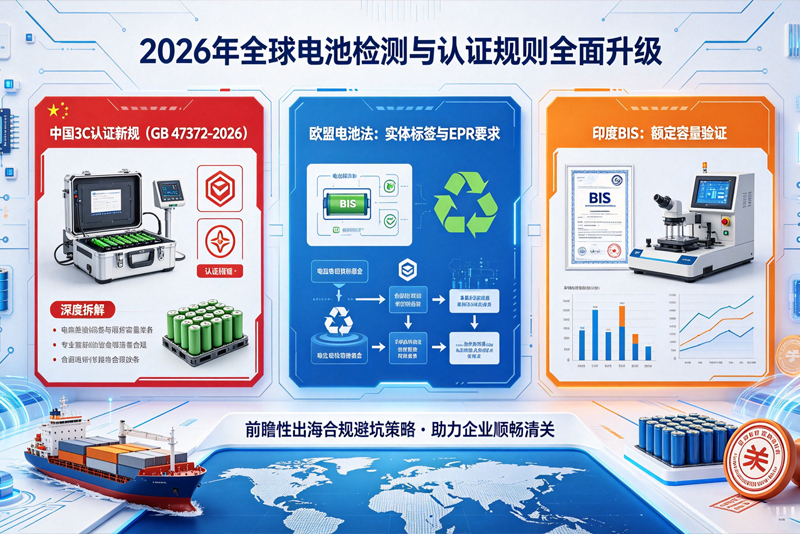
A Comprehensive Analysis of the New Battery Testing and Certification Regulations: Advanced Guidelines for Battery Customs Clearance and Compliance in Various Countries in 2026
With the continuous upgrading of global green and low-carbon transformation and consumer electronics safety regulation, the testing and certification standards of the battery industry have undergone an all-round iteration in 2026. From the update of the new national standards for domestic mobile power banks and the 3C certification rules, to the implementation of the entity labels under the new EU battery Law, and then to the tightening of testing requirements in emerging markets, major economies around the world are reshaping the battery supply chain with stricter "compliance access vouchers". This article provides you with an in-depth analysis of the new trends in global battery customs clearance and compliance in 2026, helping you make precise plans and break through to go global.
How to plan for lithium battery certification? A Comprehensive Analysis of Domestic and Export Multi-Country Testing and Certification
 Click:347编辑: 诚测检测CCJC-电池认证机构
 Time:2026-09-23 16:58:15
Lithium batteries are widely used in digital products, electric two-wheelers, portable energy storage, medical equipment and other products. Many enterprises tend to confuse the compliance requirements of different regions when mass-producing new products or preparing for export. Lithium battery certification is not a single certificate, but a combined testing system composed of transportation safety, product safety regulations and market access. If the early planning is lacking, situations such as inability to deliver goods, customs detention, inability to put goods on sale, and even project delays may occur.
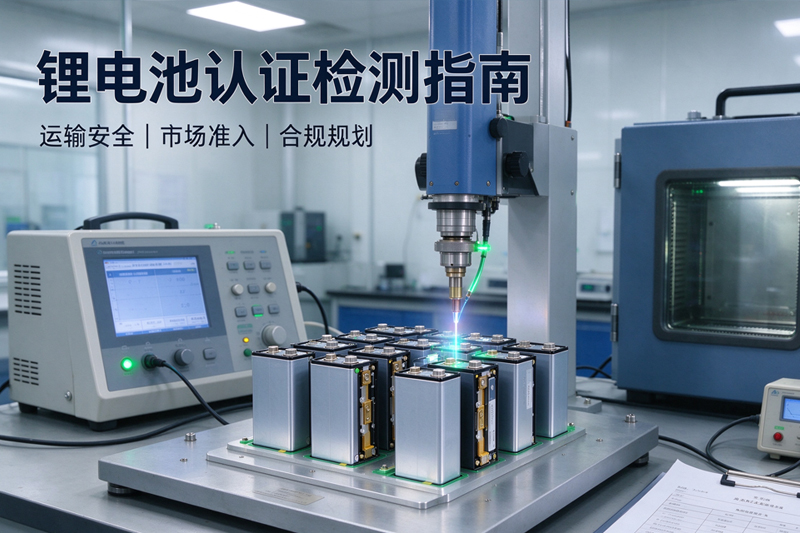
Enterprises should first distinguish sales regions, product types and transportation methods, and then match the corresponding standards. They cannot make sweeping generalizations.
Domestic market access certification
Portable lithium-ion batteries and battery packs sold domestically need to complete the 3C compulsory product certification in accordance with the GB31241 standard. This is the basic condition for products to be listed on e-commerce platforms and enter the domestic supply chain. It should be noted that the test items for battery cells and battery packs are different. The battery protection board and the structure of the casing will all be included in the assessment scope. Products that have not completed the corresponding certification are not allowed to be circulated and sold in the domestic market.
2. Essential for cross-border transportation: UN38.3 testing
As long as lithium batteries are transported across borders by air or sea, an UN38.3 test report is basically required, along with an MSDS (Chemical Safety Data Sheet). Some freight forwarders may also request an additional certificate of transportation conditions for the goods. The entire set of tests includes eight items such as height simulation, temperature cycling, vibration, shock, external short circuit, and overcharging, which are used to verify the safety and stability of the battery during long-distance transportation, jolts, and temperature differences. Many foreign trade enterprises think that obtaining overseas certification means they can ship goods and ignore UN38.3, resulting in the goods getting stuck at airports or ports.
3. Overseas market access certification
Different countries and regions have independent battery compliance requirements:
In the EU market: It is often based on IEC62133, supplemented by CE and CB certifications. CB reports can be converted through the IECEE system to reduce repetitive testing.
South Korean market: KC certification, with independent safety standards for battery cells and battery packs;
In the Japanese market, PSE certification is divided into two types: diamond-shaped and circular, and is distinguished by the risk level of the product.
North American market: Safety standards such as UL1642 and UL2054, and for energy storage batteries, there is also UL1973.
Southeast Asia and South Asia markets: Regional certifications such as BIS, TISI, and RCM.
Ii. Complete implementation Process for Lithium Battery Certification
1. Preliminary assessment
Confirm the specifications of the battery cells, the structure of the battery pack, the protection plan, the target sales market, evaluate the applicable standards, determine the number of samples, and identify structural defects in advance. The root cause of many test failures is insufficient preliminary assessment and design flaws in the battery protection circuit.
2. Sample testing stage
Send the samples to a qualified third-party laboratory to conduct environmental, mechanical and electrical safety project tests in sequence. If any non-conformities occur, the battery structure and BMS protection parameters need to be optimized, and the samples should be resent for re-testing.
3. Document review and factory inspection
Some compulsory certifications, in addition to sample testing, also require factory inspections to verify the quality control, routine inspection and traceability system of the production line. Even if the samples pass the tests, the certificates cannot be obtained due to inadequate factory control.
4. Certificate maintenance
After the certificate takes effect, some certifications require annual supervision audits. If there are any changes to the battery cells, BMS or shell materials of the product, they need to be reported in a timely manner and the old certificates cannot be directly used.
Iii. Common Misunderstandings in Lithium Battery Certification and Selection
Misconception 1: UN38.3 is equivalent to overseas sales certification
UN38.3 only addresses transportation safety and cannot replace the market access safety regulations certificates of various countries. It can be simply understood that UN38.3 ensures that the goods can be shipped out, and CE/KC/PSE and other certifications guarantee that the products can be legally sold locally.
Misconception 2: The battery cell certificate can be directly applied to the battery pack
The fact that a battery cell has a certificate does not mean that the assembled battery pack is automatically compliant. The battery pack consists of a protection board, wiring harness and casing. The risk points of short circuit and overheating may change. Generally, the battery pack needs to be tested separately.
Misconception 3: Passing the sample test = all mass production is qualified
The certified samples are custom-sent for inspection. Fluctuations in materials and processes during mass production batches may pose safety risks. Enterprises should establish a random inspection mechanism for production lines to ensure the consistency between mass-produced products and samples submitted for inspection.
Misconception 4: Starting the certification only when the shipment is close
The battery safety regulation testing cycle is relatively long. Once failure rectification occurs, new samples need to be prepared and retested, which can easily delay the delivery of orders. It is recommended that the lithium battery certification assessment be initiated after the product structure is finalized.
Iv. How to Reduce Certification Costs and Cycles
For multi-market projects, priority should be given to preparing CB basic reports, and international mutual recognition systems should be utilized to convert multi-country certificates, reducing repetitive testing.
Conduct internal preliminary tests in advance to identify problems such as short circuits, overcharging, and compression failure, thereby reducing the failure of formal tests.
Clarify the product boundaries, reasonably divide the scope of certification, do not blindly expand the models covered by certification, and control the number of test samples.
Select a third-party institution with a dedicated battery laboratory and multiple standard qualifications to complete multiple testing projects simultaneously.
Shenzhen Chengce Testing CCJC has a professional battery testing laboratory and can provide one-stop testing services for domestic 3C, UN38.3 and lithium battery certifications in many countries around the world. It helps enterprises identify risks in advance and shorten project cycles.
Conclusion
The core objective of lithium battery certification is to verify the safety and reliability of batteries in transportation and usage environments, and to meet the regulatory access requirements of various countries. During the project initiation stage of new products, enterprises need to plan a complete set of compliance schemes in combination with the sales market and product form, distinguish the differences between transportation tests and market access certificates, and avoid discovering compliance loopholes only near the mass production or delivery stage. Reasonable planning of lithium battery certification can not only avoid customs and regulatory risks but also lay a solid foundation for products to enter domestic and international markets.
相关BlOG
-
What certifications are required for battery exports to Europe? Key Points Analysis of CE Certification
The export of batteries to Europe requires not only production capacity but also compliance with the regulatory requirements of the target market. As an important compliance step in the European market, the EU CE certification requires enterprises to plan in combination with product types, safety standards and regulatory requirements.
13182026-07-10
-
How to obtain the EU CE certification? Compliance Guide for Battery Exports to Europe
For battery enterprises, entering the European market requires not only focusing on product performance but also attaching great importance to regulatory compliance. The EU CE certification is not only a testing requirement but also an important way for enterprises to establish a product safety system. Understanding the battery CE certification process in advance, clarifying the testing standards and improving the technical data can help enterprises reduce export risks and enhance the stability of their products entering the European market.
12282026-07-06
-
A Comprehensive Analysis of the New Battery Testing and Certification Regulations: Advanced Guidelines for Battery Customs Clearance and Compliance in Various Countries in 2026
With the continuous upgrading of global green and low-carbon transformation and consumer electronics safety regulation, the testing and certification standards of the battery industry have undergone an all-round iteration in 2026. From the update of the new national standards for domestic mobile power banks and the 3C certification rules, to the implementation of the entity labels under the new EU battery Law, and then to the tightening of testing requirements in emerging markets, major economies around the world are reshaping the battery supply chain with stricter "compliance access vouchers". This article provides you with an in-depth analysis of the new trends in global battery customs clearance and compliance in 2026, helping you make precise plans and break through to go global.
12092026-07-23