
 English
 中文
-

What are the battery certifications? What are the standards for battery certification
-
Leading Global Compliance: In-depth Dissection of the New IS/IEC 62368-1:2023 Electronic Safety Standard
-
2026 India BIS Update Barometer: Countdown to Mandatory Version Replacement for XR and Electronic Products
-
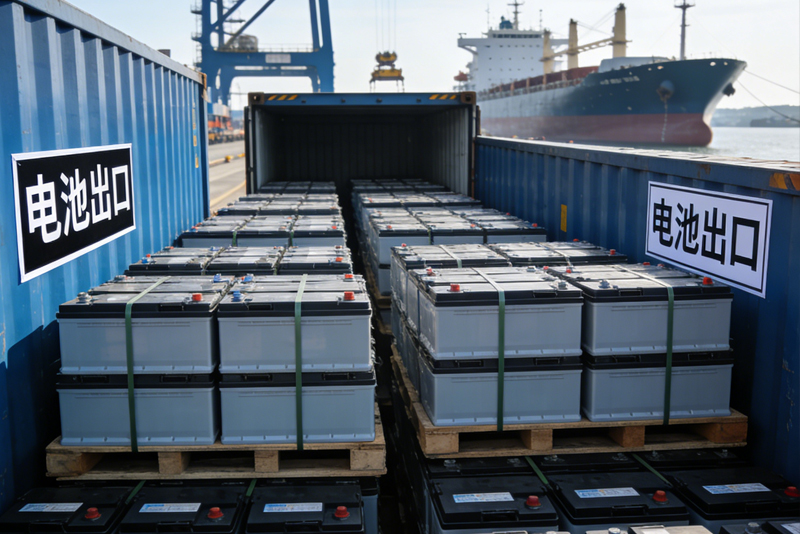
2026 Latest Guide: What Certification Materials are needed for Battery exports to the United States?
-
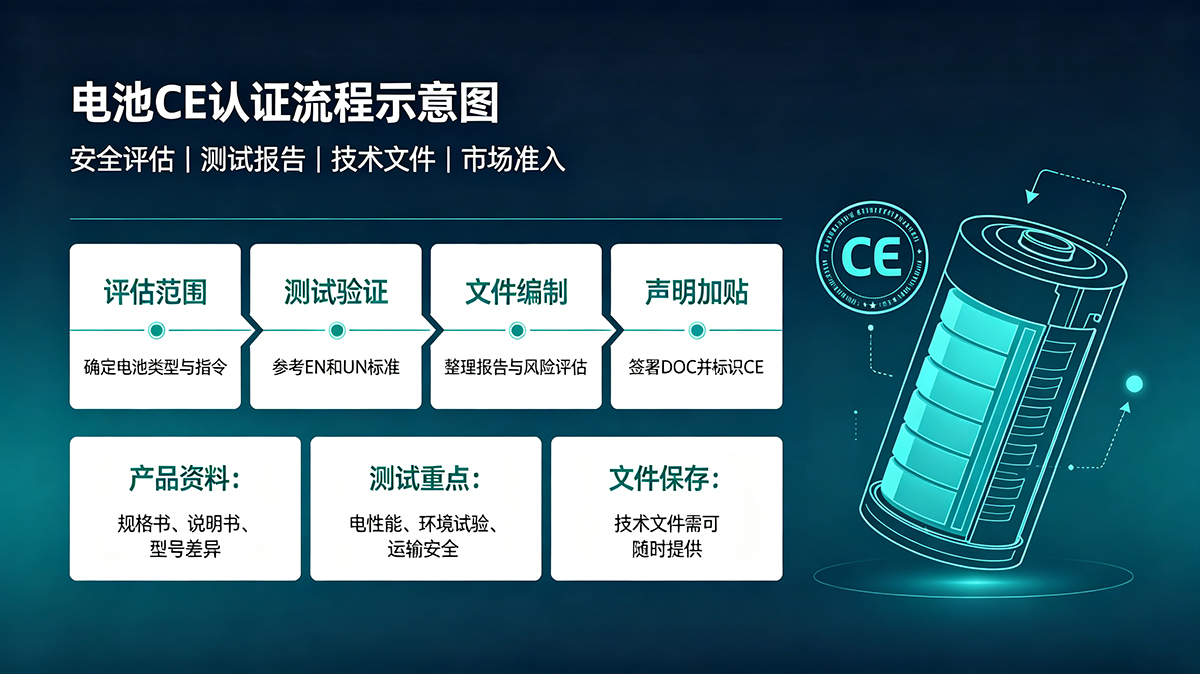
How to obtain the EU CE certification? Compliance Guide for Battery Exports to Europe
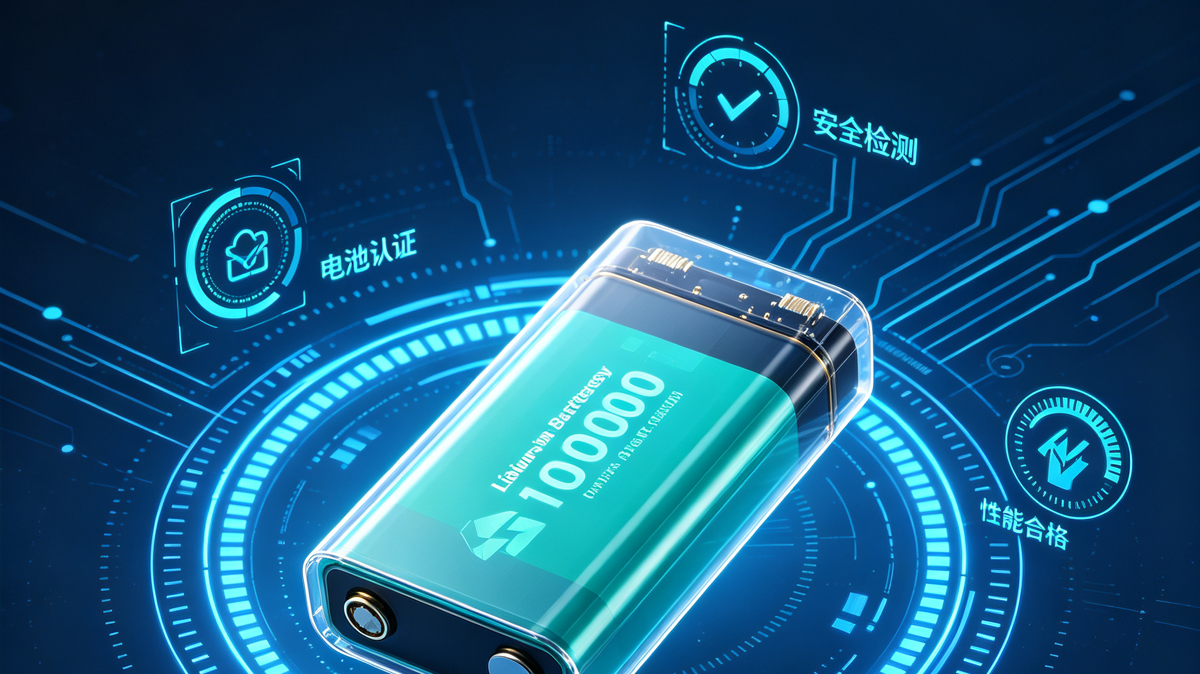
What certifications are required for battery exports to Europe? Key Points Analysis of CE Certification
The export of batteries to Europe requires not only production capacity but also compliance with the regulatory requirements of the target market. As an important compliance step in the European market, the EU CE certification requires enterprises to plan in combination with product types, safety standards and regulatory requirements.
How to obtain the EU CE certification? Compliance Guide for Battery Exports to Europe
For battery enterprises, entering the European market requires not only focusing on product performance but also attaching great importance to regulatory compliance. The EU CE certification is not only a testing requirement but also an important way for enterprises to establish a product safety system. Understanding the battery CE certification process in advance, clarifying the testing standards and improving the technical data can help enterprises reduce export risks and enhance the stability of their products entering the European market.
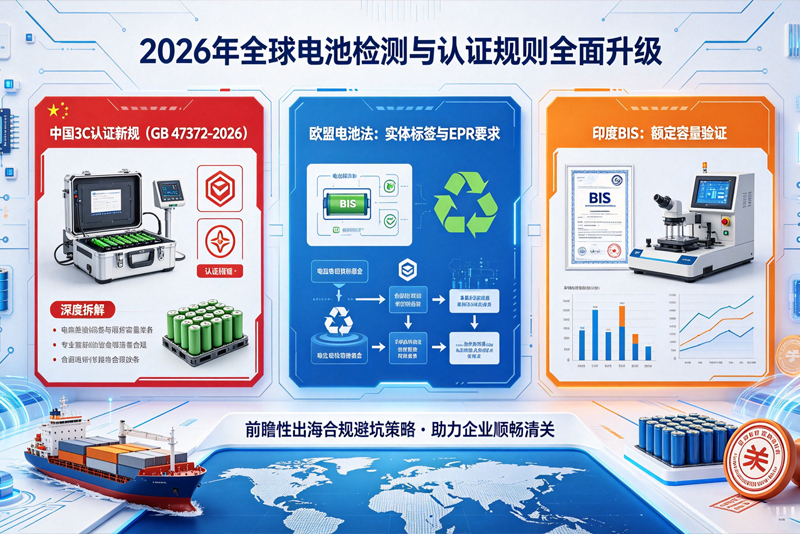
A Comprehensive Analysis of the New Battery Testing and Certification Regulations: Advanced Guidelines for Battery Customs Clearance and Compliance in Various Countries in 2026
With the continuous upgrading of global green and low-carbon transformation and consumer electronics safety regulation, the testing and certification standards of the battery industry have undergone an all-round iteration in 2026. From the update of the new national standards for domestic mobile power banks and the 3C certification rules, to the implementation of the entity labels under the new EU battery Law, and then to the tightening of testing requirements in emerging markets, major economies around the world are reshaping the battery supply chain with stricter "compliance access vouchers". This article provides you with an in-depth analysis of the new trends in global battery customs clearance and compliance in 2026, helping you make precise plans and break through to go global.
A Comprehensive guide to Global Lithium battery Certifications: A review of market Requirements for CE, FCC, KC, PSE, etc
 Click:271编辑: 诚测检测CCJC-电池认证机构
 Time:2026-09-30 15:13:02
Enterprises engaged in the export business of lithium batteries often encounter a problem: If the products have already undergone testing, why may they still be required to provide supplementary certification when they arrive at the destination country? The reason behind this is not complicated. Lithium batteries, as products with electrochemical energy storage functions, may involve not only electrical safety but also electromagnetic compatibility, transportation safety and local market access rules. The requirements for global certification of lithium batteries in different countries are not exactly the same. If enterprises only prepare according to the standards of a single market, it is very likely that there will be compliance gaps when switching to target markets.
For most lithium battery enterprises, establishing a clear certification map is more important than blindly conducting individual tests. Enterprises need to first determine the product category, capacity, application scenarios and target market, and then decide whether to conduct safety standard testing, electromagnetic compatibility testing, transportation appraisal, or apply for local mandatory or voluntary certification.
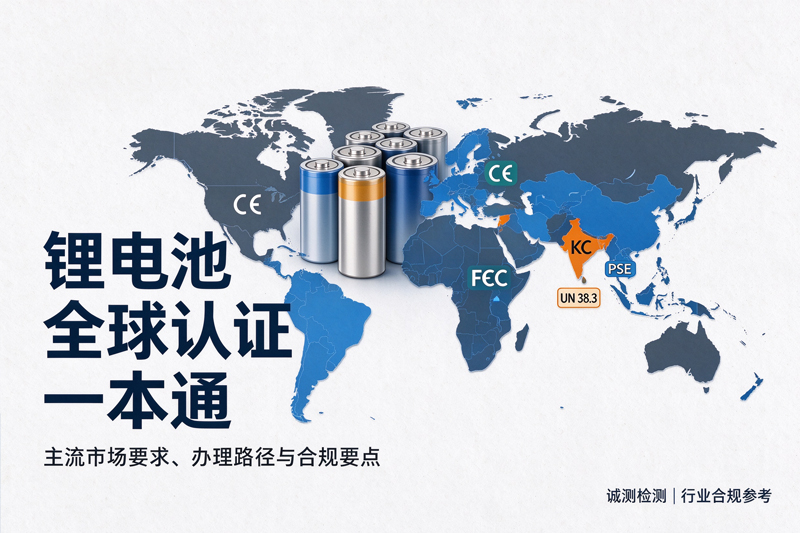
What are the common global certification systems for lithium batteries?
The management methods for lithium batteries vary among different countries and regions. Some adopt mandatory certification, some use conformity declarations, and others complete access through standard testing and document review.
When EU CE certified lithium batteries enter the EU market, it is usually necessary to take into account the battery Directive, electrical safety standards and electromagnetic compatibility requirements. The specific project depends on the product structure, rated voltage, capacity and usage method. Common standard directions include battery safety, overcharge and overdischarge protection, short-circuit protection, thermal abuse, etc. For battery packs with electronic control functions, electromagnetic compatibility may also need to be included in the assessment.
2. FCC Certification in the United States: If lithium battery products have electronic circuits, wireless functions or may generate electromagnetic interference, they may need to consider relevant FCC certifications when entering the US market. The FCC mainly focuses on electromagnetic compatibility and radio frequency interference, which is not equivalent to a complete battery safety certification. Enterprises often mistake FCC for "General Battery Certification of the United States", but in fact, they should also make judgments based on whether the product comes with wireless, whether it is sold as an independent power source, and whether it is used in conjunction with electronic devices, etc.
3. KC Certification in South Korea South Korea implements KC certification management for certain electrical and electronic products. Whether a lithium battery requires KC usually depends on whether the product is in the applicable catalog, as well as its voltage, capacity, structure and application. For many enterprises, KC is not an optional bonus but an entry requirement that needs to be confirmed in advance before entering the South Korean market.
4. Japan's PSE Certification Japan adopts the PSE system for some electrical products. Whether lithium batteries are suitable for PSE should be determined based on the product category, rated voltage, power and usage scenario. Some enterprises mistakenly believe that Japan only looks at transportation reports. In fact, local market access may also involve electrical safety, structural inspection and labeling requirements.
5. Requirements related to transportation safety: Lithium batteries may also be subject to UN 38.3 testing and transportation identification during the transportation process. This type of requirement mainly focuses on safety risks during transportation processes such as air and sea transportation, and is not exactly the same as market certification at the sales end. Enterprises are advised to understand "sales certification" and "transportation compliance" separately to avoid replacing a complete market access assessment with a single transportation report.
When enterprises apply for global certification of lithium batteries, they should first look at these four dimensions
When many enterprises consult about certification, they only ask, "How much does global certification for lithium batteries cost?" This question is hard to answer directly because the cost and cycle depend on the product itself and the market target. A more reasonable way of judgment is to first confirm the following dimensions.
"Judgment dimension" |
The contents that enterprises need to confirm |
Common influences |
Product category |
Battery cells, battery packs, energy storage batteries, power batteries, consumer batteries |
The applicable standards are different |
Electrical parameters |
Rated voltage, capacity, power, and whether it is equipped with a protection board |
The test items are different. |
Target market |
The European Union, the United States, South Korea, Japan, Southeast Asia, etc |
The certification systems are different |
Usage scenarios |
Digital devices, power tools, energy storage devices, means of transportation, etc |
The standards and label requirements are different |
Iii. General Processing Path for Global Certification of Lithium Batteries
The first step: Conduct product classification and market assessment. The enterprise should first clarify which type of battery the product belongs to, what the target market is, and whether it has electronic control or wireless functions. This step determines the subsequent certification list and can also avoid repeated testing.
Step 2: Establish a certification list. Organize CE, FCC, KC, PSE or other applicable items based on the target market. It is suggested to separate "mandatory items" from "customer-required items" to avoid understanding all tests as mandatory requirements.
Step 3: Select the testing plan. The testing items usually include battery safety, protection functions, electromagnetic compatibility, transportation performance, etc. Enterprises should make their choices based on product structure and market demands rather than simply opting for the "cheapest package".
Step 4: Complete the test and document review. During the test process, the sample structure, parameter consistency, and information in the instruction manual may all affect the results. Enterprises should organize specification sheets, circuit diagrams, Boms, instruction manuals and other materials in advance to reduce the risks of material replenishment and retesting.
Step 5: Obtain the certificate or report and maintain label compliance. Obtaining the certificate does not mean the compliance is over. Enterprises also need to confirm whether the labels, instructions and technical documents comply with local requirements, as well as whether the validity period of the certificates and the standard versions need to be updated.
Four. Common Misunderstandings: Don't Make Certification a "one report for the world"
Misconception 1: Having UN 38.3 means global sales. UN 38.3 mainly serves transportation safety and is not equivalent to EU CE, US FCC, South Korea KC or Japan PSE.
Misconception 2: All lithium batteries are subject to the same set of standards. The structures of battery cells, battery packs, energy storage batteries and power batteries are different, and so are the applicable standards.
Misconception 3: Certification only considers the cost and not the standard version. Standard updates may affect the validity of the certificate. When applying, enterprises should confirm the current applicable version to avoid facing a version change right after obtaining the certificate.
Misconception Four: Certification is not necessary if the customer does not request it. Customer requirements do not equal local regulatory requirements. Even if the customer does not mention it, the product may still be required to provide supplementary information during customs clearance, random inspection or market inspection.
The global certification of lithium batteries is not a single testing item, but a compliance system that combines product attributes, target markets and application scenarios. Rather than making up for the certification at the last moment, enterprises should establish a product compliance list in advance and manage the requirements of CE, FCC, KC, PSE, transportation safety, etc. in a hierarchical manner. For enterprises with multiple overseas markets, the core of global certification for lithium batteries is not "conducting the most tests", but "conducting the right tests, reducing repetitive tests, and maintaining the continuous validity of the certificate". Chengce Testing suggests that enterprises intervene in compliance assessment during the product development stage to reduce subsequent export risks.
相关BlOG
-
What certifications are required for battery exports to Europe? Key Points Analysis of CE Certification
The export of batteries to Europe requires not only production capacity but also compliance with the regulatory requirements of the target market. As an important compliance step in the European market, the EU CE certification requires enterprises to plan in combination with product types, safety standards and regulatory requirements.
13162026-07-10
-
How to obtain the EU CE certification? Compliance Guide for Battery Exports to Europe
For battery enterprises, entering the European market requires not only focusing on product performance but also attaching great importance to regulatory compliance. The EU CE certification is not only a testing requirement but also an important way for enterprises to establish a product safety system. Understanding the battery CE certification process in advance, clarifying the testing standards and improving the technical data can help enterprises reduce export risks and enhance the stability of their products entering the European market.
12272026-07-06
-
A Comprehensive Analysis of the New Battery Testing and Certification Regulations: Advanced Guidelines for Battery Customs Clearance and Compliance in Various Countries in 2026
With the continuous upgrading of global green and low-carbon transformation and consumer electronics safety regulation, the testing and certification standards of the battery industry have undergone an all-round iteration in 2026. From the update of the new national standards for domestic mobile power banks and the 3C certification rules, to the implementation of the entity labels under the new EU battery Law, and then to the tightening of testing requirements in emerging markets, major economies around the world are reshaping the battery supply chain with stricter "compliance access vouchers". This article provides you with an in-depth analysis of the new trends in global battery customs clearance and compliance in 2026, helping you make precise plans and break through to go global.
12072026-07-23