
 English
 中文
中文
-

What are the battery certifications? What are the standards for battery certification
-
Leading Global Compliance: In-depth Dissection of the New IS/IEC 62368-1:2023 Electronic Safety Standard
-
2026 India BIS Update Barometer: Countdown to Mandatory Version Replacement for XR and Electronic Products
-
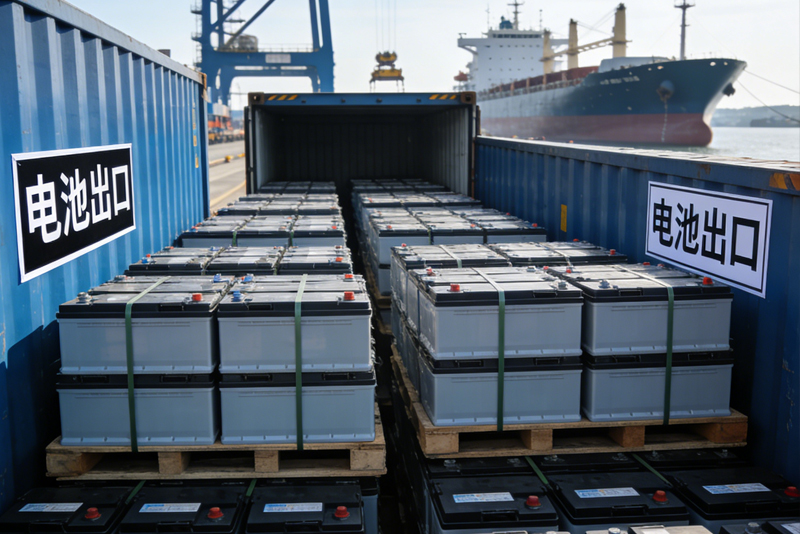
2026 Latest Guide: What Certification Materials are needed for Battery exports to the United States?
-
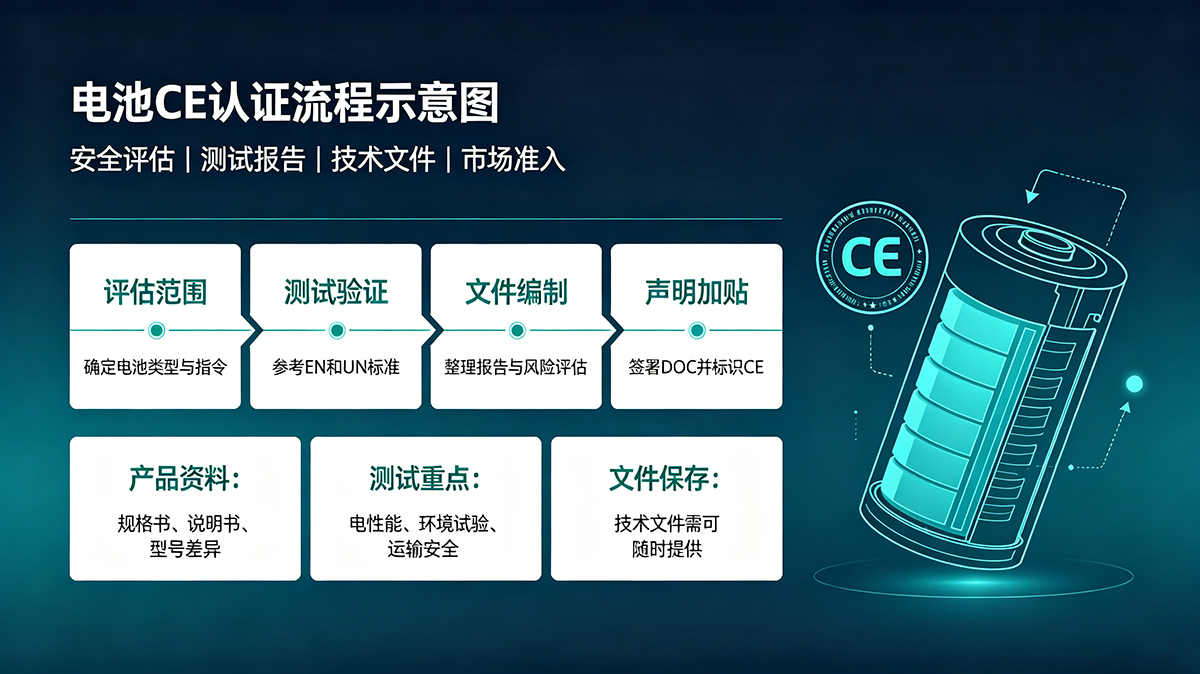
How to obtain the EU CE certification? Compliance Guide for Battery Exports to Europe
What certifications are required for battery exports to Europe? Key Points Analysis of CE Certification
The export of batteries to Europe requires not only production capacity but also compliance with the regulatory requirements of the target market. As an important compliance step in the European market, the EU CE certification requires enterprises to plan in combination with product types, safety standards and regulatory requirements.
How to obtain the EU CE certification? Compliance Guide for Battery Exports to Europe
For battery enterprises, entering the European market requires not only focusing on product performance but also attaching great importance to regulatory compliance. The EU CE certification is not only a testing requirement but also an important way for enterprises to establish a product safety system. Understanding the battery CE certification process in advance, clarifying the testing standards and improving the technical data can help enterprises reduce export risks and enhance the stability of their products entering the European market.
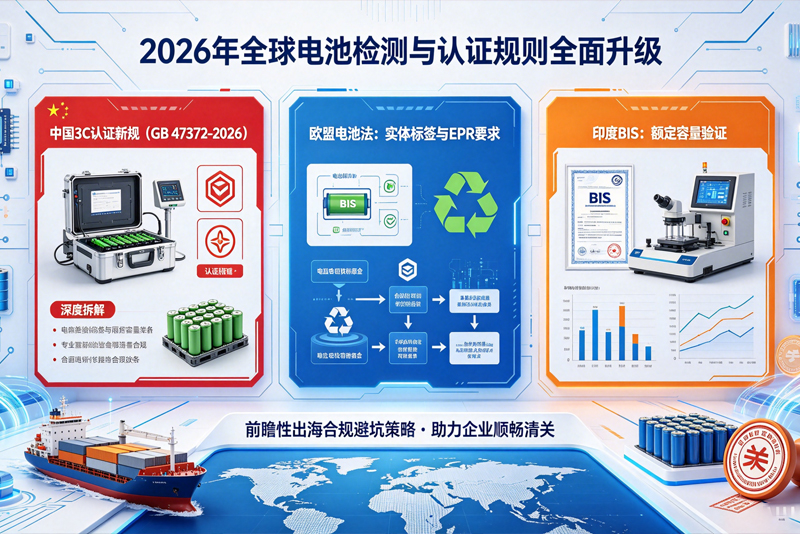
A Comprehensive Analysis of the New Battery Testing and Certification Regulations: Advanced Guidelines for Battery Customs Clearance and Compliance in Various Countries in 2026
With the continuous upgrading of global green and low-carbon transformation and consumer electronics safety regulation, the testing and certification standards of the battery industry have undergone an all-round iteration in 2026. From the update of the new national standards for domestic mobile power banks and the 3C certification rules, to the implementation of the entity labels under the new EU battery Law, and then to the tightening of testing requirements in emerging markets, major economies around the world are reshaping the battery supply chain with stricter "compliance access vouchers". This article provides you with an in-depth analysis of the new trends in global battery customs clearance and compliance in 2026, helping you make precise plans and break through to go global.
2026 Latest Guide: What Certification Materials are needed for Battery exports to the United States?
 Click:1217编辑: 诚测电池认证
 Time:2026-04-03 14:36:35

Whether your batteries are transported by sea or air, UN38.3 is the primary threshold to enter the US market.
What is UN38.3? This is Section 38.3 of the "Manual of Tests and Criteria" specifically compiled by the United Nations for the transportation of dangerous goods, aiming to ensure the safety of lithium batteries during transportation.
Material requirements: Test report: It includes 8 tests such as height simulation, high and low temperature cycling, vibration, shock, external short circuit, impact, overcharging and forced discharge.
Test Summary: According to the latest regulations (such as IATA Version 67 and HM-215Q), the consignor must be able to provide a test summary that complies with the specifications.
Time reminder: Starting from 2026, IATA (International Air Transport Association) will conduct stricter inspections on the SOC (State of Charge) and packaging labels of sodium-ion batteries and lithium-ion batteries. It is essential to verify the latest standards.
Ii. "Gold Standard" for Market Access: UL Certification for Batteries
Although UL certification is not a mandatory requirement in all fields in the United States, it serves as a "key" to entering mainstream retailers and engineering projects in the country.
Common standards
UL 1642: Safety standards for lithium battery cells.
UL 2054: For household and commercial battery packs.
UL 2580: For power batteries of electric vehicles.
UL 1973: For energy storage battery systems.
Importance: E-commerce platforms such as Amazon in the United States mandatorily require UL reports for battery-related products they list. Without such materials, the products face the risk of being delisted and recalled.
Iii. Electromagnetic Compatibility Requirements: FCC certification
If your battery has an active electronic circuit or wireless/charging control function (such as smart batteries, power banks), it must be certified by the FCC.
Classification: Depending on the product characteristics, it usually involves FCC Part 15B (for digital devices) or FCC Part 18 (for wireless charging).
The core content: Ensure that the electromagnetic interference (EMI) generated by the battery during use does not exceed the limits set by the Federal Communications Commission of the United States.
Iv. Key Customs Clearance Documents: MSDS/SDS
MSDS (Material Safety Data Sheet), namely the Chemical Safety Data Sheet.
Function: Provide customs and carriers with information such as the physical and chemical parameters, hazards, first aid measures, and leakage handling of batteries.
Writing suggestion: It must comply with the US GHS standard (OSHA HCS 2012). Starting from 2026, it is recommended to update the MSDS regularly to ensure the accuracy of the contact numbers and emergency information within it.
V. Other Special Certifications (Depending on the product)
WERCSmart Registration: If your client is a retail giant (such as Walmart or Costco), the product must be registered for environmental compliance through the WERCSmart system.
CTIA certification: For mobile terminal batteries (such as mobile phone batteries), CTIA certification that complies with IEEE 1725 or IEEE 1625 standards is usually required.
California CEC Certification: If it is a product with battery charging function (such as a portable charging case), it must meet the energy efficiency requirements when entering California.
Compliance is the shortcut to going global. Exporting batteries to the United States is not merely a matter of piling up documents; it is also a test of product quality. It is recommended that enterprises consult a professional third-party testing institution (Chengce Battery Certification) before shipping to ensure the timeliness, completeness and consistency of the certification materials.
相关BlOG
-
What certifications are required for battery exports to Europe? Key Points Analysis of CE Certification
The export of batteries to Europe requires not only production capacity but also compliance with the regulatory requirements of the target market. As an important compliance step in the European market, the EU CE certification requires enterprises to plan in combination with product types, safety standards and regulatory requirements.
9132026-07-10
-
How to obtain the EU CE certification? Compliance Guide for Battery Exports to Europe
For battery enterprises, entering the European market requires not only focusing on product performance but also attaching great importance to regulatory compliance. The EU CE certification is not only a testing requirement but also an important way for enterprises to establish a product safety system. Understanding the battery CE certification process in advance, clarifying the testing standards and improving the technical data can help enterprises reduce export risks and enhance the stability of their products entering the European market.
8072026-07-06
-
A Comprehensive Analysis of the New Battery Testing and Certification Regulations: Advanced Guidelines for Battery Customs Clearance and Compliance in Various Countries in 2026
With the continuous upgrading of global green and low-carbon transformation and consumer electronics safety regulation, the testing and certification standards of the battery industry have undergone an all-round iteration in 2026. From the update of the new national standards for domestic mobile power banks and the 3C certification rules, to the implementation of the entity labels under the new EU battery Law, and then to the tightening of testing requirements in emerging markets, major economies around the world are reshaping the battery supply chain with stricter "compliance access vouchers". This article provides you with an in-depth analysis of the new trends in global battery customs clearance and compliance in 2026, helping you make precise plans and break through to go global.
5852026-07-23